

We could go years without it ever happening, and then word would spread that we were going to get to see a movie. At least some part of the school day would be swapped for the time that would take, so we knew it had to be pretty important. For one thing, we would be allowed for once to step off the long brown plastic mats lining the edges of the corridor and walk onto the shiny gray painted rectangle where the older boys and Pan had lined up the gray cafeteria benches one behind the other. It was a big deal because otherwise the only time anybody stepped off the mats and sat there was twice a year, when chairs were lined in rows for families to sit in while we kids sang and danced for a Feast Day, and for the eighth-grade graduation, the last time you’d see any of those kids before they went off to high school, which the nuns warned was full of girls in skirts so short you could see their underwear, and boys who bought drugs in the halls as easy as we bought State Line Potato chips for dime from the box in the closet at recess. And it meant that the two big skylights high above the benches would be covered by the rolling shades that only ever were rolled shut when there was a movie.
We never saw who got to do the rolling, but I’m guessing that it was Pan who cranked the shade across the two big glass windows that looked about the size of my family’s Plymouth Fury III and somehow made up part of the ceiling. While all of us except for the helper boys were in our classrooms, the rows of chairs were set out, those skylights got covered, and a movie screen and an actual movie projector got brought out from somewhere. Then, all of us in the whole school were told to come out of our classrooms and take seats, the littlest kids up front, the older kids sitting behind them, the nuns standing on either side of the rows to make sure all of us were paying attention. Though why wouldn’t we be, when we were going to see an actual movie?
Five Star Theater was in center of town, a few doors to the left of David’s father’s bowling lanes, where for a few months of Saturdays Sekula and I bowled in a league that was only the two of us and watched David spray germ killer into the funny-looking shoes with our sizes right on the back of them in a big number. I’d never been in the Five Star, but some kids said you had to keep your feet on your seat the whole time because rats ran through the rows looking for dropped popcorn. Also, older kids sat way in the back and kissed instead of watching the movie or watching for rats. None of that made me ever want to ask if I could go there. The Five Star was showing Chitty Chitty Bang Bang, about a flying car when the nuns played us a movie warning us to be safe around electric poles because some boys somewhere else in Massachusetts had been goofing off and climbed up one. An electric company guy even was there to scare us about electricity after we watched the movie. He said he didn’t want anybody else to do what those other boys had done because we could get killed. He wanted to answer our questions, but nobody had any so I raised my hand to ask about something I saw every day – why didn’t birds get electrocuted when they sat on the wires like they did all the time? And Sister Lucentia yelled from the other side of the corridor, “Weren’t you listening?” The movie already had talked about birds, she said. But I’d been paying attention and I didn’t think so or I wouldn’t have said anything.
The better movie they showed us was the first one we ever got to see, and except for the scare about electric wires was the only other one we ever got to see. We were still little kids then and got to sit in the first couple of rows, where we were up close to John Glenn. We all knew he had gone into space, and there he was, doing that again, right in front of us, a man flying up to where we aimed our prayers all day and night. By the time we were shown the movie, he’d been back home for a long time, and by then everybody was back to talking about how some countries made monkeys fly into space instead of men. The movie hadn’t shown any monkeys, which was too bad. We only got to see John Glenn in his astronaut suit, the camera so close to his eyes I wondered how he could see out the windshield to drive his rocket, but he managed to, going so fast that the skin on his face actually pushed way back, almost like you feel yours does when you’re on your bike going down the hill on Norbell Street without once touching the brakes. When that happened to John Glenn’s face right in front of us, kids whispered, and the nuns yelled at them for whispering. I looked up at the shades covering the skylights that hid the sky and heaven and God and the saints and all the dead people, maybe including the boys who had been goofing off and climbed an electric pole –all of them are nobody you’d get to see until you died and went to heaven. But even so, there they were, somewhere right above you.
-30-
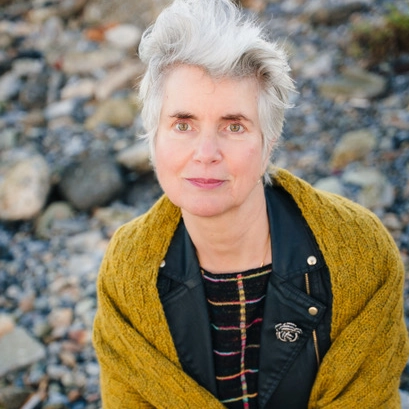
Suzanne Strempek Shea is the author of six novels and six works of nonfiction. Her freelance journalism and fiction have appeared in newspapers and magazines throughout the US and in Ireland. A winner of the New England Book Award whose fiction has been noted in Best American Short Stories, she’s taught in four MFA programs, created one, and co-directs the Dingle Writers’ Workshop and the Iota Short Forms Conference. Her latest book is Compositions: A memoir in 42 essays by 1 kid on her 8 years in Catholic School, handed in 60 Years late (PAHA Books). With lifelong journalist Tommy Shea, she lives in the US and Ireland.


