

I arrive home days later than my sisters, guilty for living so far away, heart-bruised from the lack of a welcome. There is no call from my mother at an open door: Julia’s here! There is no Beast wiggling his bottom half into a thick curl around my knees, his polyester-stuffed fishy muffling his throaty cries of devotion. The mudroom is still and silent with its wood paneled walls and its row of iron hooks, three black raincoats hunched over the hooks like crows.
I feel a chill coming on. My cotton dress is soaked after a run from the Uber to the house in a downpour, and though it’s June in Maine, the air-conditioner is blasting. Beast, our overfed mixed-breed of a rescue dog, is lush with lion-like fur. He likes a cool house, and we have always catered to Beast. We baby him like a cherished brother who comes into a family later in a marriage.
When our father still lived here–––––still weighing in––––he said we got the name all wrong. The way we doted on him; we should have called him Prince. But our father was just jealous. Beast is not a Prince. He’s a marshmallow-like moose, part golden retriever, part something mythic that gives him his puck-like paws, and a little pit bull thrown in.
I knew coming home would be different from any other visit during my last four years at UC Davis, but until I stood here alone, it hadn’t sunk in what it meant. It sinks in now. An ominous mood wraps me. I shiver. And with the shivering, my thoughts turn back to my mother.
Normally, Mom would have been checking the driveway for at least the last half hour. She would have pulled me into a tight hug despite my drenched clothes.
~
I kick off my Birkenstock clogs, the suede soaked and ditch my backpack and suitcase by the bench. In socks, I shuffle to the kitchen where I find my sister, Miranda. She is scooping freshly-ground Arabica into the coffee maker, making the whole house smell like world travel. Miranda owns a coffee truck that nests between two retired fish factories turned into small businesses in the harbor. She caters to fishermen and tourists alike. People line up for her brew and I’m one hundred percent ready for a sample.
I give her tall, taut body a side hug and pull on her ponytail, a loose braid of copper brown hair. She mouths ouch and holds her pointer against a half smile. I have missed her green eyes, her light smattering of cheek freckles, a mirror version of a slightly older me. I stand next to her at the counter, craving the heat of one of Mom’s clay-heavy mugs between my palms. The family mugs are Mom’s seconds from all the years of her craft shows––––some smudged glaze here, a slightly leaning base there, rendering the vessel useful though slightly tilted when you set it down. Throwing clay was how Mom kept hold of a part of herself while taking care of all of us all of those years, but she hasn’t worked in her studio for months.
Miranda and I don’t speak. When I first sidled up to her, she shushed me to remind me of the instructions I already received in a text message from our big sister, Tracy, sent over an hour ago. Come in softly. Beast is sleeping. There is nothing wrong with his ears. And then, as if I hadn’t gotten it or understood what was at stake, sheadded, It will kill him that he can’t get up to greet you.
Fucking Tracy. As if I were still five or eleven or sixteen and would do something stupid and jeopardize the tender equilibrium of our family.
To be fair, she also texted us a photo of our mother spooning Beast on the rug in the sunroom, the pair of them lying together like a quotation mark where what comes next, what needs to be said and done, has not yet been written.
I study the photo again. They look warm. I am still cold.
Earlier at the airport, the storm came from out of nowhere. Rain lashed against the windshield of the Uber driver’s rusty Civic as we pulled away from the Jetport onto the dark open road. Raymond, red gnarled knuckles gripping the steering wheel, introduced himself in a dense drawl. He apologized for the state of the car. Said his truck was in the shop. Needed brakes. The clunker belonged to his daughter, a bleeding-heart liberal, who fostered rescue dogs from Texas. Dog hair–––a variety of color, length, and texture–––covered the back seat.
I waved Raymond’s explanations away, too exhausted, too worried to care. I’d been studying for weeks, taking finals for days, up since well before dawn. My mother believed Beast was, now, only waiting for me, so I’d flown three thousand miles in urgency, and I was scheduled to sit the night shift with Beast. It crossed my mind how the scent of another dog on my clothes might rattle him, but not many Ubers will take jobs outside of the city, and this was my only chance at a ride down the coast.
My allergy to unfamiliar dander kicked in. I started sneezing and couldn’t stop. Raymond handed me a crumpled box of tissues depicting a sky-blue background with islands of pure white clouds, like the kinder weather I’d left in California. I blew my nose.
“When I was a kid, way up the farm,” Raymond said. “I caught a lot of colds. Doc’s office was some forty miles east, so Ma cured us with her kitchen remedies. Stewed a chicken, rubbed the grease on my chest, all over the front and back.” When he gestured the rubbing over his chest, the car swerved a little, and I slammed my heels into the floor.
“It’s not a cold,” I managed as I checked the fastener of my seatbelt. “I’m allergic to dander.” I could barely speak between sneezes.
“Ah, sorry about that. I used to have allergies. Ma made me tea from sage she grew in the garden by the porch. Nasty-tasting stuff, but it smelled like Thanksgiving. Supposed to help. Stomach upsets, too. Maybe more.”
I knew he was just being friendly. How could he know small talk wasn’t called for?
“Good thing I’m not allergic to Beast,” I told him. “Beast’s my dog. He’s sixteen. I was five when our father brought him home. A puppy. My immune system has grown used to him.”
For some strange reason, after my initial share, I found myself wanting to tell more of our tragic story to the driver, but I couldn’t get a word in edgewise. His stories about his Ma’s home remedies were infinite. I wanted to tell him the reason and the second reason I’d come all this way when my friends were graduating, celebrating, making plans for summer jobs, saving up for Burning Man. I wanted to tell Raymond I’d left everything to lie next to Beast on the rug, how we had to keep him still, protect him from the pain of stirring. I wanted to tell him about our mother.
I remember thinking, after Beast, there would be zero dogs who didn’t make me sneeze.
I remember thinking, I can’t think beyond Beast.
The fresh coffee is finally ready. Miranda hands me two steaming mugs, one black, for Mom, who won’t drink it, one glugged with oat milk for me. She points to the den. It’s weird: I can’t help but wonder if a cup of sage tea would be a better fit for the occasion, a tisane made of leaves and stems clipped and dried and steeped by Raymond’s mother, a brew with a scent that might make Beast remember summer days dozing in a cradle of dug-up dirt beneath the porch while Mom pulled up storage onions and pruned Brandywines.
In the den, I find Mom sound asleep on the floor next to Beast. She looks thinner than she did at spring break, much more gaunt than when we Facetimed last week. The edges of her clothes slough onto the rug. She is a shape within a shape against the flat and I want to wake her, help her conquer the stairs to her bed, but I know to be here next to Beast is all she wants. Beast, who is, gratefully, still with us, snoring.
Looking at the two of them, a couple of dear old friends who’ve been through an awful lot together, I can understand why instead of committing to the recommended radiation treatments after a grueling year of chemotherapy, Mom chooses to put her focus on Beast. But this is not what the sisters are thinking.
I set Mom’s mug on the coffee table and crouch on a footstool next to our dog so I can smell his Beastliness, and where I can also smell my mother. My dress is still a little damp. I’m still shivering a little, but I’m warming up with every sip from my mug thanks to heat and caffeine. Thanks to dog breath and French-milled Lilly of the Valley soap.
Perfection. I close my eyes to smell them even more, and maybe to pray.
But what should I ask for?
As children, we were taught how to pray. We said Our Fathers, Hail Marys, and Glory Bes as many times as the priest said we should for the sins we made up so we could also say we lied. The more sins, the more prayers, the longer we kneeled in a pew, the more badass we were to our friends waiting for us outside of the church. We were also taught we could pray for what we want and for other people, God was benevolent. I’ve always found it difficult to believe in God. And even God couldn’t change what was happening now.
Our father used to say dog was God spelled backwards. He once said the way we put Beast on a pedestal, we should have named him God. I set down my mug, clasp my hands together, elbows on my knees, thumbs against my forehead, and say to myself, Dear Dog. No words come after that. What comes is the sensation of a hand reaching in my chest and clenching my heart. What comes is a lump in my throat.
When I wake, the hermit thrush and red-eyed vireos are throating pre-dawn late spring songs. Mom isn’t here. I don’t remember moving, but I’m lying in her place on the rug next to Beast. There’s a throw from the couch draped across my hips and legs, and it includes Beast’s hips and legs, too. My dress is dry. My hair which I roped into a messy bun two days ago is still damp. There’s a pillow from the couch beneath my head.
The room we call the den is an old screen porch our father converted into a sunroom for our mother when she was first diagnosed, two years ago, a pebble on the underarm side of her left breast, probably nothing they couldn’t fix, a couple of pebbles that became stones, an asymmetrical rock. The den became a first-floor room just for her.
Our father used to say the den was more like a room for God the dog, and it’s true the floor is littered with ripped rubber balls, plush toys that squeak, pork bones from the butcher, and an ultra-large and expensive LL Bean dog bed pawed and chewed that Beast has never once slept in. He preferred the couch before bad hips relegated him to a rug from our great grandparents’ farm that still smells of horses. The whole room looked like some giant crow’s nest.
Through the pair of French doors leading out to the patio and the yard, I watch the sky light up pinkish. On the wall next to the doors is a painting rendering a clutch of flowers––pinkish-purple puffs, bright green stems, clusters of three cute leaves–––red clover floating against a cream canvas.
Funny. On my ride home from the airport less than twelve hours ago, the Uber driver was talking about red clover as I sat as close as I could to the cool air of the cracked-open window, and rubbed my nostrils raw with small clouds of tissues, rain sneaking in.
“This time of year, early spring,” Raymond said, “Mother used to pick red clover blossoms for tea. I used to help. She gave me a nickel for every ten flowers. Said to leave two for each one I took for the bees.”
He glanced back at me in the rear-view mirror. Smiled. By then, the conversation was one-sided, but he seemed okay with it.
“Course clovers also supposed to be a good remedy for cancer,” he said, eyes back to looking at the road.
I squeezed my eyes tight.
I squeeze them tight now.
Beast doesn’t have cancer. He has bum hips, and almost no vision. He has the curse of incontinence due to the curse of old age, but he has a good long life to show for it.
“A good life?” our father recently texted to the group feed. “He’s lived the life of a king.”
Our father can’t stand how our mother puts Beast’s health before her own. He would have called in the vet long before now, but he lost his say when he left our mother in the middle of chemo. Said he thought she’d be better out of it. We don’t know why. He’s a coward, I guess. I took a year off, took care of Mom through the worst, hated Dad, his absence, and more, hated his every now and then presence. I made him suffer. Then, she postponed the next round of treatments and insisted I finish school. She convinced me it was what she desired more than anything.
But I didn’t get what I wanted, as much time spent with her as possible.
And then, three thousand miles away, I lost track of everything, including myself. I lost the mothership as a compass. I floated. I drifted. I tanked. I picked myself up and I finished because Mom wanted me to. And then she wanted me home.
Tracy has turned prematurely gray. She hovers like a froth of mist rising in the doorway between the kitchen and the den. She hasn’t said hello to me, only shushed. She is on her cell phone, texting. The phone lights up her face, revealing again how quickly she is aging. As I was an afterthought, she is fifteen years older than me, so the start of wrinkles is to be expected. But I’m startled by the cowl of deep fatigue she wears like a hood. I’ve never taken the time to really look at my elder sister’s face.
My phone vibrates in my pocket.
Beast twitches, then groans. I don’t move to respond. He takes three quick sniffs. The tip end of his tail is quivering in a valiant try and I’m convinced he knows it’s me, here with him, knows I’ve finally come home.
I want to throw my arm across the bulk of him, but he would want to rally, and sudden movement would cause him to hurt. It is my one job to keep him still and I can’t fuck this up.
My phone vibrates twice more. Tracy points to herself, then to her phone, then to me. What does she want me to do?
As I remove my phone gingerly from my pocket, I also hum in Beasts ear while I read three separate texts.
Mom is sticking to her plan.
Cancelling her consultation. She’s even stopped seeing her therapist.
She won’t leave Beast, not while he’s like this.
I text back a sad face emoji, the one with the single tear. I don’t text, What difference can a day or two make? She’ll be able to go in soon. I am new to this stage, the progression of things, an outsider. I have lost the privilege to weigh in.
By late morning, clear skies and a high sun have dried away remnants of yesterday’s storm. We daughters converge at the cedar patio set on the deck just outside the den watching five robin two-stepping for worms. Mom is still asleep in her bed upstairs and though she has asked us to wake her for her afternoon shift, Tracy and Miranda have chosen not to. From out here, we can keep an eye on Beast who has stopped taking licks of treats and dips of water from our fingers. His breath is more labored this afternoon. He is covered with a heavy blanket, a body pillow propped in the place where mine should be, but according to Tracy, we have things we need to talk about without Mom but about Mom. Miranda agrees.
We pick at the omelets Miranda made from egg whites, goat cheese, and baby spinach. We drink coffee as they tell me they need a united front, and they don’t feel like I am all in, not supportive of the plan for Beast or for Mom. I feel like I am seven again, like the grown-ups are having a conversation I don’t fully understand.
I wonder if anyone thought to talk to someone who might have ideas about what more we could do for Mom, make medicine from the plants in the garden, like Raymond’s Ma used to do for him. I tell my sisters about the Uber ride, the driver, the home remedies.
“The story I remember most,” I say, “is the one about a woodland wildflower called goldthread. It’s a low-growing plant that masses under fir trees. A deep green glossy leaf. Three of them in a set. When it blossoms, there’s a pretty white flower with points of yellow in the middle.” I find an image on my phone.
Miranda looks genuinely interested, but she is hard-wired for kindness. Tracy is keeping her face neutral, putting up with me, but I think it’s just because she’s so tired, and maybe a little incredulous.
“He told me I’ve walked by it a thousand times in the Maine woods. So, you locate the plant growing under the last year’s oak leaves and pine needles, and when you catch a root, you tug. It’s the color gold. You pull and pull until it’s loose. It’s good for canker sores. To make a rinse. For Mom, I’m thinking. She has a lot of them.”
Tracy picks up her phone, and maybe because I am perennially naïve, my role in the presence of my sisters, I think she’s about to Google information on healing herbs, but then she says, “It’s Dad.” She looks at Miranda. “Should I answer?”
Miranda puts her face in her hands. She and Dad regularly connect.
“No,” I say. In the face of Miranda’s despair, I can be confident. “He only upsets her. It’s just not helpful.
“Let it go to voicemail,” Miranda says. “He wants to talk to her. Get her to go to radiation. He thinks she should try.”
The smell of a Beast’s fart, or maybe an accident, comes to us way out here. Whatever it is, its rank, reeking of what I can only suspect a dying dog smells like from the inside out.
“Radiation doesn’t need to happen today,” Miranda says. “But tell him to come anyway and bring us our favorite blueberry scones.
“Tell him to come clean up dog poop,” I say. “Tell him the den home smells like a poorly managed kennel. Tell him bring a bucket of bleach.” I get up to go tend to Beast.
“You sit down, Julia,” Miranda says. “It’s my turn. I’ll go.”
Tracy’s thumbs jump all over the screen of her phone. Of course, she is not texting any of our words. I keep my mouth shut. She’s been at this for days. I follow Miranda.
An hour later, Dad is in the driveway leaning against a glinty new Tesla, his late mid-life crisis splurge. He has convinced himself he’s being ecologically noble. I watch him from the kitchen window. He sets a large white bag from our favorite bakery on the hood. I haven’t eaten much since I’ve been here and I’m suddenly starving, but I will refuse to accept his peace offering.
Miranda is out there talking to him. She’s laughing so hard at something he’s saying it causes her to double over. When she straightens, she crosses her arms around her belly and frowns as if she remembers she’s not supposed to think he’s funny anymore or at least not funny right now.
Dad sees me at the window. He stands up, smiles widely, waves.
I pull the curtains together, but now I’m hungry for a scone.
In the den, Tracy’s changing out a pee and poop pad for a fresh one. She’s asked for my help shimmying the pad beneath Beast’s hips. Through the whole of Mom’s ordeal, Mom was well enough to take care of her own biological needs. Thank God! She says if and when that goes, she’s hiring a palliative care aid. She told us her daughters won’t be cleaning her up, but it’s our job to go heavy with the morphine behind the aid’s back. When she talks like this, we tell her to shut up.
I can’t think about any of that. My job now is to slide the pad when Tracy says “go.” She warns me how Beast will cry out, but I am not prepared for the weak yelp, followed by a string of thin whimpers. I am not prepared for how it wrecks me.
I gently stroke the curve of his head. His eyes flutter. He sees me or smells me and tries to get up.
This is exactly what we are trying to avoid, my being here making any part of Beast’s life today less comfortable than it was the day before. I lay down next to him and scratch the deep indent underneath his ear, his sweet spot. I try to ignore the stench of him, the pain in him, the near end. I’m jet lagged and try to take a cat nap with our old dying man of a dog.
I have been home almost twenty hours and I’ve yet to see my mother awake. When my afternoon shift is over with Beast, I climb the stairs and peek inside her bedroom. She’s conked out on top of her quilts, a slight smile on her lips. I want to wake her, but I don’t. Instead, I wander. I creep from bedroom to bedroom along the hallway, searching for something in the emptiness of them. I brush my teeth with the pink toothbrush my mother keeps for me here in a plastic cup in the bathroom Miranda and I used to share. I smooth down the wrinkles of my two-day-old dress, but it’s no use. I should shower, change my clothes, but somehow taking the time to stand under a thrum of hot water makes me worry I might miss something important in exchange for mere pleasure.
I head back downstairs wearing a pair of soft wool socks and a too-small red cardigan I find in my old dresser. I look for my sisters. I check on Tracy who is sitting on the couch in the den with Beast, but not with Beast, and he seems restful, so I leave. Miranda is––––no surprise––––in the kitchen. She is spiraling blueberry scones on a plate. I pinch back the curtain to look outside for Dad. His car is gone from the driveway, but, still, I don’t take a scone. We are basically orphans, and we are almost without dog.
On my phone, I receive an email ping from an address I do not recognize: sunshinefarm@mecommunications.net. It sounds harmless, so open it. It’s Raymond’s mom. To be polite, I’d given Raymond my email address so he could have his mother send me an e-book of her home remedies, and she has done so.
“Start with something simple, try it out, take notes,” Raymond said to me yesterday while we waited for the deluge to subside so I could make a run for the house. It had been peaceful, that moment, otherworldly in the way you can share something with a complete stranger, an unlikely alliance, something holy in the rain. “I see a wooded area over that way,” he said as he pointed to a patch of woods that was my childhood haunt. “Ma would say there’s a treasure trove of medicine right here in your backyard.”
I wonder what it is about Raymond that made him think I would be interested in pursuing wild plant medicine. I wonder what is about me that made him persist. Did he share his mother’s lore with all of his riders? Could he have sensed my confusion, my guilt, my dissociation, my pain?
And now here’s his mother, Cassandra Sunshine, flooding my inbox with care.
~
Back outside, the sun has reached its peak. It’s more like California weather we’re having, and I walk to the edge of the woods on a hot search for the elusive goldthread. If I can cure our mother’s cold sores, well, then maybe that’s one useful thing I can do to be helpful. But all I come up with is a faded green tennis ball, one of Beast’s from when he was a puppy, from before we learned tennis balls weren’t great for dogs. It’s ripped almost in half. It’s been here so long, it’s mossy.
When I return, all the women of this house are gathered together in the den. Mom is propped up on the couch. She is loaded down with throw blankets covered in doghair. She is wearing the tie-dyed headscarf I sent her last month. Miranda is sitting on the stool next to Beast. His breath seems shaky to me. Tracy is hovering by the doorway to the kitchen, her thumbs in a mad dash all over her screen, but truth be told, I only have eyes for my mother.
“Sweetie, come sit here,” she says and smiles though I know it must hurt her mouth sores to talk. She gestures to the open seat on the couch. My chest flies open as I cross the room.
Before I sit, I lean down and kiss her brow gingerly. I press my cheek to hers and become still. She smells stale of sleep and light sweat, but fresh, too, like the mint tea she loves. Her sallow skin reminds me of last autumn’s coppery leaves that cling to the branches of beech trees waiting to be pushed off by spring growth.
“I’m so sorry about Beast,” she says, her whisper like a beech leaf shivering its last shiver. She’s sorry for me?
I sit and lean towards but not against my mother in case it pains her. She reaches for my hand. I pull in my bottom lip. I try not to look at or even think of Beast. I try not to cry, but my mother is gently squeezing, pulsing her love, into my hand.
“Okay, sorry, guys,” Tracy says, looking up from her phone. She eeks out a half smile. “The vet is on his way. Julia, we’re all in agreement. It’s time.”
I have not agreed to anything. While they were scheming, I was crawling on my hands and knees in search of a tiny white flower in the buttercup family until my knees were scratched and bleeding, my dress smudged with loam.
Tracy squints at me, as if waiting for a challenge or another cockamamie idea. She arches her right eyebrow.
Tears stream down Miranda’s face.
I look at Mom, who smiles and nods.
I can’t do it. I can’t wait here until the vet arrives, and watch the sisters brighten in politeness. I can’t bear how our mother will sit on the couch, wrought with exhaustion, unable to get up and say her last goodbyes to Beast. I don’t want any part of this plan with my sisters, how Beast will be carried on his blanket to the yard with help from a neighbor who is on his way to dig a hole with his tractor because the ground is still too hard to dig with a shovel; how Beast will be wrapped in his favorite blanket and lowered and covered all within minutes; how all within minutes, Beast will be gone.
I go through to the kitchen and snatch one of Dad’s scones. I head out to the front door to the front yard to eat it while I read the latest email from Cassandra Sunshine on my phone––––four emails in a matter of four hours––––this one all about how to make tea with pine needles, how they are loaded with Vitamin C.
It’s not until I see the vet pull her pick up into the driveway, that I’m struck with the reality of what’s imminent, and know for certain Beast will be looking for me with his nose, and his tail. He will whine and no one will understand what he is trying to tell them. I do not want Beast to die without me. I break the half-eaten scone into pieces and toss them around in the grass for the squirrels, the squirrels who have always kept Beast entertained, and I wonder if the squirrels, in turn, were entertained by tormenting Beast.
I greet the vet in the driveway. Funny how Dr. Hatch––––Ruthie it says on the pocket of her mud-stained lab coat over a Scotch plaid shirt, buttons missing–––looks a little like a female version of Raymond–––his flannel shirt, hair he couldn’t be bothered about, weathered skin, Raymond–––who at first annoyed me with the intrusion of his unrelenting chatter, the personal stories, then softened me with his unexpected silence in a rainstorm, how he continued to tend to me via the emails from his mother, all of which turned out to simply express care, the kind of care I haven’t been prone to let in, lately, the kind of care that inhabits a person’s marrow, pumps through the heart, oxygenates the breath, is as natural as breathing.
Ruthie says she remembers me from when I was little and first came to her with Beast the puppy. And with only meager few words left inside me, I point the way to the back of the house, and feel like I, the littlest sister, have suddenly matured years with this gesture. We walk through the garden and into the open doors of the den, integrate into the small pack gathered.
We had no way of predicting when Ruthie knelt by Beast across from me, her bag open, needle poised, how Beast would smell her, too, and try to wag his enthusiasm for this human who had the best dried salmon and cured buffalo treats and sweet potato cookies in the county, the smoothest of voices, who held his complete and utter trust, and not even be able to rally the tip of his tail. He just lay there, still, his mouth open, his tongue extended and relaxed on the rug, as if he were ready. That’s when our mother pressed her fist to her chest and let us see the depth of her pain. I believe her crumpled expression and the tears that leapt from eyes squeezed tight were for all of it––––her diagnosis, our father, even, I assume, the three of us growing up and leaving her here with only Beast for company, and now Beast would be leaving her, too.
Three hours later, I am sitting in a chair by our mother’s bed, reading to her from a dusty old paperback mystery our father left on his dresser. I keep reading aloud even after she is asleep, hoping to crack the egg lodged in my chest.
It has been a taxing day for her, a taxing month for my sisters, a taxing couple of years for us all. In between pages, I watch for Mom’s breath, the way we all watched for Beast’s in the end. The lift-and-lower of her shoulder is steady, seems strong. She has plenty of time left. With Beast gone, perhaps she’ll go in for her next stage of treatments, become free and clear for the next five years, then forever; it’s possible. I think about all I still have to say to her, and selfishly, all I still want her to say to me. I set the book down.
It’s raining again. Sheets of spring showers ping the tin roof of the dormer. I think of waiting with Raymond in that disgustingly dirty but well-loved car for the rain to subside so I could run to the house, how Raymond grew suddenly quiet, and how I didn’t want to leave the cocoon he had somehow conjured, how I didn’t want to enter this house and now never want to leave.
Weeks ago, when Beast’s death was imminent, and against my wishes, our mother insisted I finish my exams before I come home, and at exactly the right moment, the afternoon of my last final, she texted me, insisting it was time. Last night when I found her lying there sleeping next to Beast, looking so small, so frail, doing her part to keep company with death, it gutted me. I thought, she who protected us all, all those years, who was protecting her? But right now, she just looks like our mother, resting.
I set the book down. Despite Miranda doing another round of meal prep and dishes in the kitchen, and Tracy’s voice in my head to make sure not to keep Mom awake for too long, I climb in bed next to my mother. I know how to keep vigil, how to keep careful, but I’m not sure I know how to lose. I need my mother. This is the cocoon I want now.
I allow for plenty of space between us, so as not to do any harm, but I curl exactly as she is curled, not as if we are two spoons in a drawer, but like her and Beast and Beast and me, a couple of quotation marks.
That’s when my chest egg fissures and then cracks. I begin to shake and keep shaking, mouth open, gasping for whatever oxygen I share with my mother.
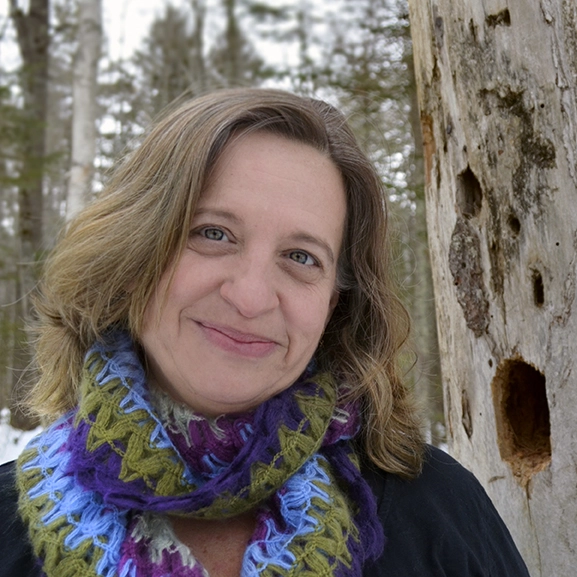
Jodi Paloni is the author of the linked story collection, They Could Live with Themselves, runner-up for the Press 53 Award for Short Fiction, a finalist for the Maine Book Award, and an Indie Publishers Award Silver Medalist. Her fiction appears in Berkeley Fiction, Green Mountains Review, Whitefish Review, Cleaver, Carve, and many other places. Her work has been anthologized in North by Northeast I and II, as well as Short Story America Anthology IV. She has an MFA from Vermont College of Fine Arts. She lives on the coast of Maine, where she is the founder and lead facilitator of Maine Coast Writers.


