

This is evidence, like fingermarks crimping upper arms,
like the bruise on the cheek bearing the shape of his ring,
the zigzag grooved in the X-rays.
You and he and the world can go on denying.
                                                                                But there it was.
The postcard from a lynching held in my hand
long laid away in a leather letter-folder in an attic
from my college friend's grandparents' generation.
Cached as a souvenir
like coconut palm-fingers splayed against a tropic sky
above any holiday beach that might have broadcast,
Wish you were here!

The name of the murdered man
lies too long planted under their litter of malice to recover.
Our shared domestic violence concealed.
But that this photograph continues to exist,
in our family album, yours and mine, is a terrifying treasure
in our era of easy erasures, bearing certain witness
that this deed was done.

The slight figure hunched and dangling from an oak
could have been anywhere, any black man.
Any white man might have snapped from under his veil
that blurred crowd of white faces staring one way,
departing, at a train station:
the child on a man's shoulders, another's elbow to a hat-brim
as if a pesky wind stirred. A man with a pipe looking bored.
A woman's shawl-edge halving her face.
Not much standing out in that moment
from all the enormity of their hatred,
beyond the swaying burden under the impartial branch.
The righteous exultation of the hour
apparently already fizzled into Job done,
the trudge home.

A blasphemy of shadows, loveless light,
The paper burned against my skin,
no message engraved or penned, no signature;
the back as blank as a pale indifferent face.
One corner curled like a sleeping infant's fist,
cardstock yellowed as an old man's wrist
and faintly wrinkled. Handfuls of them, perhaps,
passed out as trophies. Someone paid for these.
One, with his life.
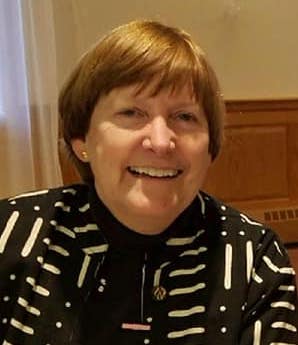
Jennifer M Phillips is a retired skydiver, scuba diver, and bonsai-grower, settled on Cape Cod, and has authored three chapbooks, Sitting Safe In the Theatre of Electricity, A Song of Ascents, and Sailing To the Edges, and a collection, Wrestling With the Angel (Wipf and Stock Pub., 2024). Phillips’ work has appeared in over 145 journals, and has been thrice-nominated for a Pushcart Poetry Prize, and 1st prize in the 2026 (The Malovrh-Fenlon Poetry Prize) in the Orchard Street Press Poetry Competition.


