

What fabulous fiction was submitted this year to our Contest! We present here a collection of lyrical, voice-driven stories from our Winner and Finalists and Editors’ Picks spanning various countries and cultures and races, fiction that probes deep into various forms of prejudice.
We are thrilled to introduce a gifted debut fiction writer Mars Robinson, author of “Hummingbirds,” this year’s contest Winner chosen by our distinguished judge Helen Elaine Lee. Mars tells in lyrical detail the story of two young Black sisters living in a poor section of Chicago and how they prevail over neglect and abuse. Told with poetic compassion, “Hummingbirds” reveals Mars Robinson as a new talent to watch:
“It’s strange to linger on voices, but details like that are sharp when you mourn. The big pictures are the shady things. You won’t remember whole rooms of the house you lived in, or why you moved there. But as you watch them tear the thing down, you’ll remember the flaking white paint on the underside of the basement steps and the spot on the carpet where your dog spilled your nail polish, and you were so mad, scrubbing with acetone, the smell soaking into your fingers. Remembering people goes the same way. No big pictures, just snapshots.”
Set in a Maine Cannery, the runner-up story “Cracking” by Priyanka Kumra tells the story of a young woman who learns to read her mother’s scars as a language of survival. “My mother used to say that lobsters scream when boiled, but it’s only air escaping the shell. I was seven when she first told me this, standing at her station in Cannery Building C, watching her feed crawlers into the steamer. “Listen,” she said in Mandarin, though the foreman had posted English Only signs at every door. “That’s not pain. That’s the sound of becoming something else.”
Lyrical, taut, and funny, Paul Rankin’s “Testing the Fence” is an excerpt from a novel about a seventeen-year-old boy who tries out for a baseball team and the girl he falls for who works at a summer theater camp for neurodivergent children.“She moved like she knew the room belonged to her. Like Shakespeare got it backward. Not all the world’s a stage but the stage is all the world. All of it that mattered anyway. And she owned it.”
And then “Samaritans” by Ronan Ryan also probes into the psyches of conflicting characters. Told with a dry wit, this tale is a deeply ironic look at a seemingly doomed adult love relationship that somehow finds compassion. “The man’s grey eyes, no light in them. The tug on the corners of his mouth rendering a smile impossible. Lucy had seen a look like that before. It was why she was lingering on the grassy clifftop too, downwind and not as close to the edge as him but not far off, pretending to be absorbed by the waves cresting and crashing below.”
“Dairy Queen” by Sr Álida with its intricate wit and riffs reveals the struggle for identity of a high school misfit who navigates her first crush. “How she start walking next to you without asking where you going? Now here y’all are, side by side in front of the Dairy Queen on 69th, splitting a damn chicken sandwich like it’s communion. Aren’t there twelve more blocks to your corner? Your ass better get on that bus. Weren’t you daydreaming about China Dragon all through Algebra? Damn near drooled on your quiz thinking about double-fried wings soaked in duck sauce.”
EDITORS’ PICKS: Notable Fiction selected by Solstice Fiction Editors
Jody Paloni’s “Beast” is a moving tale about devotion and loss. A college graduate returns home to be with her dying, beloved family dog and grapples with her grief about her mother’s advanced cancer. “I arrive home days later than my sisters, guilty for living so far away, heart-bruised from the lack of a welcome. There is no call from my mother at an open door: Julia’s here! There is no Beast wiggling his bottom half into a thick curl around my knees.”
“Sun, Wind, Lightning Thunder,” a novel excerpt by Tommy Cheis, captures Native American storytelling and its inner-turning, rhythmic depths. “I was formless in absolute darkness at the center of a black hole. A woman spoke gibberish, warbling her words. Or it was a whale sending long-distance love songs underwater? Volume came and went. Then I clearly heard Dr. Demi Diaz dispensing tough love in a human language.”
We give sincere everlasting thanks to our dedicated Readers in helping us select these excellent stories. testimonies to the human spirit during definitely hard times. Kudos to Heather Labay, David Sahl, Susan Kietzman, and Sarah Smith. We couldn’t have done it without your keen eyes and discerning tastes. Not to mention your generosity of spirit!
Lee Hope, Founder and Fiction Editor
Karen Halil, Fiction Co-Editor

Lee Hope, is the author of the novel Horsefever, a finalist in the Midwest Book Awards. She is a recipient of a Pennsylvania Council on the Arts Fellowship, and a Maine Arts Commission Fellowship for Fiction. She has published stories in numerous literary journals such as Witness and The North American Review. She founded and directed a low-residency MFA program and has taught at various universities. She also teaches for Changing Lives Through Literature, which serves people on probation and parole.
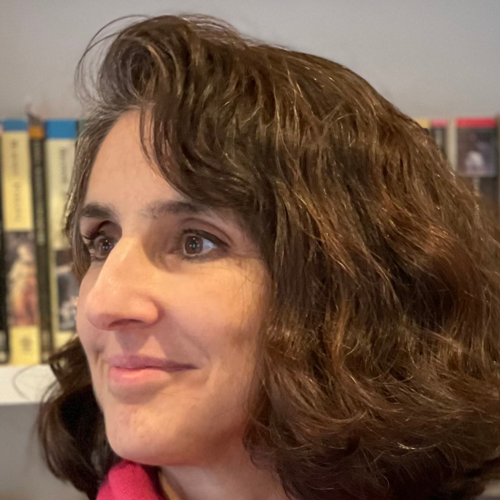
Karen Halil is a writer of Armenian and Lebanese heritage from Turkey. Born in Canada, she has since become American and now lives in the Greater Boston area. Holding a Ph.D. in English literature, she is a former lecturer at Boston University’s Writing Program and Harvard’s Committee on Degrees in History and Literature. Her earlier short stories and poetry can be found in Canadian literary magazines, and she is currently seeking publication of her debut novel.


