

For decades, I hid the fact that my family operated a Thai restaurant. Whenever someone asked what my parents did for a living, I’d respond with a vague non-answer: “Um, I just have my mom and grandmom, and they work in the food industry.” Over time, I developed a knack for stalling and redirecting, posing the same question back to whoever inquired or else steering conversations to topics other than the family business. “Tell me your family’s story” became my refrain, and just as much as I was genuinely interested in listening to other people’s narratives, I’ve never been one to voluntarily share my own. In the sphere of household matters, I mastered the art of deflection.
Why was I so coy about it? Frankly, I was plain-out embarrassed by the restaurant. Not least, by its scrappy site: land-locked between a nail salon and a bodega within a pale-yellow concrete building in a burnt-out strip mall in Van Nuys, San Fernando Valley—a.k.a., the “Valley,” a.k.a., Los Angeles’ unglamorous district. The restaurant’s dated interior was just as unsightly: the ripped-up sofa booths, peeling carpeting, faux-wooden wall paneling—all sticky with grease and mildew. Then there was the scattering of faded marketing posters produced by the Thailand Tourism Board touting the country’s “exotic” destinations with overdramatic slogans like “Amazing Thailand!” and “Discover Thainess!” Even the restaurant’s name—the Fortune House—seemed uninspired and tacky; it, along with much of the décor, was a carryover from the previous owners, who had promoted their Chinese restaurant as “the Valley’s most authentic Asian cuisine.”
But in my mid-20s, I started to grow self-conscious about my self-consciousness. All the years of omissions and deflections about my family’s business didn’t sit right. I was now living in New York, a city I chose in part for its cultural allure and work opportunities, in part for its location on the opposite coast from where I grew up. And I was starting my career as a corporate lawyer, a profession I chose in part for its promise of upward mobility and status, in part for its seeming contrast to my mom’s work at the Fortune House—sweat-filled, toiled, unrelenting, underpaid. In other words, the immigrant’s work.
Looking back, I realized that my cynicism and humiliation was rooted in something apart from my mere loathing of the place’s aesthetics; it evolved from something buried deeper, much deeper inside the pasty walls and well below the shedding carpeting. Yes, the dilapidated state of the place bothered me, but gradually I came to see that it had less to do with the place itself than the idea of it—what the place represented, what it said about me, my roots, my hyphenated-identities, and my status and standing in America.
* * *
The year I emigrated to L.A. from Bangkok in 1986, as a seven-year-old boy, was the same year President Reagan signed the Immigration Reform and Control Act. The Act would give amnesty to three million undocumented immigrants, mostly of Latinx and Asian descent, and was packaged as part of a broader policy push toward what Republicans, and some Democrats, at the time called the “patriotic assimilation.” The nationalist tone and metaphorical rhetoric in Reagan’s speech at the signing ceremony reinforced this policy approach: “Very soon many of the men and women who have had to hide in the shadows will be able to step into the sunlight and, ultimately, if they choose, they may become Americans.” The message was clear: Come out, wherever you are, and we shall set you free. But so was the warning: If you don’t abide, we shall banish you.
Among the first batch of amnesty seekers heeding that call was my mother who had arrived five years earlier, long overstaying her six-month tourist visa. She had divorced my father, whom I gathered was a heavy drinker based on overheard anecdotal stories, and soon after, packed her only suitcase and boarded a one-way Korean Airlines flight. Her uncle had emigrated to L.A. several years earlier, in the early 1970s—among the first-generationers of Thai immigrants—and he had asked her to join him. “There are opportunities here,” he told her on one of his return visits. “You can start a fresh life.”
It turned out to be true. Soon after she landed, she found a job at a restaurant in Thai Town in Hollywood, initially washing dishes before acquiring enough language skills from ESL weekend classes to work at the front of the house, a position she was naturally suited for given her affability and chattiness. After Reagan’s bill was passed, the owner nudged her to apply for amnesty, along with the other staff who were also undocumented.
All this occurred when I was in Bangkok and in the care of my grandmother whom I called Ma Yai, meaning Big Mama. Her title was a fitting reference not only to her matriarch status in our family but also to her role in my upbringing. As my mother was finding her footing on the other side of the world, Ma Yai stood in for her, assuming the role of my primary caretaker: cleaning up after me, sending me off to school, tucking me into bed in the futon next to hers, fanning me to sleep. If there are defined roles for mothering and grandmothering, then in the case of my upbringing by two maternal figures, those lines were blurred beyond any meaningful distinction.
To jog my childhood memories, I turn now and then to a thin album of photographs I have of myself from those years in Bangkok. They are the only archives that remain. Some feature me solo, whether as a pale plump baby in a cradle or in my white shirt and blue short-shorts school uniform. I also have a few photographs with Ma Yai: there’s one of me and Ma Yai in front of our gated home, offering alms to monks at dawn; another of her and me when I was dressed as a farmer for a country music performance at my kindergarten; another showing us in pajamas, our arms flung up, mid-dance—though to what music and on what occasion, I couldn’t tell you. My most cherished photograph is of a train trip she and I took: I am seated on Ma Yai’s lap in a train car, looking out the window to a distant mountain range. Ma Yai, in a purple summer dress, her black hair gorgeously permed, is grinning and directing her gaze down toward me—her deep brown eyes an emblem of love and tenderness.
My mom would eventually send for me after she had saved up enough money to open her own restaurant. Those initial months in L.A. I was in equal parts frightened and intrigued by the unknown land whose people spoke a language I knew only a handful of words in. As my mother worked her long shifts—fifteen-hour days, six days a week—she was eager for another pair of eyes to watch over me. Those pair of eyes, it turned out, would belong to my grandmother who came three years after me on a Green Card.
* * *
In my preteens, it was mostly the two of us, Ma Yai and me. We didn’t talk much; she and I kept to our own spaces, her mostly in the kitchen and den and me in my bedroom. I was a reserved bookish kid, preferring to read in my room alone. The time we spent together was mostly in front of the television, taking in the foreign-to-us spectacle and wonderment of American programming. We particularly liked game shows. The Price Is Right was a favorite, and easy for Ma Yai to follow given its emphasis on numbers rather than words, and we shared joy in playing along, taking turns to guess the price tag for a can of tuna, a box of cereal, or a trip to the Bahamas. The other show we enjoyed was Sesame Street; it also came with a built-in audience participation component. We’d spend weekend mornings in the company of our imaginary friends on an imaginary block: singing the ABCs along with Big Bird, learning basic math from Count Dracula, and reciting the food groups with Oscar the Grouch and the Cookie Monster.
For us, Sesame Street was not purely another form of entertainment; it was a prelude to an exploration of language and speech. After each episode, I’d pretend to be an English teacher, running through language drills based on what we heard in the episode. “So, if someone says ‘How are you?’ what do you say?” I’d quiz her. “I’m fine…thank you?” she’d hesitantly respond, with her raspy voice. As I was gaining fluency in English—employing it at school and out in the world with the fascination and excitement of one discovering a new superpower—I wanted her English to progress, too. I thought it would help her chat with customers at the restaurant, on those busy evenings at least twice a week, when my mom asked her to go in. Wouldn’t it be nice, I surmised, for Ma Yai to say more than just the standard set of polite formalities she usually offered to customers: Hello. See you next time. I assumed—in hindsight, rather naïvely—that learning English would give her more of a voice. What I failed to see, though, was that she already had the power of speech through her language: the language of our household.
Just as my English was improving, my Thai was deteriorating. I was speaking Thai at home with my grandmother and mother and taking language lessons at the Sunday temple school, but my accent was thickening, and my ability to recall words was declining. My relatives would joke about my accent; some gently mocked it while others positively spun it: It’s “cool” you speak Thai with an American accent, they’d say. But to me, it wasn’t cool or funny; it was rather frustrating and pathetic. I wanted to will my tongue back to what the Bangkok me sounded like, words flowing out naturally, unconsciously, with little effort. I wonder if the Bangkok me could have imagined his future world: a world in which he’d grow up not only gaining fluency in another language but that that once foreign tongue would eclipse his mother tongue?
* * *
Dialogue around the sense of displacement and double consciousness in America’s racialized society is not new, but it’s only been since the late 1960s that scholars began applying strands of that critical discourse to Asian-Americans and Asian immigrants. The scholarship articulated what many of us had already discovered on our own: In staking a claim to our intrinsic worthiness of our heritage and culture, we had to grapple with our internalized subordination. And in our efforts to assimilate and adopt American ways, customs, and languages, we had to make amends with the residual shame about our homelands and ancestors. In an interview about her memoir, Minor Feelings: An Asian American Reckoning, Cathy Park Hong confesses grappling with her shifting identities, the ways she has created stories about her standing and legitimacy in her head and on the page: “It’s so much easier to write a narrative where you’re the victim. But to write a narrative where you’re also complicit, and where you’re also either guilty by association or your actions, it becomes much more uncomfortable.”
In my attempts to reclaim my narrative and my pride in my native culture and history, I wonder if I’ve neglected to account for my own instances of self-censoring, failing to externally acknowledge the internalized shame associated with my motherland and my mother tongue. Nowadays, it seems to me that feelings of discomfort, guilt, and even past resentment towards one’s heritage are still judged as transgressive. I’m referring to a particular form of self-censoring inherent in many of those who have been the subject of an othering and a reducing: acknowledging our internalized shame over aspects of our heritage and, subsequently, wrestling with the shame over our shame.
Hong’s “reckoning” is poignant and resonant, and in direct conversation with our predecessors, the small though vocal group of writer-activists of Asian descent who have likewise dared to articulate what was previously muted. Activists such as Eric Liu, who was working through the complications around the “Chinatown idea” two decades earlier in his book, The Accidental Asian. (The term “accidental” in the title denotes how identity is socially constructed and context-dependent.) “I think of [Asian-American] identity as something that reacts,” Liu writes, “something almost alive, in the way that a shadow, or a mirror image—or a conscious—is almost alive…It is like a storm, a beautiful, swirling weather pattern that moves back and forth across my mind. It draws me in, it repulses me.”
Though Hong and Liu were writing a generation apart, they came to the same conclusion based on their lived experiences and observations of their families and communities: that our status as Asian-Americans has always been about two things at once—about how it both giveth and taketh, how it sustains while it also drains. Our identity has always been evolving and contentious, as amorphous and paradoxical as our relationship with the self and our place within a larger, often harsher social reality. As the terms “Asian-American” and “Thai-American” (or for that matter, “Chinese-American,” “Korean-American,” “Vietnamese-American,” “Burmese Americans,”…) connote, we’re one part East, one part West, a whole made up of two tension-filled halves. Perhaps a source of beauty offered by these hyphenated identities is derived from another aspect of their duality: They are as much personal and distinct to the self as they are communal and shared within families and cultural heritages.
* * *
Five years ago, I made a trip back to L.A. to visit my mom and Ma Yai. I was flying in from Hong Kong, where I had been working after transferring with a law firm. I had decided to invite them on a road trip along the scenic Pacific Coast Highway to San Francisco; though I didn’t know it then, it would be our only grandma-mom-son road trip. I had wanted to spend time with them, the two women who raised me and with whom I feel at ease.
But I also had another objective. As I witnessed Ma Yai aging, getting frailer and becoming short of breath, I wanted to interview her to collect her stories, to start to understand her life and where she came from—and by extension, where I came from. The genesis for this improvised oral history project was perhaps not unlike that for other archival projects: born out of a desire to record and preserve communally resonant stories. But just as important, and perhaps just like others in my position—the ones who’ve come after, the ones who’ve once been left behind—my mission derived from a deep yearning for sense-making and reconciliation, to create a path forward to construct and deconstruct the throughlines in my own family narrative, to find that magic key that will unlock our ancestral past.
“So, tell me how you met Grandpa and how you guys fell in love,” I asked Ma Yai, who was seated in the backseat with me as my mom drove. I was translating the question from a list I pulled up from a Google search of “Questions to ask your grandparents before they die.”
“I met your Grandpa when I was seventeen, and he proposed, and we got married.”
“That’s it? How’d he court you? When did you know he was the one? When did you fall in love?”
“Love? I don’t think it was love.”
The next thing out of her mouth shocked me. She spoke about Grandpa’s bad temper, how he’d get violent with her, and that once, when he was in a fit of rage, he had doused her legs with a bucket of boiling water. She narrated all this to us in a dry, matter-of-fact tone.
In the rear-view mirror, I could see my mom’s eyes watering, lips pressed together, as she, like myself in the reflection, was trying to hold back tears. Her story, I had to admit, drew me in just as much as it repulsed me; this new piece of information complicated the rather straightforward narrative I had conjured up about her life, the result of all the myth-making mental acrobatics that perhaps all children and grandchildren devise to fill in the blanks in their family narrative. Inside the car that moment, I tried hard to stay strong for her, and I could tell from my mom’s intense eyes that she was too. But neither of us knew what to say, so we remained silent.
Years later, my mom and I would consider if we should have asked Ma Yai to share more details of that event, or other instances of abuse, and how she managed to cope with it. Did she have any support from other family members or friends? Or was she alone? Were my mom and I, by keeping silent, merely being respectful of Ma Yai’s privacy and her right to opacity, or were we complicit in further silencing her story?
A small truth that gradually became visible was this: in our attempts to uncover our family history we had to contend with uncovering not just the good and expected, but also the deplorable and unthinkable, while also making space for the stories, and the truths and meaning they may hold, to carry more than one categorical response over time or to defy categorization altogether.
* * *
My mom doesn’t cry much, so this is why I clearly remember what followed: How two Januaries ago, on the night of New Year’s Day, I would see my mom’s eyes water again when we had to rush Ma Yai to the hospital for severe pneumonia. How I would again see the same pair of watery eyes, during the days and nights we spent by Ma Yai’s ICU bedside after the doctors intubated her; there was no choice, the doctors advised us, as she stopped breathing on her own. And how I would see those watery eyes two months later, during my mother’s speech at the memorial service where Ma Yai, her cheeks artificially rouged, laid serenely inside a glossy open casket under a giant white tent at the Hollywood Forever Funeral Home.
The night before, I had prepared two different versions of my eulogy: one in Thai and another in English. The morning of the memorial I woke up early to practice both versions, and English was by far the one I was most comfortable with, the version I felt I was less likely to trip up. The Thai version would have been more appropriate given that most of the guests were those in my grandmother and mother’s circle of Thai friends, but in the end, I chose the tongue I was most conversant in. Before starting the eulogy, I went up to my grandmother’s casket, leaned down, and whispered, in Thai, a final apology: “Mai Yai, I hope you don’t mind I speak in English. But don’t worry, it’s not another language lesson!” I ended my remarks with a promise to keep her memory alive.
After thanking the hundred or so guests in attendance, my mom and I drove a few miles to Hollywood Boulevard, passing the commercial plazas, motels, and low-rise apartment complexes. We arrived at Spice, one of the oldest restaurants on the Thai Town strip. My mom was good friends with the owner, the same old friend who had clued her into the Amnesty Law.
It had been years since I had been to Spice, but when I stepped inside, it felt uncannily familiar and cozy. The faux-wood wallpaper, the tourism board posters, the worn-out tables, the waft of mildew mixed with basil and garlic. Our waitress, a middle-aged woman, talkative and with a warm, affable demeanor and an efficiency that reminded me of my mom, took our orders of pad see-ew noodles and tofu basil stir-fry. We also ordered longan juice, which Ma Yai often credited with boosting her memory and cognition. Looking around the place, seated across the table from my mom, I could sense the history, that precious passed-down kind of history. If not for my fear of missing a flight later that afternoon, I would have asked to stay longer.
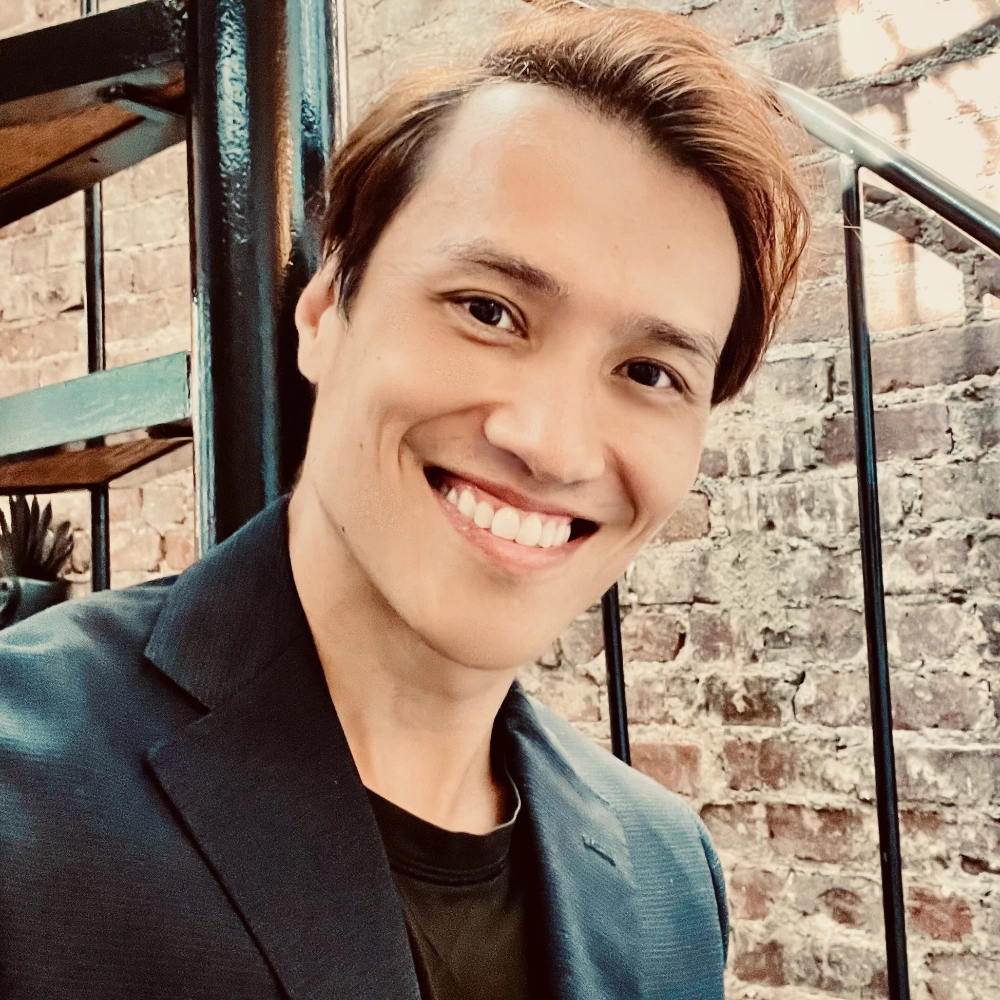
Wally Suphap (he/they) is a queer Thai-American writer, lawyer, educator, and social justice advocate based in New York City. His short memoir, Thirteen Ways of Interrogating an Incident, was the overall winner of the Fish Short Memoir Prize, and his essays have been recognized in the Writer’s Digest Personal Essay Awards and the CRAFT Hybrid Writing Contest. He has also received writing fellowships from the Asian American Writers’ Workshop, Hudson Valley Writers Center, and Anaphora Literary Arts. Born in Bangkok, Thailand and raised in the San Fernando Valley, Los Angeles, Wally holds a B.A., J.D., and M.F.A. from Columbia University, where he has taught scholarly writing, creative writing, legal writing, and journalism.


