

One sees all manner of life rock up in the waiting room of a doctor’s surgery. You have the red-faced teens with their embarrassing infections sat next to the bleary-eyed mammies comforting scabby-arsed babies. Then there are the worrywarts navigating the sniper’s alley of middle age followed by any amount of crumblies shuffling in to refill prescriptions as they gummily warn all and sundry that growing old is just a big feckin scam. And in between you have no end of blocked ears, black eyes, dicky tummies, and runny noses: a human petri dish teeming with life’s bruised and banjaxed in search of a sticking plaster. Gearóid Hearty notices none of it sitting there. A lanky restless streak with a puss on him like a dose of cholic, he’s recalling an earlier phone call from his GP asking him to drop in for a chat about some recent bloodwork. ‘It probably wouldn’t be the worst thing in the world, sez he, to bring along the wife. Now what d’ye think he meant by that?’ Gearóid’s voice has a quivering edge to it. Kneading his sweaty palms together as if in prayer, a nervous shudder ripples the length of his wiry frame. If a man could be said to resemble a hound, then Gearóid has the fidgety looks of an anxious Lurcher.
‘You’re getting yourself all worked up there now, Gearóid,’ says Margaret without looking up, browsing through a well-thumbed issue of Hello! magazine. ‘It may be nothing too serious.’
‘I mean to say,’ he continues, ‘you hear something like that from your own doctor and straightaway you think to yourself, Well that’s it so, I’m obviously fucked!’ To Gearóid’s way of thinking, this is the exact sort of thing a doctor might say to someone not long left for this world, someone who should prepare themselves for bad news and so should bring along some emotional support. A meandering pootle out to the boneyard in the back of a hearse, idling briefly outside his place of work as a mark of respect, is imminent, he feels.
No spring chicken, he’d lately been experiencing some problems in the downstairs department. Notwithstanding nebulous cramps in the bones of the pelvis and a gradual weakening of the bladder at nights, he’d also registered a noticeable decline in his sexual application. A growing source of concern to Gearóid, it wasn’t long before Margaret started in at him to make an appointment with Doctor Folan. People put great stock in Frank Folan. A veteran of the medical world, he knew the inner workings of the human body like the back of his hand. No nook and cranny went unchecked with Folan. If something was skulking nefariously beneath the skin or lurking inside in an orifice, he was the man to ferret it out. Not one to sit back on his laurels and allow disease to run away with itself unfettered, it was rumoured Folan could sniff out cancer like a truffle pig. Gearóid didn’t want to make the appointment, naturally, but then what man would. He belonged to that ancient school of Irish male thinking which maintained that if you ignored a problem for long enough it would eventually go away of its own accord. In the end, however, his wife’s nagging won out and so in he went and inside of ten minutes Folan had a needle in his arm for bloods and a KY-jellied finger jammed up his arse prospecting for lumps. That had been two weeks previous.
‘If it wasn’t for you peck, peck, peckin’ away at me like an oul mother hen to make that appointment, I wouldn’t be sat here today,’ whines Gearóid, lines of worry etched into his brow. The poor man is in the horrors, locked in morbid contemplation at the prospect of extinction. Margaret ignores him as she rises and treks into Folan’s office, her husband reluctantly trailing in after her with his head bowed as if she were leading him to the gallows. Sitting down, Gearóid warily eyeballs the doctor’s face for any possible indication that he might need to start getting his worldly affairs in order, but Folan is as inscrutable as The Sphinx. Folan is of island stock, a salty windblown class of people that only speaks to you when they have something very profound to say. Small talk is anathema to such folk. As he foosters about with his notes and fiddles at the mouse to pull up files on the computer screen, Folan repeatedly shakes his threadbare head in a slow purposeful way and exhales several deep sighs out into the room as if steeling himself to deliver a death sentence. Gearóid is now convinced he won’t see Christmas.
‘Thank you for coming in, Gearóid,’ rumbles Folan. ‘And yourself as well, Margaret, you’re very good to come along.’ With eyebrows like tumbleweeds come to rest on the downward slope of his forehead providing shade for wise, kindly eyes, and a lower jaw that juts outward into a savage underbite, Folan projects a grandfatherly air that normally puts his patients at their ease. ‘I’ll just come straight to the point, Gearóid. The results of the bloods are back in and they would seem to indicate…’
But Gearóid is out of the starting blocks before Folan can even finish his sentence. ‘Just give me the numbers, Frank!’ Gearóid blurts, the eyes in his head like small feral creatures.
‘Numbers?’
‘Time, Frank. Time! How long left in the tank have I got?’
‘Well now it’s very hard to predict these things with any real accuracy, Gearóid. Sure it’s hardly an exact science.’
‘Don’t keep me ignorant here, Frank. I need to know.’
‘I think you may be jumping the gun a bit here, Gearóid…’
‘Just tell me straight up, man. How long left have I got?’
‘Well if I had to make a good guess about that then I’d hazard around thirty,’ says Folan, ‘give or take.’
Gearóid feels as if he may keel over. ‘Weeks or months?’ he squeaks, reaching for his wife’s hand.
‘That would be years, Gearóid, barring you don’t get a smack off a bus or fall off a high ladder in a gust of wind.’ A rare smile tugs at the corner of Folan’s mouth. Gearóid gawps at the doctor as his brain scrambles to process the fact that he still appears to have a bountiful supply of tomorrows to look forward to. ‘You’re not quite headed for the departure lounge just yet, Gearóid, if that’s what you’re worried about. The bloodwork was all grand, everything more or less as it should be for a man your age. There’s not a thing wrong with you, touch wood, only the same manner of problem that effects most men as they start to get a bit older.’ Margaret is listening intently now, hanging on Folan’s every word like a magpie gleaning useful facts.
‘Men can feel a bit diminished in themselves at this time of their lives especially when they hit a few snags with the oul waterworks and things can seem to take a good deal longer to get going during intercourse. Some often get it into their heads that there’s something more sinister at work but there’s no blame for it. These are merely the first little whisperings of old age. I’ve always believed myself that couples should reach an emotional understanding of the problem and look for solutions together and so I asked you to bring Margaret along here this morning to chat to you both.’ As if struck dumb, Gearóid’s gob sags open, his tongue as immobile as a tasered slug.
They emerge from Folan’s office about twenty minutes later, the good doctor having set them straight on the tricky workings of the prostate and gradual decline of male virility with middle age. Solutions ranging from the pharmacological to the psychological have been discussed at length and both husband and wife have a faintly crimson sheen of mortification about them. ‘Well now I’d say that’s a savage weight off your mind,’ says Margaret, tentatively linking arms with her husband in an attempt to break the ice as they set off down the street towards the town centre. They face into a damp ocean breeze cutting in off the Clare coastline, gulls squabbling nearby over the battered guts of a discarded chip bag, but at least the rain has held off and there’s the promise of a lick of sunshine by the afternoon. She’d been hoping to reassure him and chivvy him back into good form but one quick glance tells her his mood is already turning to shite again. Gloom has descended like a murder of crows around Gearóid’s shoulders to feast on his insecurities.
‘What’s with the long face, Gearóid? Haven’t you just been told your health is grand. Sure what more do you want?’
‘Working equipment would be a good start,’ he whines.
‘And would you rather have cancer?’
‘Well, no, of course not, but it feels a bit like an out-of-the-frying-pan-and-into-the-fire kind of situation.’
‘Ah, Gearóid, it’s always the same way with you; Glass half empty. Straightaway you’re off looking for the negatives, even after a bit of good news.’
‘I wouldn’t expect you to understand.’
‘I understand far better than you think, mister! You can never just be content, forever hauling imaginary troubles around after you like a sack of rocks. You’re always worrying about the next thing.’
He stares after her then, gobsmacked, as she stalks off towards home. He thinks, perhaps, his situation warrants a second opinion.
Musing upon the fickleness of the human body, Gearóid sits watching his Guinness settle, the pale velvety head slowly ascending from the swirling maelstrom of the stout to softly crown the rich darkness beneath, the mesmeric emergence of order from chaos. Mid-morning sees him in The Lively Sup which is mostly empty except for a few rheumy-eyed patrons from the oul fella brigade shakily hoisting whiskeys or hand-poured porters up to toothless mouths. Tabloid newspapers are idly perused for the latest scandals. A game of chess is playing out with solemn intensity at a corner table. The atmosphere is occasionally broken by a hoarse, wracking cough, it’s owner wrestling up great gobs of phlegm as if from the tips of his toes. Presently, the roundly porcine face of Barty hovers behind the bar where he makes small meticulous adjustments to the assorted optics and taps. He turns and scrutinizes Gearóid with the unflappable bearing of an elderly publican well used to hearing the confessions of punters. He can smell melancholy at fifty paces and immediately registers Gearóid’s distracted, tense bearing. He senses counsel may be in order.
‘Jaysus, Gar, but you’ve a face on you like a dog’s arse. Is there something up with the pint?’
Gearóid looks up, caught on the hop. ‘No, Bart. Pint’s grand.’
‘What is it then? How’s Mags? I saw her in the post office only last week. She tells me Aisling and Aoife are doing well down below in Sydney.’
‘Oh, happy out, the pair of them,’ replies Gearóid, skulling a good third of his pint. ‘I can’t ever see them coming back to be honest. And sure why would they? Isn’t it pissing down here every other day of the week. But herself seems to know better. According to Margaret this is just a bit of galivanting they need in order to get everything out of their system after Uni. She reckons they’ll be back like boomerangs once they’ve had their fill of the place.’
‘I think I’d be siding with Mags on that one,’ says Barty. ‘A mother knows her daughters.’ Gearóid shrugs as if ceding the point. ‘So tell me, why the long face?’ Taking a deep breath, Gearóid launches straight into the specifics of his earlier GP visit, downing the remainder of his pint in the process. He holds nothing back for he wants Barty to have all the facts, full sure his barman will understand the root cause of his anxiety and empathize accordingly.
‘Sure weren’t you lucky to come away with your life!’ declares Barty at the conclusion of Gearóid’s account, putting the finishing touches on a fresh stout for him. ‘One minute you’re at death’s door and it’s all game, set and match, and the next it’s a false alarm. Anyone would be pleased with that.’
This isn’t quite the sympathetic response Gearóid had hoped for. ‘Now you sound like Margaret. She thinks I’m too fixated on the negative.’
‘And she’s dead right! You’d do well to listen to her a bit more. If I were you I’d be jumping for joy.’
‘I suppose,’ he concedes, ‘but still, it’s hard all the same for a man to accept that his sex drive is headed for the scrapheap, Bart. Some things are fierce important to a man.’
‘And so’s having a pulse!’ Barty replies. ‘Listen, Gar, there’s none of us immune to ageing. I know plenty of lads coming in here who swear by the little blue pills? Would you not maybe consider giving them a go yourself?’ Gearóid’s face runs red as a radish at the mere suggestion of this approach having already endured an earful on this awkward topic from Folan earlier. He’s eager for any distraction when one just happens to shuffle by en route to the jacks, the shrunken figure of Gus McCarthy cocooned inside a shabby herringbone overcoat that hangs to his ankles. Barty and Gus nod to one another in respectful acknowledgement, Gus pausing for a minute or two to exchange farmerish small talk with the barman before shuffling on. Returning his attention back to Gearóid, Barty is again struck by the uneasy bearing of the younger man and, for the first time also, the creeping shadow of worry that seems to lurk behind his eyes, an indicator no doubt of some deeper concern at work.
‘What’s really bothering you, Gearóid?’ Barty asks, his eyes narrowing, although he thinks now he can probably guess.
Gearóid fetches up a deep sigh and decides to come clean. ‘Listen, Bart, I know Folan is a good medical man and I’ve no business questioning his judgement, but I just can’t help thinking that this whole sex-drive thing might just be a sign of something much more serious in the post, if you get me.’
It is exactly as Barty thought. He smiles sympathetically and gives Gearóid a look that intimates some intuitive male understanding of his concerns, that one’s genes are as inescapable as gravity. He decides to go for the emotional jugular.
‘Martin’s anniversary is coming up soon, isn’t it?’
‘Next month,’ admits Gearóid. ‘He’ll be eighteen years gone this September.’
Barty nods. ‘And would I be right in thinking that you’d nearly be the same as him age-wise when he passed away?’
‘Only two more years to go,’ says Gearóid. ‘I’ll be 55 then, the same as him.’
‘That oul prostate cancer is some awful fucken dose all the same, isn’t it,’ says Barty. Gearóid nods gloomily and Barty knows he’s hit the nail square on the head. ‘Now you listen carefully to me, Gar,’ he says, clamping a pudgy, reassuring mitt down on Gearóid’s forearm. ‘There’s no heavenly rule says you’re destined to follow in your father’s footsteps when it comes to the health. At least you’re taking yourself in for the medicals and that’s more than I can say for most of the yokes that traipse in here day-in-day-out, including your dad when he was alive, God rest him. Something tells me you’ll have him well passed out in the end. Sure aren’t you still in the fit of your health. Stop your worrying now or you’ll only drive yourself and that poor wife of yours demented.’
Gearóid is in awe of Barty’s ability to see right to the heart of the matter, opening up a pathway to common sense. The fact that Barty is of his father’s vintage and a solid judge of character is also very reassuring. He feels a quiet relief waft through him.
Just then a creak from the jacks door and accompanying whiff of Harpic-laden air announces that Gus is on the turnabout having completed his ablutions. ‘You’re flying low there, Augustus,’ Barty points out as the old man shuffles past them a second time. ‘You’ll cause a stampede with the ladies.’
Gus pauses, rust-coloured fingers shakily fumbling his zipper closed before looking up with a bemused smile, the leftovers of good-looking still lingering beneath his leathery features. ‘Arra, you know yourself, Bart,’ he grins sheepishly, ‘a dead man never fell out a window.’
‘Happens to the best of us, Augustus,’ winks Barty, chuckling conspiratorially with his ancient customer. Witnessing this exchange Gearóid feels his face reddening again even though he somehow knows they’re not laughing at him, rather, sharing a private joke about the inescapable depredations of life. Just seeing how Gus has grown impervious to embarrassment and accepted the ravages of ageing is momentarily humbling for Gearóid and he feels a tinge of shame about all his whining lately, that perhaps things aren’t quite as bad as they could be. He knows only too well he’s sometimes inclined to go from nought to ninety and allow in morbid thoughts to rattle around inside in his head, thoughts on illness and mortality often fueled by vivid, traumatizing memories of his father’s final weeks doped up to his eyeballs and fading away before him in the hospice. Sometimes he wishes the most serious thing he ever has to think about is the rugby or the horses but his head just isn’t wired that way. Still, he accepts that every once in a while he needs to diffuse his concerns for his own sake and for the sake of his marriage. This little session in The Sup has eased his mind. There’s no set rule says you’re destined to follow in your father’s footsteps when it comes to the health. Blokes need that sometimes, the words of older men to ground them, even more so at times than the words of their wives who undoubtedly know them infinitely better than they know themselves. And so when the time comes for him to settle up and leave, he slips Barty an extra few quid with instructions to put one in the barrel for himself and Gus.
Gulls screech overhead with raucous belligerence as the town now thrums with lunchtime trade, traffic starting to gather pace along Main Street as folks head into the weekend. The air hangs heavy with the seaweedy tang of the nearby quays and the promised sunshine has materialized now to warm Gearóid’s face. He’s glad to be back outside in the clamouring brightness, aiming his feet towards home, his head less cluttered with worrisome thoughts and his glass seemingly half full again. At least for the time being anyway.
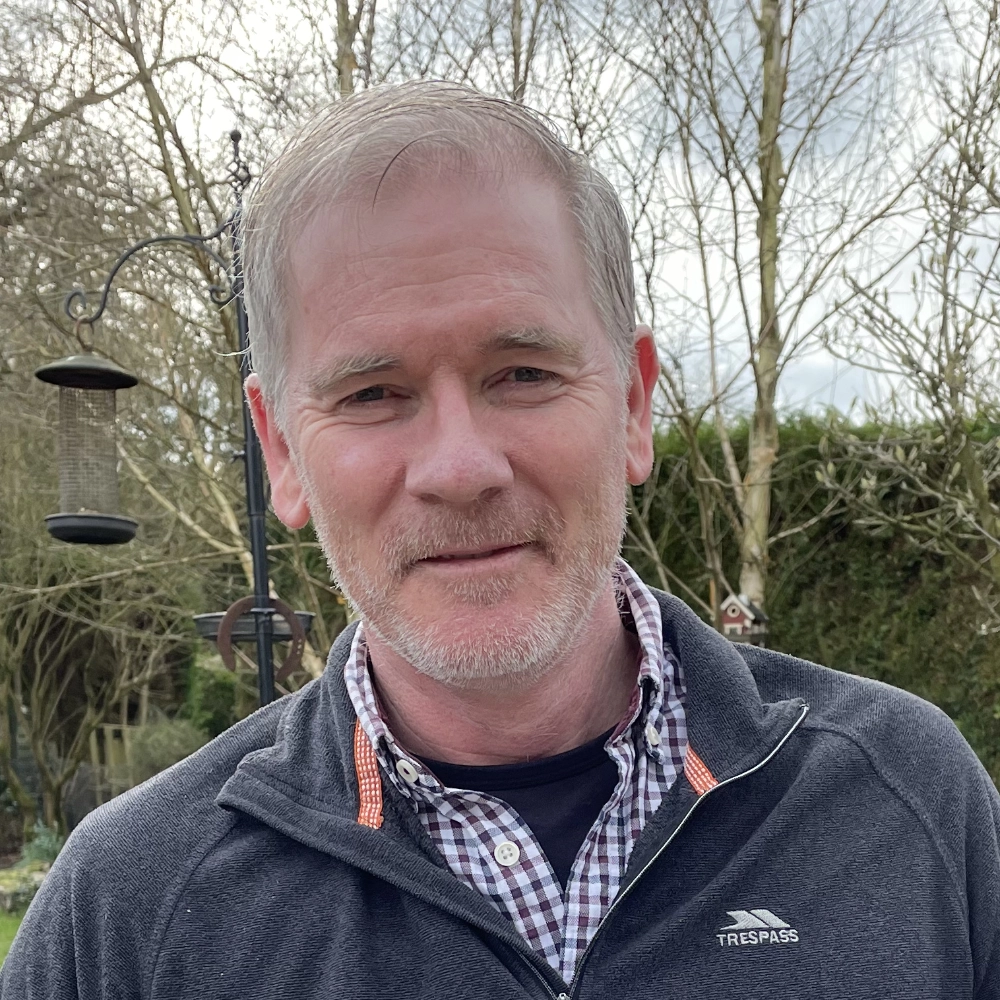
Phil Cummins is an Irish writer, based in Kildare. He has been published in Crannóg, Fictive Dream, Sans. PRESS, bioStories, Solstice Literary and elsewhere. His work has been placed in several competitions including the Fish Memoir and Short Story Prizes, Wild Atlantic Writing Awards, and Write by the Sea Award. He has also been nominated for the Pushcart Prize and Best of the Net. He can be found on Instagram: @profphilcummins


