

I don’t know his name, or what crime he was accused of, or whether he was guilty. We’re told that he composed a poem moments before the executioner’s blade fell. This suggests such remarkable equanimity that I find myself wondering if the sparse details I have about this event are reliably rooted in what happened. Perhaps they’re just invention, a make-believe cameo born from the imagination, rather than a documentary record chronicling a real set of circumstances. Or maybe it’s a cosmetic version of what someone witnessed, an embroidery done to gentle and obscure a bloody spectacle. The story of the poem could have been conjured afterwards as a way to mask the horror that unfolded in plain sight, helping those who saw it to eclipse from their mind’s eye the glinting blade and butchered flesh, focusing instead on birdsong and bravery. I’ve no way of establishing for certain if this beheading ever actually took place, or, if it did, whether it was marked by the condemned man showing such courage that he created a verse at the very point of his obliteration from the Earth. If it happened, it’s just as likely to have been a botched and brutal business unleavened by any trace of poise or self-possession.
* * *
Faubion Bowers’ anthology, The Classic Tradition of Haiku, includes this verse:
The rest of your song
I’ll hear in the other world
Oh, sweet cuckoo bird
It wasn’t the haiku itself that made an impression when I first read it, but the note that accompanied it: “As a condemned criminal was about to be beheaded, a hototogisu sang sadly. The executioners recorded his farewell words.” Other than this, we’re told very little. There’s no name given—the poet is simply listed as “anonymous.” We don’t know his age. Beyond Japan, there’s no indication of a specific locale. The haiku is dated vaguely as “belonging to Basho’s period.” This means we’re dealing with something from the seventeenth century. Matsuo Basho, the great master of the haiku form, lived from 1644 until 1694. The country was at that point in the grip of the Tokugawa shogunate whose laws punished a wide range of offences with death.
* * *
It would be easy to dismiss this sliver of verse as of little interest. It’s remote from me historically and culturally. It’s of uncertain, if not dubious, provenance. It’s drawn on such a small canvas—the traditional seventeen syllables of a haiku—that it surely doesn’t warrant much attention. These points notwithstanding, I’ve come to feel haunted by it; it’s lodged in my mind like a splinter. The reported circumstances of its composition, regardless of their historicity, have left a powerful impression. I’m drawn back to them repeatedly. These three lines have become one of those touchstones to which the mind keeps returning as it probes the world for sense.
Did the condemned man’s haiku really lodge in my mind “like a splinter?” Yes, “splinter” catches the persistence with which it niggles, the way my attention is repeatedly recalled to it. But it doesn’t do justice to its aliveness. This is no inert spike of wood that pierces the skin, its painful incursion something that can simply be plucked out and discarded. Rather, it possesses its own vigorous vitality. It’s like a tiny rogue cutting that has taken root, budding a rich growth of symbolic foliage and blossom. Or, given how it needles, perhaps I should strike out any image suggesting the softness of leaf and flower and replace it with something cactus-like or thorny.
I know the circumstances of this haiku’s composition point to an extreme and violent experience, one which—thankfully—few of us will have to endure ourselves. But the verse also speaks of something universal. I’ve come to see it as so steeped in the fundamental dye of being human that it reeks of our essential existential situation. It acts as a kind of beacon, pulsing out reminders of the reef of finitude on which, in the end, all our individual vessels founder. We may not have to face an executioner, but all of us stand condemned. In one way or another, we’ll meet the strike of whatever blade will kill us—cancer, stroke, heart attack, old age, accident. As David Shields puts it in his meditation on mortality, “The thing about life is that one day you’ll be dead.”
* * *
Although it’s rendered “cuckoo” in English translations, the hototogisu isn’t the common cuckoo (Cuculus sanorus) familiar in Europe but another member of the same Cuculidae family, the lesser cuckoo (Cuculus poliocephalus). Its song isn’t the simple coo-coo, coo-coo, coo-coo that gives the common cuckoo its name and that’s imitated by cuckoo clocks. The hototogisu’s song is a more complex affair that defies easy expression on the page. Although the name, hototogisu, is sometimes said to have been bestowed in imitation of its song, I don’t find this onomatopoeic explanation convincing. Rather than attempting some crude verbal approximation, it’s better for readers to seek out one of the easily available recordings online. Listen to one, and you’ll be hearing the same sound that our condemned poet heard in those last seconds of his life, waiting for the lethal blow. As you listen to the bird, imagine the scene as it unfolded four centuries ago. The anticipation of the sword’s arc and strike becomes almost palpable, its crude punctuation about to abort a life mid-sentence.
* * *
The hototogisu is a frequently encountered trope in Japanese art and literature. Whereas the European cuckoo’s call is taken as a sign of spring, and the bird is cast as a symbol for cuckoldry, in Japan the hototogisu is a harbinger of summer and the symbolism associated with it is more complicated. The song is sufficiently haunting that it came to be viewed as the lament of departed spirits mourning what they’ve left behind. Another reading casts it as a kind of theme for lovers, the melancholic accompaniment to the anticipation of assignations, the knowledge of their brevity, and the sadness that comes when a tryst is over and the lovers are parted. The bird finds a place in The Tales of Genji, and in Sei Shonagon’s Pillow Book. Since, traditionally, haiku contain a season word and are written in three lines of five, seven, and five syllables, the hototogisu’s association with summer and its name’s pentagonal form make it an ideal fit for writing in this mode. Indeed, Faubion Bowers goes so far as to suggest that it is “virtually synonymous” with haiku. It’s no accident that Japan’s preeminent haiku magazine, founded in 1897, is called Hototogisu, or that one of the country’s best known haiku poets, Masaoka Noboru (1867-1902) took the pen name Shiki. (Written in Chinese characters, “hototogisu” can be read as “shiki.”)
As with the theory that the hototogisu’s name is an onomatopoeic rendering of its song—something I simply don’t hear when I listen to it—so I think it’s far removed from the sound of someone coughing blood, another comparison that’s sometimes offered. I can’t hear this when I listen to the bird. I suspect it’s something that’s been transposed from a visual image to an auditory one. The bird’s open mouth is a bright blood-red colour. This looks dramatic when it’s singing and is probably the source of the belief that the birds sing so vigorously they cough up blood. When Masaoka Shiki took on his nom de plume, he was already suffering from the tuberculosis that killed him. The fact that the poet was coughing blood gave the pen name he chose even more appropriateness.
The hototogisu also features in the visual arts. It can be found in the work of Japan’s two great artistic giants, Hokusai (1760-1849) and Hiroshige (1797-1858). Hokusai’s “Cuckoo and Azaleas,” a woodblock print dating from around 1828, is perhaps his most famous rendering, though I have a liking for the subtler composition, “Cuckoo and Dandelions” from a 1796 album. Hiroshige’s “Cuckoo in Summer Rain Over Isozaki” is particularly striking, with the artist brilliantly catching the sense of movement in the cuckoo’s flight. The bird also features in Hiroshige’s great masterpiece series One Hundred Famous Views of Edo (1856-58).
* * *
The fact (if it is a fact) that the bird the condemned poet happened to hear was a hototogisu adds a wealth of culturally specific resonance to his haiku. But it would have made no difference to the essentials if he’d heard another species of bird singing. Yes, the hototogisu is appropriate to, and enhances, the mood of the moment—it carries a sombreness that fits the situation; its melancholy note stresses the transience and loneliness of our existence. But what gives this haiku the power to stop us in our tracks doesn’t depend on the particular symbolism carried by the hototogisu in Japanese culture. The force of its three lines comes rather from the stark contrast between life and death that’s loaded into the circumstances of their composition.
For me, this haiku possesses a universality of reference in the cameo scene that led to its creation. It’s not limited to one individual in one time and place. It doesn’t just address the terrifying specifics of an execution in seventeenth century Japan. Rather, it speaks to a fundamental moment that every one of us will go through: the transition from conscious being to nonexistence. The scene brought to mind by the condemned man’s haiku acts as an existential mirror, reflecting with chilling precision the fact of our finitude.
* * *
Did the hototogisu startle and fly—sounding its alarm call—at the swish and thunk of the swung sword? As the blade hit its mark did it cause all the birds in the vicinity to fly off in panic? Did the now dead poet hear the blow that killed him? Was the last sound of which he was aware the squawk and wing-flurry of the nearby birds, or was it the grunt of the executioner’s exertion? Did the lines of his haiku stay with him till the end, their seventeen syllables still flickering in his mind as the final seventeen beats of his heart pumped blood around his body and then, for a few moments, through the terrible wound that was inflicted, staining the ground around the executioner’s feet?
In Severed: A History of Heads Lost and Heads Found (2014), Frances Larsen touches on some disturbing experiments performed on severed heads when the guillotine first came into use. “The mechanism of the guillotine was so fast,” she writes, “that observers were left wondering whether death could occur so quickly: perhaps life persisted in these unfortunate heads after the fatal blow.” Some macabre investigations were carried out in the attempt to settle this question. Moments after decapitation, heads were shouted at and watched for signs of whether they heard, they were pinched and prodded to test for reaction, ammonia was held to the nostrils, lit candles brought close to the eyes. Heads, like bodies, can continue to twitch immediately after death. But what does such movement signify? Opponents of the guillotine read it as evidence that the machine, far from being a humane means of instantaneous dispatch, created horrific moments of consciousness when there was an awareness of what had happened. Is it possible the executed haiku poet saw the bloodied blade that killed him; saw his own headless body lying in the dirt? Did the moment of his death happen as cleanly, as decisively, as a song being abruptly stopped mid cadence, or was there an agonizing discord of more gradual fading out?
* * *
Sometimes when I read this haiku now, I find my thoughts going to the other end of the condemned man’s life. When was the first summer that he heard a hototogisu? Was he a tiny baby in a cradle, the notes falling unnamed upon his virgin hearing? Might he have been aware of the sound even before that, something heard gently muted through his mother’s flesh, a beckoning from the outside world that softly touched his awareness in the protective capsule of the womb? Perhaps at the very point of his conception, the moment his life took form from the egg and sperm that made it, a hototogisu was singing, its notes clearly audible to his parents as they lay clasped together in the embrace that made him. What sort of life did he lead? Was he loved? What work did he do? Did he go to bed well fed, warm and content, or was he often hungry, cold, dissatisfied with his lot? What were his dreams? Who were his lovers? Did he have children? When was the last time he was kissed? How many times had a hototogisu’s song fallen on his consciousness before the one that sang him to his end?
Thinking about his life in its entirety makes me wonder about beginnings and endings. In one sense, yes, of course, the haiku poet’s life started at the moment of conception and ended with the stroke of the executioner’s sword. But thinking beyond these two obvious punctuation marks, how does that period of individual existence relate to the family bloodline that birthed it, and how does that bloodline, in its turn, stand in relation to the species-lineage within whose network all of us are cradled? I picture the life-song in which the condemned poet sang his part, its harmonics sounding through the generations of ancestors that came before him, couple after couple, stretching back through time. And if he did have children of his own, that bloodline continued to echo after him. Perhaps notes from it are still evident today in the children of his children’s children. Listen closely to the hototogisu’s song and it soon spirals into questions about the very nature of our existence.
* * *
The rest of your song
I’ll hear in the other world
Oh, sweet cuckoo bird
The haiku admits of other renderings into English. Arguably, it’s better to leave hototogisu untranslated. Toshio Tsukahira’s version of it as “Oh, sweet cuckoo bird”—in the Bowers’ anthology—sounds slightly stilted, and the introduction of “bird” is surely questionable, a redundant addition brought in simply to maintain the syllable count. We could have:
Hototogisu
In the next world I will hear
The rest of your song
Or
In the realm of death
I’ll hear your song’s conclusion
Hototogisu
Or
Hototogisu
The rest of your song I’ll hear
In the world beyond
But however we tinker with the wording, it’s clear enough what the poet is saying. He knows his hearing of the cuckoo’s song is about to be brutally interrupted. On the brink of that terrible moment, did he really believe he’d hear the rest of the song post-mortem? What he always took for “I,” his sense of self, what he felt as “me,” was surely intimately bound up with his physical form, the undamaged integrity of head and heart and blood and breath and body. Once the head was severed from the torso, the blood pooled on the ground, the breath stilled, the body’s warmth cooled, it’s hard to see what form of continuance that sense of “I” and “me” could have. With its familiar form so violently dismantled, how, where, in what manner could the rest of the hototogisu’s song be heard?
* * *
For centuries, humans have variously believed in some innermost essence—a soul or spirit that constitutes our true self, our fundamental identity, the nub of our personhood. And this abiding, but elusive, element is thought to somehow survive our corporeal disintegration. It is ethereal, non-physical, able to persist independently of our fleshly forms. From the earliest traces left by our prehistoric ancestors, right up to the varied immediacies of outlook that flourish in the world today, a powerful recurring theme in humanity’s search for meaning is the idea that, despite appearances, death does not mean the end of us.
In his Wilde Lectures on Comparative Religion, delivered at the University of Oxford in 1972 and published the following year as The Sense of God, John Bowker pictures religion as an attempt to plot a meaningful way through the impenetrable and frightening limitations with which our lives are hedged. The unforeseeable nature of the future, the unreachable presence of the past, always at our heels, forever unalterable, no matter how much we might ache with regret and want to change what happened, the randomness of suffering, the fact of death—such things Bowker presents as limitations which threaten to circumscribe our existence and rob it of any sense of sense. The most threatening and intransigent of all limitations, says Bowker, is that of death. Religions variously attempt to forge a way through it by means of rituals that are sufficiently rich in symbolic associations that meaning seems assured. So, for example, burying a body “gains suggestive confirmation from the burial of a seed and the growth of a new plant.” Or, tapping into a different key of association, burning a body “gains suggestive confirmation from the observation that burning anything releases something into the air, and leaves only a changed and much smaller part of whatever was there in the ashes.” In the same way, floating a body out to sea “gains confirmation from the observation that salt dissolves in water.” Bowker proposes that religions should be thought of as “route-finding activities, mapping the paths along which human beings can trace their way from birth to death and through death.”
I have many doubts about the extent to which religions can offer reliable routes through life, still less that they can somehow liberate us from the “limitations” Bowker identifies. Indeed, such limitations might better be seen simply as conditions of life rather than constraints; they are things that define as much as threaten us. Does it make any more sense to say that we need to find a “way through” the “limitation” of oxygen dependency than it does to say that we need to find a way through death? Breathing and mortality are fundamental characteristics of our existence, not unnatural hurdles that stand in the way of its fulfilment and have somehow to be overcome. This (serious) criticism apart, I think Bowker does put his finger accurately on an important part of the consolation religions offer in the face of things that are hard to bear, via their store of comfort-giving symbols.
Doubtless the condemned poet’s outlook was informed and influenced by the specifics of whatever ideas dominated the particular niche he occupied in seventeenth century Japanese society. We’re all shaped by the milieus in which we find ourselves. But however Buddhism, Christianity, Confucianism, or Shinto may have coloured his worldview, judging by the verse he left, he saw death as a threshold not a terminus, a crossing over rather than a crossing out—in Bowker’s terms, he believed in a way through the limitation of death.
How did he picture the coracle of continuance in which his self would sail unharmed across the gulf of his execution? Where did he imagine it would take him? However he imagined it, I hope it was seaworthy enough to give him comfort in those last terrible moments before catastrophic injury was inflicted on him.
* * *
Words seem prosaic when compared to ideas of an eternal soul. But it was into their keeping that the poet consigned his last impression of this world, words coloured with his belief that he would exist in another one. Whatever view we take of his continuance beyond the moment he described, his description has been preserved for four centuries and has travelled across thousands of miles to reach me and to spark these musings. Thinking about the poet’s words, and how they hold a trace of his belief in his own survival, reminds me of a comment of Sven Birkerts’: “Language,” he says, “is the soul’s ozone layer and we thin it at our peril.”
One source of thickening this essential layer, and a source that our condemned poet was almost certainly drawing on, if not self-consciously contributing to, is a Japanese tradition that was well-established by the time he faced his executioners. Yoel Hoffmann notes how in Japan, as elsewhere, it was customary “to write a will in preparation for one’s death.” But he reckons that Japanese culture is “probably the only one in the world” where, as well as leaving a will, “a tradition of writing a farewell poem to life (jisei) took root and became widespread.”
The rest of your song
I’ll hear in the other world
Oh, sweet cuckoo bird
This haiku would certainly not be out of place in Japanese Death Poems, the anthology of jisei that Hoffmann has compiled. Predictably, he includes many haiku—composed by a range of poets—where the cuckoo provides a central point of reference. To give just a few examples (and note that the syllable count is not maintained in the English translations):
Looking back at the valley
No more dwellings
Only the cuckoo’s cries
Cuckoo,
Let’s go – how bright
The western skies!
At the crossroads
Of my life and death
A cuckoo cries
The cuckoo’s voice
Is all the more intriguing
As I die
Whether it was self-consciously composed as a death poem, or simply as a spontaneous haiku sparked by hearing a hototogisu singing as he awaited execution, our poet’s verse, however long it has preserved his words, however far it has conveyed them, carries no trace of the unique personality of the speaker, with all its quirks and idiosyncrasies—who he felt he really was, his essential self. It is this, crucially, that we’re faced with losing. Belief in a soul negates the loss by claiming that it doesn’t really happen—that our essential identity is somehow fireproofed against our physical annihilation.
* * *
The tradition of writing a poem at the point of death may be specific to Japan, but there’s a widespread interest in people’s last words—as if the timing of their utterance, on the extreme edge of their existence, poised on the precipice of nonbeing, bestows some special significance on them. Air travel is probably the nearest most of us come these days to the sense of imminent extinction that the condemned poet must have felt as he listened to the cuckoo singing moments before his execution. Mostly, of course, our air miles pass in a blur of routine order and comfort, if not boredom. It’s only when some glitch threatens the accustomed smooth unfolding of things that the equivalent of an executioner’s sword seems pressed against our jugular. In Can’t and Won’t, Lydia Davis provides a striking account of the way she was affected when an emergency situation occurred on a flight she was on to Chicago. What went through her mind is surely not an atypical reaction:
Our lives might almost be over. This required an immediate reconciliation with the idea of death, and it required an immediate decision as to the best way to leave this world. What should be my last thoughts on this earth, in this life? It was not a matter of looking for solace but for acceptance, some way of believing that it was all right to die now.
Davis’s words seem almost like a kind of prose death poem. Of course, the difference between them and the writer of the hototogisu haiku is that Davis survived to write them herself. Unsurprisingly, her most immediate concern was “to say goodbye to certain people close to me.” Following that imperative, she tells us that:
I had to have a larger thought, for the very end, and what I found to be the best thought was the thought that I was very small in this large universe. It was necessary to picture the large universe, and all the galaxies, and remember how very small I was, and that it would be all right that I should die now. Things were dying all the time, the universe was mysterious, another ice age was coming anyway, our civilization would disappear, so it was alright that I should die now.
Obviously, all of us eventually reach the same mortal destination. But before we die there are often instances—like the one Lydia Davis details—when death comes uncomfortably close, but then its threat is lifted—postponed—and our lives continue, as if the haiku writer’s executioner shrugged, put down his sword, walked away, leaving the condemned man free to go, the hototogisu’s song still ringing in his ears.
* * *
What was his crime? Was he guilty? In seventeenth century Tokugawa Japan—as in seventeenth century Europe—there was a long list of what we would view as trifles, or at most minor misdemeanours, that carried a death sentence. Perhaps, like Cincinnatus C, the protagonist in Vladimir Nabokov’s novel Invitation to a Beheading, he stood accused of “gnostical turpitude” and was put to death simply for the “crime” of being different. Or perhaps he had indeed committed some monstrous deed. It could be that he was a murderer, kidnapper, or rapist. Goodness is not a prerequisite for writing verses; there’s not necessarily any correlation between composition and compassion, creativity and concern for others.
I prefer to think of him as innocent, a blameless victim—or someone who fell foul of what, to our 21st century eyes, would be viewed as a trifling matter. I suspect it’s because the haiku is written from his point of view that I want to exonerate him from any wrongdoing. The power of perspective—even in what is the merest fragment of a story—the way words act to make us see things from the standpoint of the speaker—is a potent force. As the teller, the narrator, he beckons us to align ourselves behind him, to look at the world from his position in it, despite its extreme precarity. Doing so is part of what invests his haiku with such impact.
As the hototogisu signalled the arrival of each summer after each winter’s silent absence, at which point in the turning of the seasons did the course of the condemned man’s life torque and shift and settle into the shape that led to the crime—if he did commit one—for which his life was forfeit? Would it have been possible for him to have taken different turns, or was his life always locked into the pattern that led to that last haunting haiku? Are we fixed immovably into destinies we can no more change than the cuckoo can change its song, or are we free to choose one path over another, sing different melodies to the ones that seem to be laid down for us?
* * *
It can be shocking to recognize how slight the margins are between events that spell annihilation and those that allow for our continuance. Consider, for example, the case of Ruth Hamilton. On the night of October 3 2021, she was asleep in her home in the small Canadian town of Golden, in British Columbia. Far overhead an asteroid, estimated to have been in space for some four billion years, broke up as it entered Earth’s atmosphere. One of the chunks that fell weighed 1.3 kilos. It crashed through the roof of Ruth Hamilton’s house and landed on the pillow right next to her head. Writing about this meteorite in Queen’s Quarterly’s Fall 2023 issue, Peter Jedicke notes how the asteroid it was part of had been in space “since the very beginning of the Solar System.” Then, “about half a billion years ago,” a “gentle nudge” from planetary gravity set it on a course that, eventually, resulted in its collision with Earth. Think of the different outcomes there could have been over the vast reaches of time and space involved. Think of how little would have needed to be altered for this piece of rock to have broken in a different way, fallen in a different trajectory. If it had fallen a few millimetres from its point of impact, hitting Ruth Hamilton’s sleeping skull with far more force than an executioner’s sword, would she have joined the haiku poet in that other world he seemed to believe in? Might they have spoken of cuckoos and asteroids? Or of the billions of other souls in the world who existed between the sword’s blow and the meteorite’s skull-smashing impact? Thinking of the sheer numbers of individuals who have come and gone over the centuries surely adds a heavy straw of improbability to any camel we laden with the idea that, somehow, all of us survive for ever.
* * *
In his elegiac meditation on birdsong during the COVID-19 pandemic, Birdsong in a Time of Silence, Steven Lovatt at one point describes birdsong as “an almost forgotten aspect of the grammar of reality.” I like that phrase – and the way that Lovatt, by using it, recognizes the wider significance of a phenomenon too easily dismissed as trivial. If we listen closely to the hototogisu in the condemned poet’s haiku, it offers insight into the nature of being, reminds us of the delights and perils of consciousness, its non-negotiable transience, and the questions that it raises. In short, it helps us to parse the grammar of reality, reminding us of life’s essential structure and dynamic.
* * *
Like so many members of the Cuculidae family, the hototogisu is a brood parasite, laying its eggs in the nests of other birds The hototogisu often chooses nightingales. Sometimes now, when I think of how the condemned poet’s haiku has lodged in my mind, making me return repeatedly to the circumstances of its composition, I think the verse itself has some of these same parasitic qualities. Out of the egg it’s laid hatches a reminder of the grammar of reality. It ejects from the mind any facile imaginings of happy-ever-after endings and prompts a sense of wonder – albeit tinged with terror – at the astonishing fact of existence, the uncertainties that attend our life-songs, and the nature of the mysterious scores they follow. It reminds me of the extent to which we’re caught on a shifting network of contingencies whose tangled interconnections and outcomes dictate the course our lives will follow and the span of years they’ll last for.
The great essayist Michel de Montaigne took the view that, essentially, philosophy is concerned with learning how to die, and he expressed the wish that he would die well. By this he meant dying patiently, quietly, and without fear. How someone meets their end struck him as an important indicator of how well they’d lived their life. Montaigne would, I think, have approved of our condemned poet, listening to birdsong and composing his haiku in those final moments before the sword cut him down. Montaigne said (in his essay “That to philosophize is to learn to die”) that he wanted death to find him “planting my cabbages, but careless of death, and still more of my unfinished garden.” I warm to that image: at work in the garden, planting vegetables, and thinking neither of death, nor of the weeding and pruning and other chores that need to be done elsewhere in the garden, but simply concentrating on the practical task in hand. Can we steel ourselves in advance so that we meet death with the aplomb of Montaigne and the haiku poet? Realistically, by the time most of us reach that point in life, we’re unlikely to be thinking clearly. Age, pain, disease, medication—singly or in combination—will probably have dulled, reduced, or stolen away completely whatever cognitive powers we had. But however our quietus comes, and however we face it, we know—with a certainty that can occupy the mind’s nest like a monstrous cuckoo chick—that one day, one night, our life-song will collide with extinction. Whether there’s more of it to hear beyond that point, whether we’ll still be able to sing it, or to hear it, takes us into realms that are pitched at frequencies far beyond the hototogisu’s haunting range and rhythm.
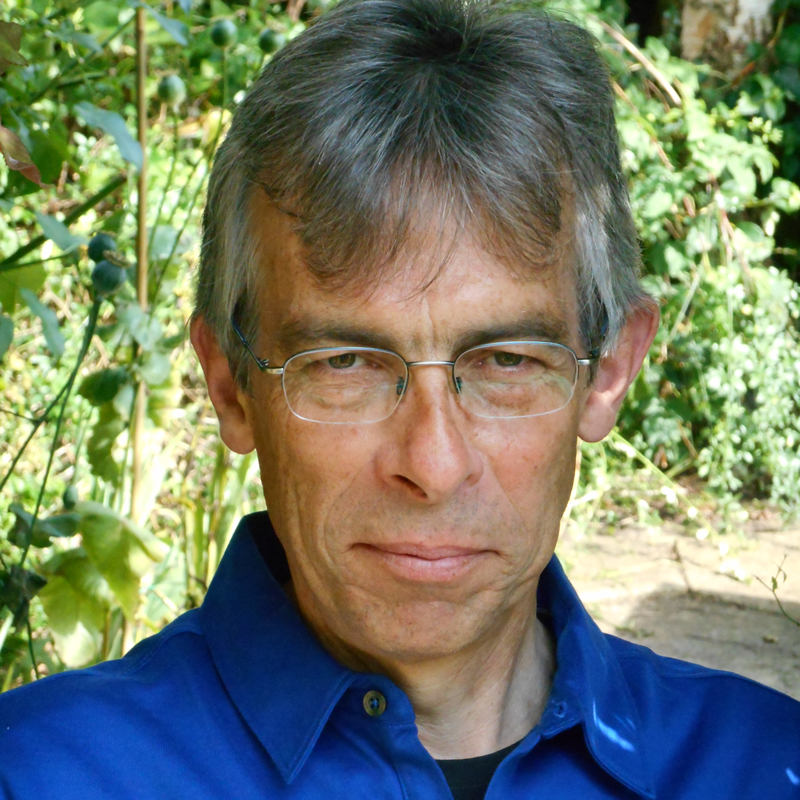
Chris Arthur is a Northern Irish writer currently based in Scotland. He’s author of several
essay collections, most recently Hidden Cargoes (2022), and has published in a range of
journals. His awards include the Akegarasu Haya International Essay Prize and
the Sewanee Review’s Monroe K. Spears Essay Prize. His work has appeared in The
Best American Essays and is often included in that series’ ‘Notable Essays’ lists. His
new collection, What is it Like to be Alive? Fourteen Attempts at an Answer will be
published in September. For further information about his writing
see: www.chrisarthur.org.


