

At the end of “Barbie,” different models through time flash on the movie screen alongside the credits. It was then that I remembered I own a Barbie. I had never played with dolls as a child, but “Going Home Barbie” was a gift when I adopted my daughter.
I traveled to China in 2002 to meet her when I was 37 and single and she was almost two. My parents had immigrated to the US from China before I was born, but I had never been there. My adoption agency arranged for each travel group to stay at a five-star hotel while we waited for the US Embassy to produce the children’s visas. With an ornate lobby, high chairs at every dining table, a colorful playroom, and a concierge who directed parents to the Hard Rock Cafe, the hotel had the monopoly on adoptive families from the West. In that year alone, about 6100 children were adopted to the US from China.
Amidst this festive atmosphere, a “Going Home Barbie” welcomed my new daughter and me to our crib-equipped room. The box stated the doll was a “souvenir presented by Mattel to adopting parents of Chinese orphan children staying at the White Swan Hotel, Guangzhou, China.” Focused on air-conditioning and bonding, I did not examine my irritation about this gift. Adoptive mother Barbie had long blonde hair, periwinkle deep-set eyes, pink lipstick, a pink dress, and heels. She held a baby with a black bowl cut.
I shoved the pink box decorated with butterflies, flowers, and clouds into my suitcase. I could not have predicted the doll would become a collector’s item on eBay. I could not have told you intercountry adoption is a billion-dollar business. Hiding Barbie in the storage closet when we arrived home, I chose not to question uneasy feelings.
Digging my Barbie out spurred me to interrogate all that was cringy since I decided to adopt. I could no longer disregard discomfort about the system and my participation in it.
From middle school, I knew I wanted to be a mother. The autobiographical The Family Nobody Wanted introduced me to the idea of adoption. The author was the wife in a white Christian couple who believed “all races were basically alike underneath…Any American child of dark skin must learn to adjust to a ‘white’ society.” I must have accepted this assumption of assimilation, because it matched how my parents were raising me. In adulthood I realized how the silence surrounding daily stares, taunts, and stereotyping stunted my awareness of my difference and pride in my identity. Knowing what it’s like to grow up Asian in America, I can’t explain why I didn’t pause at mothering an Asian American who is also adopted. I can’t explain why I ignored the missionary couple’s color-blind stance as detrimental to healthy development.
As I entered my 30s, China’s foreign adoption apparatus gained steam. Since 1979, China’s One Child Policy had controlled population growth by discouraging couples from having large families. The government charged insurmountable fines to register over-quota children. Unwilling or unable to pay, many birth families made the heart wrenching decision to secretly leave babies to be found and brought to orphanages. Most were girls because if you could only have one child, boys were preferred in the mostly agrarian and patriarchal society.
Simultaneously, the “demand” for healthy babies for couples in the West struggling with fertility had grown, partly due to abortion access for women who previously would have become birth mothers who placed their children for adoption.
Adoption from China made perfect sense as a way for me to become a mother. I did not allow myself to think about any downsides, like the damage to my child’s birth family, nor the losses she would suffer from leaving her home country. I focused on the child’s need for a parent, our ethnic match, and how no birth parent involvement would be simpler for me.
I can’t remember when I first questioned adoption as all good. I’ve scoured my memory for moments of uncertainty. If I am honest with myself, I disregarded niggling doubts before and during my decision-making.
When the 1995 documentary “The Dying Rooms” came out, I did not watch it. Reporters with hidden cameras visited orphanages in China and found abject neglect. Having read the headlines, I probably thought, “Well, not all orphanages are like that.” While writing this essay, I watched the grainy footage of desolate conditions and silent emaciated babies with empty eyes who had concluded cries did not elicit attention. My jaws tightened and the muscles around my eyes clenched. I didn’t want to see. Had I viewed the film before adopting, I might have hesitated, but I can’t honestly say I would have found a different way to become a mother.
Instead of viewing the film, I attended an adoption conference and found myself one of the only participants of color. Adoptive parents and adoption professionals who controlled the uniformly cheery portrayal of adoption were almost all white. I did not roll my eyes at euphemisms like “red thread,” a term from Chinese folklore suggesting an intentional connection between Western parents and Chinese orphan children. I passed over kitschy talismans of luck, like ladybugs, which suggested adoptive parents and children were “meant to find each other.” Rather than question the need for propaganda, I welcomed signs I was doing the right thing.
Around this time, acquaintances who had adopted internationally exuded joy. At my workplace, one white mom adopted two children from Guatemala, and another adopted from Ethiopia. I had plenty of company in forming a “family nobody wanted.”
I thought I had considered every aspect of adoption from China. I read books written by scholars, who had themselves adopted girls from China, about the fallout from the One Child Policy, with titles hinting at rescue like “The Lost Daughters of China” and “China’s Hidden Children.” The authors described their own journeys to motherhood and searched for how to explain the political and social conditions in China that led to children being adopted abroad.
I knew I would have to explain how birth mothers arrived at giving their children up for adoption. I read “The Girls Who Went Away,” in which the author, a domestic adoptee, compiled interviews of birthmothers pre-Roe vs Wade, many of whom were coerced into placing their children for adoption and lived the consequences daily, decades later. Another book, “I Wish For You A Beautiful Life,” compiled sorrowful letters from Korean birthmothers to the children they had surrendered. Their lasting grief brought a familiar lump to my throat. I vowed to honor my future daughter’s birth mother, especially every birthday and Mother’s Day. As if these Hallmark holiday gestures could assuage her hurt.
To reduce expenses, I had a friend move into my apartment. During one of our first dinners together, she said, “I think it’s important to tell you, since the reason you took a roommate is to save money for adopting, I am a birth mother.”
I processed my surprise. “What?”
“I got pregnant my first year of college and gave him up for adoption.”
My first thought was, “I hope I haven’t said anything insensitive about birth mothers.” What if I had uttered something in her presence like “How could someone give up their baby to a stranger?” or “Why didn’t they use birth control?”?
She shared about the lifelong ramifications of the closed adoption her parents chose for her. I witnessed the sorrow and longing, fifty years later, she felt. Not a day passed without her thinking of him. Once her firstborn turned eighteen, she registered both their names, his birth date, and birth place in every adoption registry, hoping to reunite with him. She died years later without ever having met him.
Still I forged ahead to adopt from China. My adoption agency had me create the required dossier including a personal statement, financial statements, medical report, home study, affidavits explaining I was heterosexual and why I was still single, photos of my car and home, and more. I also checked the boxes for a child “as young as possible” and “with no special needs.” I wanted to believe I was doing good, but only if it did not complicate my life.
The pioneer in intercountry adoption is South Korea, which started exporting mixed race babies born in the 1950s to American soldiers and Korean women. We now know through South Korea’s Truth and Reconciliation Commission investigations its government adoption system violated human rights by changing children’s names, labeling children abandoned when they were not, and lying to birth families about their newborns dying, all for financial gain. Similar reports have begun to emerge from China, that loving birth families going through hard times were also tricked by corrupt government employees. Birth families may have returned to orphanages in better times to reclaim their child, only to discover them gone without their permission. Crooked intermediaries could have threatened or bribed birth families into giving their children up.
I must have been so wed to the idea of adopting a Chinese girl, I filtered what came into view. I chose not to watch certain documentaries, not to contend with my roommate’s daily anguish, not to analyze the lack of racial diversity in adopters. Instead, I concluded adoption was mutually beneficial for a child without a family and for a single woman who wanted to be a mother.
Time passing would make me see things differently.
Nine months after submitting my dossier, I arrived in China. My travel group started off in Beijing to sight-see before we met our respective children in other cities. I was suspicious as our tour bus guide told us we had an hour to shop in the government sponsored store we had just pulled up to.
We stepped into a vast warehouse with concrete floors, fluorescent light, and lots of red and gold. I don’t remember how the store was organized, but I imagine big numbers above each aisle, because otherwise they would be impossible to distinguish. “12” for jade pendants, “13” for paper cuts, “14” for Tang outfits. Calligraphy scrolls lined the walls, leaving not an inch of uncovered space.
I heard the other parents “ooh!” and “aah!” with excitement over the exotic trinkets they planned to give to their children each year on “Gotcha Day.” “Should we put this Chinese poem on your wall? We got it in China when we met you!”
Even though I am Chinese American, my childhood home lacked these goods, too. My parents never celebrated Lunar New Year with us in North Carolina. Their own childhoods in China included Japanese occupation, family separation, conversion to Christianity by missionaries, and aspiring to whiteness. By the time they moved to the US, not only had their knowledge of traditional Chinese practices been diluted and possession of Chinese artifacts disappeared, the goal of acculturation dominated.
I did not know then I had the“privilege of authenticity.” My daughter would not pose in bright, embroidered outfits each successive Lunar New Year. These marked up items were material symbols of a foreign culture to decorate my travel mates’ walls, so their children would see their “homes” reflected thousands of miles away. These couples took this rare chance to acquire cultural mementos for their Chinese children, but like my parents, decorations were not one of the ways I chose to reinforce identity.
Our next stop was finally meeting our daughters. Many images from the day my daughter and I met in her orphanage city of Hefei remain indelible. One is the moment the middle-aged caregiver entered the city office carrying a howling child, and I recognized the same child whose referral photos I had first seen months ago.
Her open mouth took up half her face, her eyes squinted shut, and seeing her so distraught made me start crying. At the same time, I thought her wails were a healthy sign. For twenty months her daily routine had probably never wavered. Today it wasn’t even 9 am and she had already had many firsts – new clothes, a car ride beyond the orphanage gates, and strange people passing her around. While I signed paper after paper I couldn’t read, she fell asleep in my lap. I thought that, too, was an adaptive response.
After we had shopped for formula and diapers, we returned to our hotel for an early afternoon nap. It might’ve been our first alone moment. She was small enough to lie flat on top of me, belly to belly. I hoped she would rest, because I for one was exhausted from so many emotions. That first feeling of her relaxed weight and light breath is still one of my go-to happy places. I had faith my new daughter falling asleep on me meant she already trusted me.
The hot and muggy July day after, we went for a walk in the park. After a while, my tired daughter declared she was done with the outing by sitting down on the crowded path. I tugged her, but she stayed with her head and torso bent over her outstretched legs. Rather than pick her up, my travel companions and I kept walking slowly, assuming she would try to catch up, as most toddlers would. But she was unconcerned with tracking our whereabouts, because she had never had anyone to track.
Amongst the many healthy behaviors I studied in those first hours and days, here was the first act I attributed to her twenty months in an orphanage, where the ratio of staff to child was 1:20, formula bottles propped on blankets fed infants, and schedules rather than cries dictated diaper changes. In her experience, no single person was ever responsible for what happened next. So why would she wonder whether we were waiting for her?
Perhaps I chose to focus on her “typical” behaviors because now that she had a mother, I needed the narrative to be “everything is OK.” General wisdom based on one study of orphanages was every three months of institutionalization translated to about one month of developmental delay. I worried about cognitive or other challenges, instead of facing unanswerable questions that would surely arise. How did her birth parents proceed with their lives? Did they grieve every day? How does race play into an adoptee of color’s identity development? Would her sense of belonging be even more challenged than mine was? Had my child’s birth family been vulnerable to bribery? Why had terms like “abandoned” and “unwanted” been replaced with euphemisms like “left to be found” and symbols like butterflies and hearts on triangles? How had my education, class, citizenship, race, and sexuality endowed me with the privilege of mothering someone else’s child? Of choosing what to teach her about her “home” culture or language?
Since my daughter and I met in China twenty-three years ago, the closet door has come unlatched, and these questions spill out. For the most part, her childhood was unremarkable. That she was adopted and grew up in a biracial and bicultural family were backdrops rather than central to the day-to-day, but now I recognize important moments in her life as signs of my shifting perspective about how we became a family.
Her white father and I got together after I adopted her. We wanted to foster pride in her identity as an adoptee and as a Chinese person. We followed all the usual wisdom for adoptive parents. Make sure she always knew she was adopted. Normalize conversations about birth parents. Make friends with other adoptees. Visit China when she is old enough to remember, but before puberty, when she might become less open, more sullen and rebellious.
We had a whole shelf of books about different kinds of families. Well-meaning white colleagues gave me “I Love You Like Crazy Cakes” when I left on family leave. Written from the perspective of a single white adoptive mother, it opens with “Once upon a time in China there was a baby girl who lived in a big room with lots of other babies.” As if her life started there.
In some of the picture books, birth family members may be mentioned, but we learn nothing of their daily lives and their sorrow. “The Best Single Mom in the World” devotes one line to the original mother: “Your birth mother wanted the best for you, but she couldn’t take care of you.” In “We Adopted You, Benjamin Koo,” after speculation on how Benjamin ended up in an orphanage, his adopted life begins on page 2 with “Now comes the happy part of my story.” Even “Letter of Love from China” written in the voice of the birth mother is silent about the circumstances that led her to relinquish.
How did I fail to notice the books excluded birth parents and glossed over upsetting parts of the adoption story? If we fear telling our children the truth and omit it, do we think they will not arrive at the truth themselves?
The first time my daughter expressed grief over why she was adopted was in sixth grade when she was asked to write about a time when she displayed courage. She wrote about responding to other kids’ shocked reactions when her dad picked her up from her afterschool. The scene required explaining China’s One Child Policy. One sentence, “My birth mother could not keep me because she was poor,” was inaccurate, but she kept not revising it.
I commented again in the next draft, “That’s not necessarily true.”
Later, on the way to gymnastics practice, my daughter said, “Why do you keep saying that?”
“Because we can’t assume she was poor.” No response from the back seat. “I mean, she probably was, but she might have had plenty of money. If she could only have one child, she might have preferred a boy.” More quiet. When I made eye contact with her through the rearview mirror, her face broke up.
“Do you know how that makes me feel?!” Tears streamed from under her palms. Her nose began to run. I chided myself for my matter-of-fact insensitivity. “You don’t understand! She didn’t want me!” She felt the impact of her birth mother’s decision for the first time, even though we had gone over and over it for a decade. I searched for the right thing to say, when nothing could make the truth less hurtful.
In her teens, my daughter asked, “How much did I cost?” As much as I had predicted this common adoptee question, it jarred me. My first response was evasion: “You’re priceless.” Was I stalling to think of a better answer? Was I ashamed that there was a price at all? Did I want to hide the transactional nature of how we became a family?
She rolled her eyes. “You know what I mean!”
The adoption costs involved a social worker’s home study, an adoption agency in each country, one city registry office, tips for all of our guides and interpreters, and two weeks of international travel for my two travel companions and me. Her orphanage required a cash donation specifically in “brand new one hundred dollar bills.” I still have the labeled, now empty, envelopes that held the money for each step.
“The process cost money, but I didn’t buy you,” I told her. The moment passed, she didn’t probe, and I wasn’t ready to think about the psychic and emotional expense to adoptees nor to their birth families. I also didn’t know that for Korean intercountry adoption, both the Korean government and receiving countries had monetary motives for increasing the speed and the volume of children being adopted out. Time will tell whether that was the same for the Chinese adoption program.
The National Association of Black Social Workers has always opposed placing Black children with white families. The Indian Child Welfare Act was enacted after children in need had been lost to tribal communities for generations. It states Native American children must be adopted by family or, if no family is able to adopt, within the tribe. Both stances should apply to intercountry adoption, because they counter the white supremacist, patriarchal structures that allow white people with resources to adopt Black and brown babies from under-resourced communities.
Even though I am the same race as my daughter, my unquestioning participation in intercountry adoption supported a business that stripped families and communities of agency, documented in One Child Nation. This 2019 film depicts how the Chinese government propagandized and bullied to curb its unsustainable population projections using slogans and banners, placing “family planning officials” in rural villages to encourage snitching on pregnant women, enforcing sterilizations, abortion, infanticide, and prohibiting registration for education and health care.
Similar to the Korean adoption reunification data coming out last year, most Chinese adoptees and their birth families have likely been lost to each other permanently. Because it was illegal to give up a child, loving birth parents left their babies in public places at the crack of dawn. My daughter’s orphanage file said she was found at the police station gates. I imagined her parent or close relative left her bundled in a cardboard box on the day after her birth just before the 6 am shift change so she would not stay alone in the cold for long. They may have even hidden behind a bush and watched until a policeman found her and brought her inside.
Leaving her may have been the most difficult thing that caring adult ever did. What if they changed their mind later that day or month? What if her family had been able to keep her, or to place her with relatives or friends who wanted a child?
My daughter will never know whether her file information is true, nor why her birth family did not keep her. She will never have information about what village was home, nor what her birth parents are like. Like her, are they good natured, punctual, animal lovers? She will never know her health history, any siblings, nor whether she looks like her birth mother. Even though my daughter has not expressed any of these questions (except the last one), I caused this forfeiture of information.
I thought being Chinese would help me to raise my daughter with tools to fight the exoticization and erasure I experienced, or even better, pride in her racial identity. Instead, she wished she were white, struggled with body dysmorphia focused on her “Asian” features, and won’t consider dating Asians. While identity and belonging troubles aren’t exclusive to adoptees, they seem more complicated.
I accumulated numerous examples of adoptees in my close circles having crises. Middle and high school were perilous, manifest as refusing to go to school, social anxiety, self harm, drug use, estrangement from family, and petty theft. Adoptive families I know sent their teens away to expensive military boarding school and wilderness experiences to find safety and get back on track. Another teen became homeless, and many skipped college. These things happen in birth families as well. But it is hard to dismiss the disproportionate rate of mental health difficulties many adoptees face in adolescence, notwithstanding most adoptive families’ relative socio-economic security.
At a book talk about her 2023 memoir, “I Would Meet You Anywhere: A Memoir,” Susan Kiyo Ito shared the oft-heard lament, “Adoption is the one experience of trauma for which you should be grateful.” When I repeated this quote to my then 23-year-old daughter, she replied without skipping a beat, “Well, it wasn’t traumatic for me and I am grateful!” If my daughter had contended more with the facts or the mysteries of her adoption, would I have questioned the institution earlier? If I had used a more critical lens on the adoption industry and on whose story was being told, would I have found a more ethical path to motherhood?
Intercountry adoption has always been a one-way transaction. We adoptive parents with assets, from wealthy countries, benefit from less resourced birth families in poorer countries. About 84% of intercountry adoptions have been transracial. Sending countries such as South Korea, Vietnam, and Guatemala had a “supply” of babies due to US imperialism and war-mongering. Yet headlines featuring Korean war babies brought to the US and Operation Babylift from Vietnam portrayed adopters as the saviors and rescuers. They perpetuated the controlling perception of adoption as a uniformly benevolent and joyful act.
A counternarrative has emerged both in the adoption world and in my consciousness that intercountry adoption is more complex than I thought when I chose it.
The Korean adoption era precedes the Chinese one by 25 years. Korean adoptees and birth families have now published numerous memoirs and been featured in documentaries depicting their loss, grief, and isolation. A scholar who interviewed birth mothers at different intervals after giving up their children, Gretchen Sisson concludes adoption is only ever chosen by birth mothers as a last resort. I now think about how so many parents were coerced into relinquishing due to societal norms, family pressure, shame, trauma, and in the case of China, government actions.
With more adoptees coming of age, and social media so accessible, I follow Instagram accounts and read blogs of transracial adoptees. These authors post about the human cost of the adoption system, their own experiences and reactions to policy changes, and current adoption research and advocacy. One adoptee’s provocative website title is “Harlow’s Monkey,” referring to the cruel psychology experiments in which infant monkeys were given dolls to stand in as mothers. Another, titled Red Thread Broken, subverts the common adoption metaphor and emphasizes the oft-neglected birth family rupture.
Adoption proponents argue there are millions of orphans in need of families. Many well-intentioned adoptive parents spend time and resources to learn about and attempt to preserve culture and language. They form playgroups with other adoptive families, find summer camps and classes for adoptees, and choose to live in racially diverse neighborhoods to reduce isolation. These attempts to downplay the system’s challenges do not change my opinion.
China’s One Child Policy was enacted from 1979 to 2015. China’s foreign adoption program lasted from 1992 to 2024. Intercountry adoption has been almost completely dismantled from other countries as well due to corruption and COVID-19. Since its height in 2004, when there were almost 23,000 intercountry adoptions to the US, they have declined steadily. In 2022, only 1275 intercountry adoptions were completed. Ending this practice is the right thing to do.
When friends ask me what I have been writing, I say, “I’m reflecting on my evolving views about intercountry adoption.” Blank stares. “I now don’t see it as all good.” Adoptive parent friends are more vehement in their responses. Every single person has replied with a version of “but what would her life have been like?” or “but she’s so much better off!” My answer is “perhaps” or even “likely,” but this analysis isn’t only about how it turned out for my family. It’s about an institution that would not exist in a better world.
On a recent weekday in an almost empty dim sum restaurant with stained carpets, my thirty-something friend shared her thoughts on becoming a mother.
“I’ve been thinking about wanting to be a mother,” she said.
“Oh wow, that’s great!” I knew she was single.
“What about adoption? Would you recommend it?” She mentioned infants of color were more available for adoption. I had to look down from her piercing green eyes to muster an answer.
“That’s complicated. I would never tell anyone what’s best for them.”
I had chickened out of the real conversation. This abdication of responsibility stayed with me.
In our next phone catch-up, I redressed my error. “Remember you asked me about adoption? I have a better answer. I’ve done a lot more thinking. Now my answer is this. I think when there is a child in need of a family, the first option should be with family. If that’s not possible, then within the birth family’s community. Or certainly in the same country. Intercountry and transracial adoption should never be necessary.” I hoped I hadn’t closed any doors she had been considering.
The first Barbie was sold and the first intercountry adoption occurred in the 1950s. Barbies went on to become the most popular dolls in the world, and Asian countries account for more than half of all international adoptions to the US. Over 80,000 children from China have been adopted to the US. Twenty-five years ago, Mattel sought a new market in these children, who would ask their well-off parents to buy more Barbies. Growing up in the West playing with Barbies, Chinese adoptees would fatten the executives’ pockets while internalizing a beauty standard they would never resemble.
I helped create the “demand” and contributed financially to the US adoption agency, the Chinese government, the orphanage, the tourism business, and probably Mattel. “Going Home Barbie” should have been named “Leaving Home Barbie.” My choice cleaved my daughter’s original family forever. Having my greatest joy, my daughter, meant others were harmed.
Societal context shapes how we think about what is acceptable and moral. And context changes over time. Some of us view women’s equality, civil rights for all races, and LGBTQ+ rights as givens, but these goals have not always been clearcut, or else they wouldn’t be labeled as social movements. How we think about right and wrong is not static. My own transformation in how I think about intercountry adoption is no different. Before, I blindly celebrated it as a win-win. Now I think it should not be possible.
My heart holds all of these truths: adopting my daughter was one of the most significant decisions I ever made and I will never regret doing it, she is at peace (for now) with having been adopted, and the adoption industrial complex is a capitalist, racist practice that perpetuates suffering. I grapple with the fact that in a more just world I would not have in my life the best thing that ever happened to me.
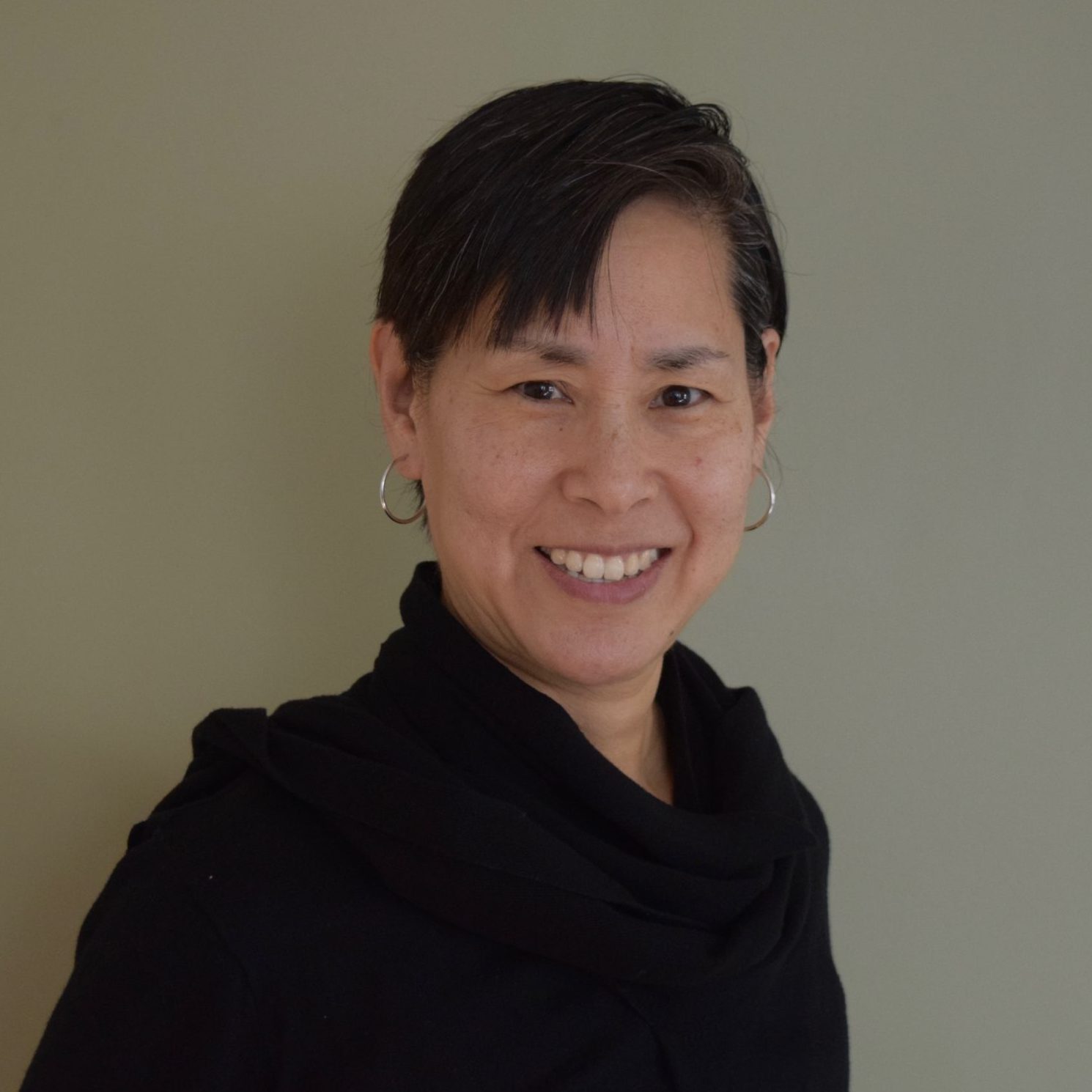
Rosann Tung writes creative nonfiction and conducts research and advocacy for racial justice in public education. Her personal essays have been published in the Boston Globe, Memoir Magazine, Pangyrus, and elsewhere. She placed first in the Boston In 100 Words flash contest, and she and her mentee in the PEN America Prison and Justice Writing Program were awarded the 2025 PEN America/L’Engle-Rahman Prize for Mentorship. She serves on the board of 826 Boston, a non-profit that supports youth publishing and leadership.


