

As the light gives way to earlier winter darkness, the landscape seems to sharpen, or is it just the earth growing more bare and spacious? Once again, we are on the cusp—the threshold of something else, some further existence, as what we encounter in poetry, striving to translate into language what it feels like to be human amid war and loss, and we come to a moment such as the great French poet Jean Follain noted: “the instant at which one hears the underground water/trickle across the clay.”
With lyricism and grace, Elsa Cross (through Susan Ayres’s elegant translation from the Spanish) explores the interplay of the love and unspeakable grief that accompanies the death of one’s child, and how prayers open a path for ashes “with their small ivory shards.” In her weft of natural and spiritual imagery and language, she bears this weight at the core, arriving at wisdom “in a silence that breaks […] through the cracks of the worlds,” with the lightest touch. The 16th century Indian mystic-love poet Mira (Mirabai) has been newly realized in Chloe Martinez’s versions from the Braj Bhasha, an early form of Hindi. Revitalizing the fierce power of divine and erotic love, Chloe, who calls Mira a “mystical bad-ass,” brings out the earthy and divine in equal measure, resonating with the “speechless until you come and put out this fire.” Such a way to feel the immediacy and sense of enlightenment across space-time that we too may fall speechless at their feet.
Yulia Berezhko-Kaminska and Olesya Mamchych’s poems, masterfully convey the silent drama of the war through women’s eyes. Both poets are Ukrainian war refugee writers–currently residing in Krakow, Poland. Their writing, to paraphrase Zbigniew Herbert’s poem “Mr. Cogito and Imagination,” has the “the motion of a pendulum” which “crosses with precision from suffering to suffering” and “there is no place in it for the artificial fires of poetry.” In one of Yulia’s poems, a woman washes her hair beneath a hail of assault rifles as the hair slowly turns into ashes, just as the spring slowly turns grey (gray-haired). Yulia’s most recent poems are testimonies to the atrocities committed in Bucha, where she lived all her life until the outbreak of the war. Yulia’s previous poems have been adapted to songs and performed in the philharmonic halls of Ukraine, as well as included in schools’ curricula across Ukraine. She is both a hereditary (via her mother’s sister Kateryna Boyko) and a poetic descendant of the legendary Ukrainian poet Taras Shevchenko.
Olesya Mamchych’s poems carry silent despair within their disciplined conciseness. These poems weep quietly. They also carry prayers and incantations through their complex rhymes and internal rhythm. When one hears Olesya’s poems in person, one is swept away by their melody. Her mastery is the ability to carry inexpressible pain within the sweetness of the song. In one of her most famous poems, “War” (not featured here but included in many anthologies), she envisions the war as a plant that honorable men of this world sowed and fertilized. At the end of the poem, she proposes that instead of the war, we plant a pear tree. These poems are incantations, prayers. They are powerful soldiers.
With a bow to these distinguished poets and translators.
Barbara Siegel Carlson and Ewa Chrusciel

Barbara Siegel Carlson is the author of What Drifted Here (Cherry Grove, 2023), Once in Every Language (Kelsay, 2017) and Fire Road (Dream Horse, 2013). She is the co-translator (with Ana Jelnikar) of Look Back, Look Ahead, Selected Poems of Srečko Kosovel and co-editor (with Richard Jackson) of A Bridge of Voices: Contemporary Slovene Poetry and Perspectives. Her poetry, translations and essays have appeared in Verse Daily, Cortland Review, Mid-American Review, Salamander, Slovene Studies and elsewhere. Her poems have been nominated for Best of the Net and Pushcart prizes. A fourth book of poems The Current is forthcoming in 2026.
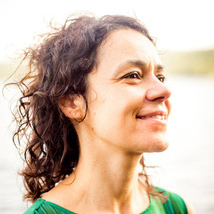
Ewa Chrusciel is a poet, translator, and educator. She has four books of poems in English with Omnidawn Press: Yours, Purple Gallinule (2022), Strata, Of Annunciations, Contraband of Hoopoe, as well as three books in Polish: Tobołek, Sopiłki, and Furkot. Her book Contraband of Hoopoe was translated into Italian by Anna Aresi and came out in Italy with Edizioni Ensemble in May 2019. Her poems have been included in curricula at institutions such as Harvard University, University of Wisconsin, Dartmouth College, Salem State University.
She also translated various authors into Polish, including books by Jack London, Joseph Conrad, and I.B. Singer, as well as book of selected poems by Jorie Graham (2013), and aforthcoming book of selected poems by Vievee Francis (2027), and selected poems of Kazim Ali, Lyn Hejinian, Cole Swensen, Mathew Olzmann and other American poets.
She is a Professor of Creative and Professional Writing and M. Roy London Endowed Chair at Colby-Sawyer College.


