

I write this from Ljubljana, a city famous for its numerous bridges.
What is a bridge if not a connector? A translation is a bridge—a link, a bond between cultures, between people and peoples.
And so our purpose for translation might be as early modernist Slovene poet Srečko Kosovel wrote: To widen the circle of one’s understanding, not just by chance, but to seek new realizations with your soul, to have them. He was a humanist, a visionary who believed that art and literature hold transformative power to reshape our values toward a more compassionate world. Translation brings such widening and deepening.
The poetry in translation in this issue brings us two works by Italian poet Mario Luzi translated by Stephen Sartarelli. Luzi’s voice is ardent, though clipped and chilling. We are of the earth, but also unearthly in our feeling limitless, restless. The poems range from intimate to communal sentiment, spinning through what is left out, whether we are talking about ourselves as earth made by “some celestial algebra” or as murderers in some alley of hell.
From Eugenio Montale, one of Italy’s most famous 20th century poets, we feature this gem of a poem “English Horn” translated by Mary Jane White for its captivating and passionate depiction of the wind as a musician animating the trees and sea until the wind itself becomes a bridge the poet might cross to play and thus open his heart to feel its wholeness “gone out of tune.” The poem itself of a heart filled with the life of the natural and human worlds conjoining.
Poetry in translation strives to deliver the original (the delicately complex, alive inner being of its writer) into another tongue from experience into words from one language, then into another—carrying it across two bridges. It seems an impossible task. But in the crossing over—the transference, there is poetry as something else is brought in—a bit of the foreign that gives way to a new perception, a new vision, a broadening that also strengthens the bonds of the humanity we share, all the more urgently needed in these fraught times.
–Barbara Siegel Carlson
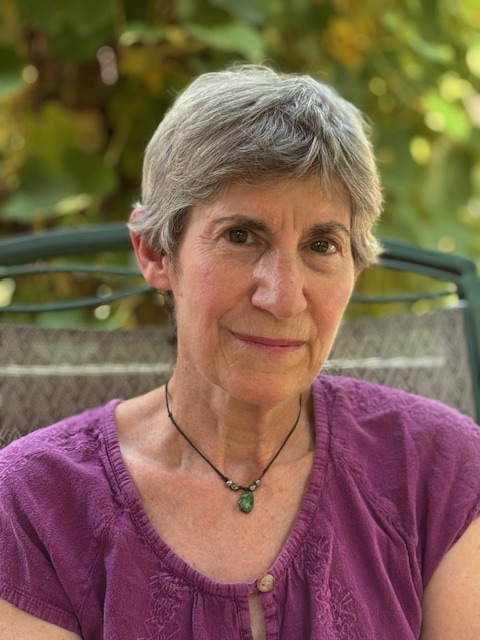
Barbara Siegel Carlson is the author of four books of poetry, most recently Current published by Lily Poetry Review Books, 2026. She is the co-translator (with Ana Jelnikar) of Look Back, Look Ahead, Selected Poems of Srečko Kosovel. Her poetry and translations have appeared in On the Seawall, Verse Daily, Mid-American Review, Salamander, 2River, The Poetry Porch, among others. Carlson is a Co-Poetry in Translation Editor of Solstice.


