

It is in these troubling times that threaten to crush the spirit, that we, as Joy Harjo writes in Catching the Light “search for what singers, poets and storytellers bring forth” and focus on finding that heart space in each of us that breathes in all great literature. Let us honor that place so apparent in the poems in translation featured in this spring issue.
Michał Sobol is an awarded Polish poet whose poetics is marked by restrain and condensation, at the same time displaying existential tension. Sobol transfigures ordinary experiences into philosophical, political, or historical moments of unease or disquietude. In the poem “Waiting for the Aliens,” modern technology is juxtaposed with archaisms in the attempt to grasp the whole history of homo sapiens. This poem also alludes ironically to famous Cavafy’s poem “Waiting for the Barbarians, ” in which barbarians never arrive, exposing the politicians’ reliance on the “other”, “the imagined enemy,” while the society slowly collapses. Other poems indirectly allude to the current War in Ukraine. Sobol’s poems presented in this issue were selected from his most recent book of poems in Polish: Trasy Przelotów (2023) – Flight Paths and translated from Polish to English by Soren Gauger. Thebook was nominated for the prestigious Szymborska’s Prize….Ivan Dobnik’s poems are deceptively pastoral. In “Where the Forest Season Ends,” the lush and magical depiction of lighting a fire in the forest as a child becomes a metaphor for the unwitting destruction of the forest as “its shadows fall through the poem” and “the flames persist […] in the trusted wilderness of primeval space.” Eventually this glimmer flares into the words that rush through the poem validating the poet’s inner state. In “Sheepskin,” his sheep’s tuft of wool intrigues him for what it triggers in his imagination. These finely layered and crafted poems create a sense of wonder in the way they lead us into a deeper world…. Christine Lavant in “Earth if you had two lips” speaks passionately to Earth in a voice that may well speak for humanity in our time, believing we are friends but also fearing that we are destroying ourselves by the lies we tell ourselves concerning the way we treat it. Lavant struggles here between her kinship with Earth and her fear of its abandoning her. She asks it to take her tongue and lips so it can “Talk beneath the snowflakes / about warm and lasting love.” One of nine children, Lavant grew up in poverty in Austria and struggled between her faith and anger toward God. She is considered a major postwar poet.
Enjoy!
–Barbara Siegel Carlson & Ewa Chrusciel
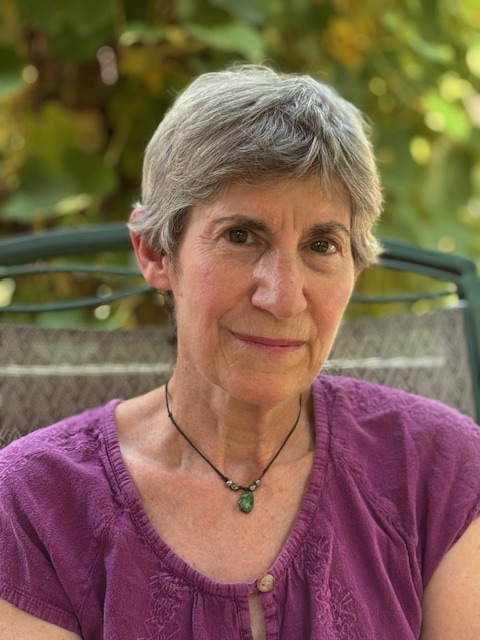
Barbara Siegel Carlson is the author of four books of poetry, most recently Current published by Lily Poetry Review Books, 2026. She is the co-translator (with Ana Jelnikar) of Look Back, Look Ahead, Selected Poems of Srečko Kosovel. Her poetry and translations have appeared in On the Seawall, Verse Daily, Mid-American Review, Salamander, 2River, The Poetry Porch, among others. Carlson is a Co-Poetry in Translation Editor of Solstice.
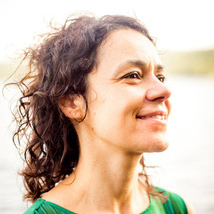
Ewa Chrusciel is a poet, translator, and educator. She has four books of poems in English with Omnidawn Press: Yours, Purple Gallinule (2022), Strata, Of Annunciations, Contraband of Hoopoe, as well as three books in Polish: Tobołek, Sopiłki, and Furkot. Her book Contraband of Hoopoe was translated into Italian by Anna Aresi and came out in Italy with Edizioni Ensemble in May 2019. Her poems have been included in curricula at institutions such as Harvard University, University of Wisconsin, Dartmouth College, Salem State University.
She also translated various authors into Polish, including books by Jack London, Joseph Conrad, and I.B. Singer, as well as book of selected poems by Jorie Graham (2013), and aforthcoming book of selected poems by Vievee Francis (2027), and selected poems of Kazim Ali, Lyn Hejinian, Cole Swensen, Mathew Olzmann and other American poets.
She is a Professor of Creative and Professional Writing and M. Roy London Endowed Chair at Colby-Sawyer College.


