

It was the watches I wanted, those radium dials

Glowing like bomb sights


When I cupped my palm.

Wisp


Of radioactivity—the hour hand;

Nether-wisp—the second.


For weeks my mother worked the counter at Kresge’s—

Her faded pink smock


As tight as a nurse’s—

As she laid out the bands in their false


Reptilian shines—

The cowboy tans, the avocado greens.  This


Was Radium City

And my mother, Marie


Curie, scientist of jewels and hams,

The chunks of meat slapped


Like memory into the knife

And the iridescence sliced to pieces as thin


As winter sky, shaved uranium.

I had to stack them high to tongue the plugs


Of fats, the permeating salts.

The roll breaking in my hands like a ball of


Glass.  And the stench of drugstore

Popcorn, its second perfume


Mingling with what my mother wore

As she shoveled out


The bags like spent carnival fortunes.

More money was one we wasted on ourselves.


Or new drapes.

One last snap of the Tupperware over the nightly concoctions


No one ever wanted to eat.

I’d go away and ponder mono/stereo


For the extra buck

In the lp bins, or keep an eye walking


Home for Tarzan—

Weissmuller in a shiny Olds or Cadillac.


And then wait out the summer hours pitching

A 9-inning game


In a chalk box the side of the house.

Ferguson Jenkins for 7 or so,


Then Abernathy for the submarine.

Next door a neighbor would peg out his pet


Skunk and I’d listen as it roiled

With thirst


Or hunkered under diving blue jays,

Their cobalts dipped


In the mouth of the sun

And set out like hour hands


To the shadowed yard.

The Cubs would lose.


Weissmuller never show.

The Mexican kids from Dempster would threaten


To beat my ass into the street

And leave me there


Dented and ringing as a hubcap,

Another rat-faced kid


Waiting for his mother to come home.

Pink smock.


Ham in a pocket.

Singing beyond the genius of the meats,


The radium dials, the gems,

The gold fish


And guppies in their clouds of hopelessness.

The kiss, the mother’s kiss, put like a cure to the child’s face.
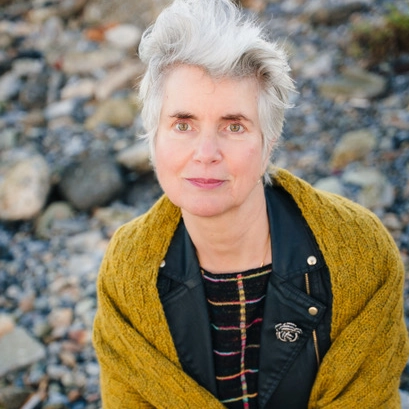
Suzanne Strempek Shea is the author of twelve books, the first four of which were novels set in her native Polish America that led to her being featured in national and international media, including twice on NBC’s Today; on The Late Late Show with Tom Snyder, NPR and Voice of America; and in major newspapers and magazines in both the United States and Poland.
Awards for her books include the New England Book Award and the Oskar Halecki Prize. Her journalism was shortlisted for the Penney-Missouri Awards, and her creative writing was recognized in Best American Fiction. Her freelance journalism and fiction has appeared in magazines and newspapers including Yankee, The Bark, Golf World, The Boston Globe, The Irish Times, The Philadelphia Inquirer, Brevity, Down East, Organic Style and ESPN the Magazine.
Suzanne co-directs the annual Dingle Writers’ Workshop in Dingle, Ireland, and the annual Iota Short Forms Writing Conference on the easternmost coast of Maine. She’s taught in MFA programs at the University of Southern Maine, Emerson College and the University of South Florida, and at conferences through the United States and in Ireland. She lives in Howth, Ireland.
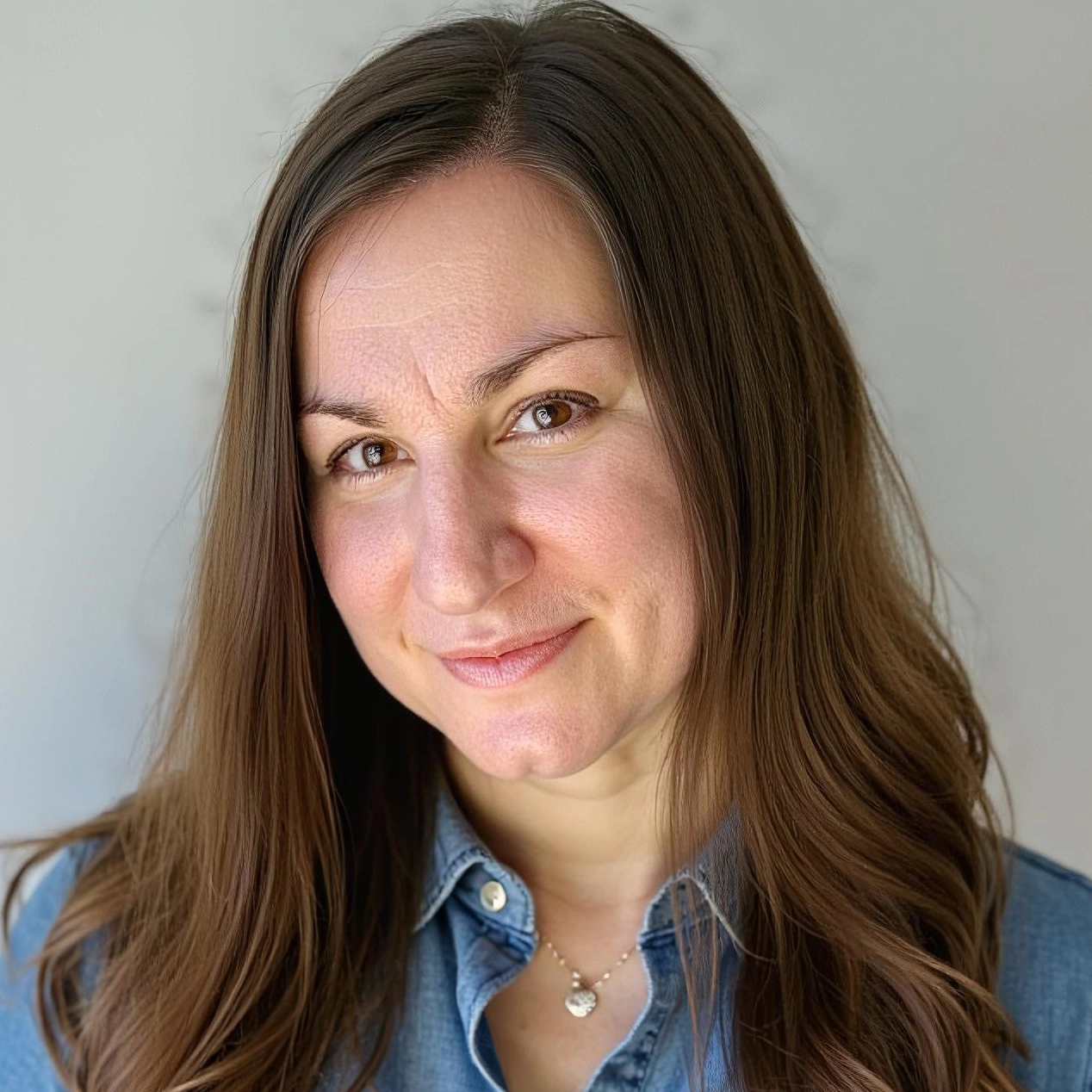
Karen Sherk Chio (she/her) earned an MFA in poetry from the University of New Orleans, where she was the winner of the 2025 Andrea Saunders Gereighty/ Academy of American Poets Award, the 2025 Maxine and Joseph Cassin Prize for Poetry Thesis, and the 2023 Vassar Miller Poetry Award. She brings 25 years of professional experience leading and managing projects for non-profit organizations to the role of Editor-in-Chief, as well as experience as an associate poetry editor for Bayou Magazine and West Trade Review. Her creative work has appeared in swamp pink, Salamander, CALYX Journal, and SmokeLong Quarterly, among others, and her critical work has been published by or is forthcoming from Colorado Review, The Adroit Journal, and West Trade Review. Chio holds two Bachelor of Arts degrees from the University of Connecticut and a Master of Public Health from Boston University.

Monica Jimenez is the senior culture & trends editor for Tufts University news and features and assistant editor of Tufts Magazine, and a community ed acting and playwriting instructor. Her work has appeared in publications including Ruminate Magazine and the Mini Plays Review, and her plays have been produced in festivals including the Boston Theater Marathon, Boston Slam Theater, and Short ’N Sweet Hollywood. She is a graduate of the Stonecoast MFA in Creative Writing program and former co-editor-in-chief, fiction editor, and designer of the Stonecoast Review. She was an honorable mention for Ruminate Magazine’s William Van Dyke Short Story Prize and winner of the flash fiction contest at the Boskone sci-fi and fantasy convention.


