Sartre’s definition of genius, Jane Hirshfield writes in Ten Windows is “not a gift, but the escape a person invents in a desperate time.” We counter uncertainty, incoherence, chaos and death with presence, beauty and imagination through language to increase our sense of solace and to make the despair more bearable. Such self-preservation is Wallace Stevens’s “necessary angel,” the imagination resisting and pressing back against the exterior forces.
Our words can be both shelter and weapon. And, as Emerson said, in his essay “The Poet,” “Words are also actions.” They affect us, change us, reflect us. They carry power. They matter, which is why in repressive regimes poets are considered dangerous because of the force their language carries in revealing truths.
One such poet was Osip Mandelstam, one of Russia’s greatest poets who wrote “The Stalin Epigram,” the searing satiric poem (written in 1933 in a climate of fear) that led to Mandelstam’s arrest, imprisonment and death in a transit camp in 1938. The translation by Margaree Little portrays with verve the animalistic nature of the “Kremlin mountaineer” whose “eyes are laughing cockroaches,” surrounded by “a rabble of thin-necked rulers.” One note on the translation: in the penultimate line “every execution is like a raspberry,” the Russian word malina means both raspberries (as “a bowl of cherries”) and the criminal underworld. Unfortunately we lose the double meaning in English. Little’s other translation “Leningrad” depicts with haunting imagery the sorrow Mandelstam felt in seeing his beloved home city transform into a city of arrests and betrayals.
“What place of shelter flourishes through our speech,” Miguel Bacho asks his brother in “Up-rooted.” In evocative and elegiac language translated from the Spanish by Lynn Levin, Bacho suggests that in the expanse that swallows us will be “the tree [that] will branch out in our shared heart” vast and fertile in reflecting the extent of our humanity as tears for a history not yet written.
There’s magic and delight in Zoran Pevec’s “Beckett—My Advocate” with its contradictory impulses “where you train silence to be voice.” Becket reinterpreted by Zoran brings him alive in two koan-like sections as the poet grapples with the nature of our paradoxical selves as both “heavenly parade” and “tragic groundwork.” The seamless ironic shifts lead us to realize ourselves as small gods who are both “hollow in the middle” and “in the centre of the world.”
–Barbara Siegel Carlson
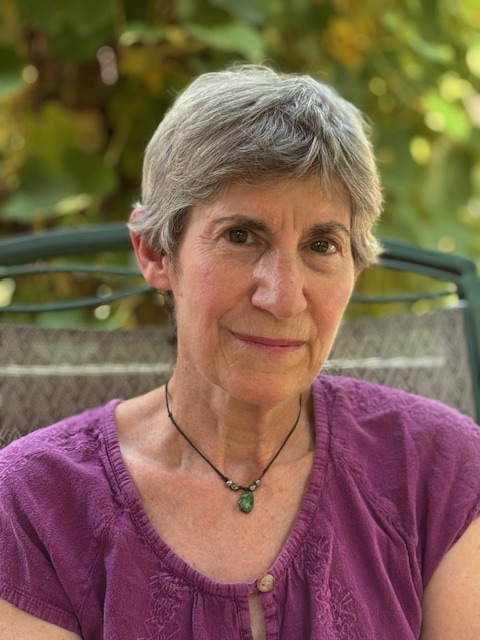
Barbara Siegel Carlson is the author of four books of poetry, most recently Current published by Lily Poetry Review Books, 2026. She is the co-translator (with Ana Jelnikar) of Look Back, Look Ahead, Selected Poems of Srečko Kosovel. Her poetry and translations have appeared in On the Seawall, Verse Daily, Mid-American Review, Salamander, 2River, The Poetry Porch, among others. Carlson is a Co-Poetry in Translation Editor of Solstice.