

Gabriel woke up early, before light. He dressed in the dark and carried his backpack down to the kitchen and dropped it on the floor by the screen door. His father had already made bacon and eggs and toast and coffee. Gabriel sat down and rubbed his eyes and waited. His father put a plate before him and he ate.
Better than going to school, don’t you think? His father said.
Definitely.
Let’s hope we get a good haul this year.
After his father finished eating and put his plate in the sink, he said, Well, you about ready to go?
Sure.
They went down to the truck, and Gabriel pushed his pack into the space behind the seat and climbed up into the cab. His father slid in and closed the door and started the engine and turned on the lights. Ahead, the trees were a tunnel of dark trunks and boughs illuminated by the headlights. They moved down the gravel driveway and out onto the road.
They didn’t speak. They drove north in the dark then out onto the highway that was nothing but clear lanes white lines and blue reflectors at this hour. Then they pulled off onto the access road and went down into the town. The streetlights were fixed in a yellow blinking pattern. The streets were empty. It was like an end of the world movie. Then they drove up to the ferry terminal, paid the cashier in the booth and went onto the ferry.
They stayed in the truck for the crossing. It smelled of leather and mink oiled boots and rifle iron and cigarettes. Gabriel’s father opened a window and lit one up and smoked and blew the smoke out the window and leaned back in the seat and turned on the radio. He fiddled with the dial and came to a Hank Williams song and let it sit. The ferry horn sounded three times and the boat pulled out into the sound and rocked softly. Out there was the blackness of the water, the far faint lights of homes on the islands. What was it like to live on an island? It seemed like a desirable dream and at the same time unreal. He didn’t want his life the way it was, now that he was a bad kid. On an island he would be alone.
Daylight was coming, glowing up along the eastern mountains across the sound as they drove off the ferry and onto a two-lane highway. Then they were back driving through the darkness of trees, alone except for the forest eyes.
They went through a mill town with sandstone buildings blasted by wind and sea waves and then back into the forest corridor with trees fluttering past in the car lights and Sasquatch watching from the deep of the forest. The road was becoming as they drove on it, because they drove on it and believed a road must be there for them to drive on. Really, they were still asleep in their beds, asleep other lives and would wake up curious about these scenes that would quickly fade as they went into the rush of their other worlds. And the people in those worlds were asleep in other worlds and this went on maybe forever. This is what he kept thinking as they drove in the dark.
Emerging at last they entered a clearing, and his father drove onto a gravel road and out into a field of clearcut where the stumps of trees stood flat-topped and gray and other trees lay, fallen dead soldiers. The truck came to a stop, and his father stubbed out his cigarette and opened the door and stepped out and stretched and scanned the field. Gabriel got down and walked a few feet out in front of the truck and gazed out over the wasted forest edge. Every tree was cut down all the way up to the ridgeline. A few lay on the ground, and some saplings twigged their way up through the ground cover. Robins jumped and darted and flew stump to stump, and they seemed weirdly exposed. Tendrils of mist rose from the ground. The air had a strange raw wounded feeling to it, and as Gabriel stood before the ticking engine of the truck he had the dizzy feeling he had seen this before.
Well, his father said, better get started. He took the chainsaw out of the back of the truck and hiked out over the rumpled terrain. Gabriel followed, climbing over dead trees. The ground was a loamy tangle and he had to choose his footing carefully. His father took long strides, lifting his feet high, and would occasionally stop and inspect a tree, pull at it then move on until he finally found the one he wanted. He punched the choke on the chainsaw and was just about to pull the cord when he turned and said, Now I want you to stand back while I’m cutting. When I’m done you can help me load the truck. Then he yanked the cord and the chainsaw screamed and he started carving into a fallen tree.
Gabriel climbed up onto a stump and watched as his father cut slice by slice, bucking and lifting the remaining log to prop it up and so get the cut all the way through, tugging it back length by length, as sawdust grew around his feet. It was like their basement full of sawdust and the smell of wood and wood oils and stains and varnishes and machines for cutting wood and for shaping wood, and here he was now, his father the crafter with his arms deep into wood.
It didn’t take long to cut the trunk down into moveable sections. All right, he said, turning to Gabriel and brushing the sawdust from his chest. Give me a hand here. Gabriel jumped down. He could only take a chunk at a time, while his father’s armloads seemed heaped high. But he worked on steadily and didn’t complain. His arms soon felt hot and tired and ached and his back felt tight-strained, but he kept on working and said nothing as his father worked on and said nothing.
After they finished loading the wood, his father lit another cigarette and stomped on in search of another fallen tree. When he found one to his liking, he yanked at it, getting it into a position ready for cutting and pulled the cord on the chainsaw and set the blade in while a cigarette bobbed between his teeth and his eyes squinted and sawdust boiled up over his hands. They loaded more sections onto the truck and then his father sought another tree. After he had sliced up two more trees, they had a full load.
We’re done, his father said. He stood smoking another cigarette, looking out over the clearcut. Sweat was flowing down his face, and he wiped it with his sleeve. Gabriel stood beside him, leaning back against the hood of the truck. The sun was breaking through the clouds and warming the ground. The stumps steamed like hot bodies. Chipmunks appeared from the tangle and jumped across fallen logs and stumps, rising up and looking around with forepaws dangling against their bellies.
Well, his father said, is that enough work for ya?
Yeah, Gabriel said, and he blew a long breath.
What do you say we go get a hamburger?
Sounds good to me.
Let’s go.
They climbed back into the truck and backed up onto the service road. The truck moved heavy with its load, straining in a new way through washouts and the potholes and the uneven ground.
They ate lunch in a roadside diner with trucks and semis pulled up in front with men in plaid shirts and John Deere caps who smoked and drank endless cups of coffee. And then they were back on the road, driving through the corridor of trees again. The clouds burned off and sunlight came piercing through. The radio jumped between stations, so his father switched it off. They opened the windows and the cabin filled with the sweet pine smell of the forest. And slowly, through glades and turns and far from any town, the road descended and the trees began to change, thinning out as the road dropped and rose and dropped again winding out towards the coast. Smell it? his father said.
What?
The sea.
It emerged retreated like a living thing. And Gabriel was awake and attentive, gazing hard through the trees. Was that a silver flash of wave? Was it the glitter of light on the surface? Was it blue gleam coming from distance? He was unsure even as they came to the turnoff and drove down bumping and jolting to the road’s end in a dirt lot. His father switched off the engine and said, Here we are.
They climbed out and unloaded the gear. Gabriel put on his pack, and his father pulled down the straps so that it was cinched tightly around his shoulders and waist and pressed close against his back. Then his father put on his own pack and tugged the straps down tight and stuck his arms out and lifted them and worked his shoulders and then said, Let’s go.
His father set off up the trail and into the woods, and Gabriel followed, leaning forward, striking for a balance that would put the weight of the pack right in the middle. Sometimes he felt it pulling him back and so he leaned forward, then he felt it pushing him forward so that his steps were a kind of catch-up. And so he weaved along the trail, toe-stumping roots and rocks when he didn’t pay attention to his footing. Gradually, he found the right stride, hooking his thumbs under the shoulder straps and keeping his eyes on the path. His father strode ahead and out of sight. Occasionally Gabriel caught glimpses of him through the trees or when the trail curved back on itself, and from time to time his father would call out, You all right back there?
I’m all right. Are you all right? And he would hear his father laugh. And that became the call and response of their hiking, his father calling back, Are you all right back there? And Gabriel answering, I’m all right, you all right?
After a while though the straps felt like they were cutting into Gabriel’s shoulders, and his arms began to tingle, a feeling that went to the bone. But he said nothing and kept up the call and response with his father. He was hot, thirsty, mouth dry from hard breathing. But he pushed to follow and keep up. The trail descended, steep as it switched back on itself. Sunlight came through in dusty rays. The forest floor was thick with moss-covered logs and thistles and nettles and ferns. Fat banana slugs stretched across the trail, and Gabriel stepped around them while keeping his stride. And then he found a rhythm that allowed him to move with grace, concentrating on the path and his footing even as he sought in quick glances for a glimpse of the sea.
And at last he saw it. A silver flash. Then it was gone. He listened and heard a whispering from the distance. Then he saw it again, glittering through the trees. He was certain of it. And the whispering returned.
His father called back, You all right back there?
Gabriel answered, I’m all right, you all right?
Then he saw it full through the opening in the trees huge and blue with a white ragged surf edge and a hard dark line far out there and then sky. He came down to where the path leveled out and saw his father standing there, hands on his hips, smiling, not even breathing hard. How you holding up? his father asked.
Good.
Thirsty?
Yeah.
His father turned him around and tugged on his pack and pulled out a water bottle and handed it to him. Then he reached back to a side pouch on his own pack and pulled out a water bottle and drank and poured some of the water over his face and shook his head and said, Ahhhh. Not much farther, now.
Okay.
You done with that? his father said, pointing at Gabriel’s bottle with the tip of his own.
Yeah.
His father took the bottle and slipped it back into Gabriel’s pack, then put his own water bottle back into the side pouch and said, Last leg. Let’s go.
They followed the trail through swampy glades and crisscrossing creeks, descending gradually. The ocean was coming to them, moving under and into the land as the trees seemed to stand back for it. Seagulls rose crying over the treetops as if saying this way this way. Then the trail dipped down and the sea was gone from view. But when the trail rose again the sea was before them fully, open. Gabriel felt the full rush of it with the surge of wind and the salt smell and taste, the water rolling in, huge and cobra-bent coiling and suspended briefly then crashing tumbling and roiling under churning white foam as it stretched out at last thin and green and glassy as the seagulls with their wings in perfect hard arcs rode the wind currents over the breaking waves. Gabriel stood rapt before the enormity of it, his first vision of the sea.
They set up a camp in the grass behind a line of tangle driftwood where the last few firs and pine trees blocked some of the wind and where a little creek flowed gurgling down and fanned out shimmering onto the beach. His father pitched the tent and built a fire ring while Gabriel gathered firewood. They shook out the sleeping bags and tucked the packs into the foot of the tent, and his father hung a bag from a tree limb to keep their food. Then he spread a blanket out before the opening of the tent and the campsite was set.
Gabriel walked balancing along the driftwood logs and then jumped into the sand. He looked out at the ocean, the curve of horizon. No ships were visible, only the sea. Then he went down where water came sliding fast, the wet sand shimmering like polished stone. The sun was low and warm, and the wind wild off the sea was full of intensity. Gabriel could lean into it and feel his body suspended as if a hand were pushing him back. He sailed sand dollars and they came alive. Hawks flew scanning overhead. He knelt down near a tide pool and overturned a rock and saw little black-shelled crabs scattering. He picked one up and it dug its stony limb-points into his fingers. He looked into the orbit of its white-tipped, milky eye. What do you see, my little friend? He put it back and replaced the rock and continued down the shore.
He came to a tower of rocks. They looked like they were marching in slow motion out to sea with a few scraggly pines embedded in their tops. He wandered among them feeling like a crab among giants. He picked up a heavy stick and dragged it through the wet sand, leaving a long, unbroken scroll of meaningless script. Then he wrote out his name in cursive letters along with stars and river waves and mountain tops like a map of everything he saw and at last a giant X. Then he threw the stick into the waves and watched it plunge and rise and drift in the currents, seeming to try for return.
He turned and headed back to camp, and now facing into the wind, sand came at him stinging with speed. He put a hand up to protect his eyes. From a cliff of sandstone grooved by wind grinning faces gazed at him. The forest up the hill was dense. He couldn’t see where the trail came out. And then he saw something lift off, something too big to be a gull or even a hawk, moving slowly in powerful soar, using the wind with a kind of liberty as it circled skyward and on. And as the eagle rose and cruised over the treeline and higher, Gabriel jumped and flew after it knowing in that moment a truth of breath and buoyancy as he floated by will alone and the air held deep in his chest.
When he returned to the camp, he dropped down onto the blanket. His father had a campfire going hot with a blackened pot nestled close on a flat rock with beans bubbling away inside. He tossed in a couple of hotdogs and they sank and it all smelled good. He cut up some bread and cheese and apples and laid out a fine little meal on some paper plates and handed one to Gabriel. The food was steaming hot. Gabriel blew on each forkful as he ate.
Not bad for a camp meal, his father said. My grandfather used to cook bacon on a piece of wood, made it smokey. That tasted good.
What was his name?
My grandfather? Your great grandfather? His name was Thomas High Bear, too, just like me, just like you. He was the first High Bear I know of.
What do you mean the first?
He got the name, acquired it you might say. He was with the Crow, I think. That’s what my father told me, anyway. His people were hill people. River people. Stayed on the edge and just kept moving higher. Farther. Maybe Crow, I heard. I don’t know if we have relations or not, but that’s how he got the name.
Crow? That’s what they called themselves?
You never heard about that?
No.
The Crow.
Huh. Is there a way to find out?
I don’t know. It’s a story wandering people tell. Remembrances. None of them read or voted or paid taxes. One day, your great grandfather wandered into a town east of here and started a new life. We come from that.
But we don’t know. So…how did he die?
Great Grandfather or Father?
Grandfather. Your father.
He drowned, here in the ocean just a little north of here. He and my mother were here on vacation, and he went in for one last swim that evening and drowned, caught in a rip tide. Some of the folks up there searched for his body using their fishing boats. He was always a strong swimmer, a powerful man. It was a boy riding a horse along the top of the shoreline who spotted him.
And how did Great Grandfather die?
He died an old man. Moved out to Lake Chelan and ran a hotel there. We visited a few times, but I rarely saw him. He never talked about his past to me. I asked my mother about him some, but she just said he was a hardworking man, a good man.
How did they meet?
My parents?
Yeah.
In school. They were sweethearts in school. Ask her about it sometime. She likes to tell that story.
So you never learned about the people that were Crows.
His father laughed a little. Nope.
So how come you and mom call me Gabriel?
That’s your middle name.
How come I don’t go by my first name?
So we won’t get confused when she calls us to dinner. Finish up there.
And his father tossed own empty plate into the fire where it sputtered and steamed and then burst into a quick flame burning from the center then gone. Gabriel ate the rest of his food and tossed his plate into the fire.
His father lit a cigarette and leaned back against a log and smoked with one hand behind his head. Gabriel lay flat on his back looking up at the stars as if he had never seen them before. Wow, he said, the stars are really bright out here, and so many.
Yeah, the city lights don’t obscure it here. See that white streak? His father pointed with his cigarette.
Yeah.
That’s the Milky Way.
What’s that?
That’s our galaxy. It’s like our galaxy is a spinning octopus, and what we’re seeing there is one of the arms of that octopus. Our planet is on another arm, but we can’t see it because we’re on it. And see that big collection of stars there, with the square and the part curving back?
I think so.
That’s the Big Dipper.
The Big Dipper, Gabriel said, and then he saw something flare-out in a quick and silent streak. What was that? he said.
A shooting star. Actually, they’re not stars. They’re bits of matter hitting the earth’s atmosphere.
Wow.
We’ll probably see some more before the night’s through. That’s Orion there, his father said, running his hand back and forth over a spot of sky. You can tell by the three stars of his belt. And that’s the little dipper and the little bear.
That sure is a high bear, Gabriel said.
His father laughed. And that’s Great Grandfather riding on his back. Looks like he’s smiling.
He’s laughing.
At what.
You and me.
Why?
Cause we’re looking at him.
All right.
It seemed to Gabriel that in some way out here his father was different, lighter. They lay there a long time with the stars all around them. After a while his father rose and went out beyond the fire light, and Gabriel waited and listened and wondered. Then his father came back and tossed his cigarette into the fire and said, Well, I’m turning in. And he yawned and stretched and climbed into the tent. Gabriel listened to the rustling as his father slipped into his sleeping bag. Then Gabriel rose and went out to the creek and dipped his hands in and brought the cold water to his face and listened to the snapping of the fire and to the waves coming in on the beach below. Did he hear something else? Did he see something? Another flash in the sky above? Then he went back and climbed into the tent and lay down there in his sleeping bag beside his father, hearing the sounds of fire and sea and his father there beside him breathing in the dark.
He stood before it, naked but for the cross on the little black cord around his neck. The sun was behind him, coming up over the trees. He stepped in and felt the first touch of it on his feet, the cold bite. He went forward until he stood with the water up to his knees, surging forward then surging back, the seemingly solid ground beneath him dropping away in circles where his feet were planted. He went farther, and the incoming water hit against his chest with its cold body-wracking force. Then he dove in.
The waves came in and he dove under them and felt them roll across hit back, felt the fast sweep and lunge of all that water and then a brief suspension where nothing seemed to move at all. Then he rose to the surface and sky above and horizon line and the diminishing curve of the shore. He swam beyond the breaking waves into the outer swells and felt his body rise and fall. He swam parallel to the shore and outward too feeling a new kind of fear and freedom as he pushed forward and at the same time felt nudged and propelled in a thousand ways he couldn’t control. He felt good and strong and dove down and swam in that green-hued and spiraling world. Then he rose and caught an incoming wave and rode it as it surged and gathered like a fist and rushed forward. He turned back and lunged out to catch another wave and rode it for a short distance before it left him. He went out on wave after wave and had a string of good rides, hitting just as the waves pulled into their full force, riding to shore and gliding into the rippling shallows.
Then there was a lull during which he floated and waited and watched as the swells came in, and he tried to gauge which ones would rise and carry him. He caught a few too early and swam hard to stay in, but they rolled past him. He caught a few more, finding that place too high up and behind the force of the wave nor too far forward and hammered by the break. Then he found himself trying for one too late. It was already breaking, and he was caught up in its explosion and punched downward. He couldn’t control himself and was thrown down and dashed by the churning water. He rose to his feet in the foaming, broken wave and coughed and shook his head and leaned onto his knees. Then he dove back in and swam under the next three waves to a deeper place to tread water and choose the next perfect wave.
He rode some, lost some, diving under some that seemed huge and frightening. In the lulls he swam back and forth or dropped down to a pinging depth by letting the air out of his lungs, and when his feet struck bottom he bent his knees and pushed back surfaceward to break gasping into the air. Then he came up into another wave that was just starting to break. He saw it only for a moment and barely had time to take a breath. It pounded down and sent him swirling under. When he rose, he was facing another wave and could only gasp once before he was thrown back under again. Then it was as if the wave had him in some terrible grip. He came to the surface only to see another wave in full crest. It seemed to draw back, as if gathering from its own collapse the force and energy for its next rise and fall. And Gabriel was inside it, swept forward and carried with it, rolling completely lost. By luck alone he broke through and gasped for air before another wave came down on him and drew him under, and for a long, heart-throbbing and chest-aching moment he couldn’t tell how to get back and there were no rays of light to guide him to the surface.
Then there was a strange suspended moment with no idea of surface or depth, only the dark between wave-breaks. His mind became still. The thought struck him that he was drowning the way his grandfather drowned, in the same place in the same waters—and it was as if the thought brought his grandfather near, inside his mind, seeing this all over again in the body of his grandson and saying in a silent way, No. Gabriel swam as hard as he could in the only direction he could, wave after wave breaking upon him and taking him under, erasing the world. But he kept swimming, going forward, taking whatever breath he could steal in the intervals of wave-crash, until he reached the shore and crawled out of the grip of the sea.
He collapsed, dissolving into the sand, breathing hard but his mind deep down completely at ease. He felt nothing. And he passed out.
When he woke, his body was shaking and tingling. He did not know if he could stand. The salt crystallized on his skin. He rose to his feet and stood on trembling legs. He looked down at his body and saw no injuries. He was amazed. He wanted to call out to someone and say, Did you see that? He laughed and shook his head and looked out at the sea now calm and beautiful. He lifted his hands and looked at them, he lifted his feet. I’m all right, he said. He placed his hands on his chest and took a deep loving breath and then realized that his cross was gone.
He put on his clothes and hiked back up the empty beach. An eagle swept along the upper edge of the treeline, and Gabriel raised his head and let out a sharp and piercing sound unlike anything he had ever heard come from his throat before. He leaped over the fallen driftwood and called every branch and every stone and every swirl of sand and swale of gras brother. He followed the creek back into camp where his father was packing up the tent, a cigarette dangling from his lips. He said nothing to his father about the waves.
He helped collect up the last of their things and set his own pack against a log and slipped it onto his back by himself. He stood up, pulled the straps tight and said, I’m ready.
Well just give me a minute, there, cowboy. His father took a few last drags on his cigarette, then tossed it into the fire pit and kicked some dirt over it. He scanned the site and the sea one more time, then lifted his pack onto his back and cinched it and said, All right. Lead the way.
Gabriel leaned forward into the slope of the hill and used the weight of the pack to propel him. He concentrated on each heavy step, but he felt clear and crisp and strong. And he called back, You all right back there?
I’m all right, his father said, You all right?
When he reached the first sharp switch-back he turned and took one last look at the sea glittering hard and blue through the trees and the waves singing with infinite voices and then turned and hiked on, and gradually he couldn’t distinguish the sound of sea waves from the sound of wind coming through the trees or at last the sound of his own breathing.
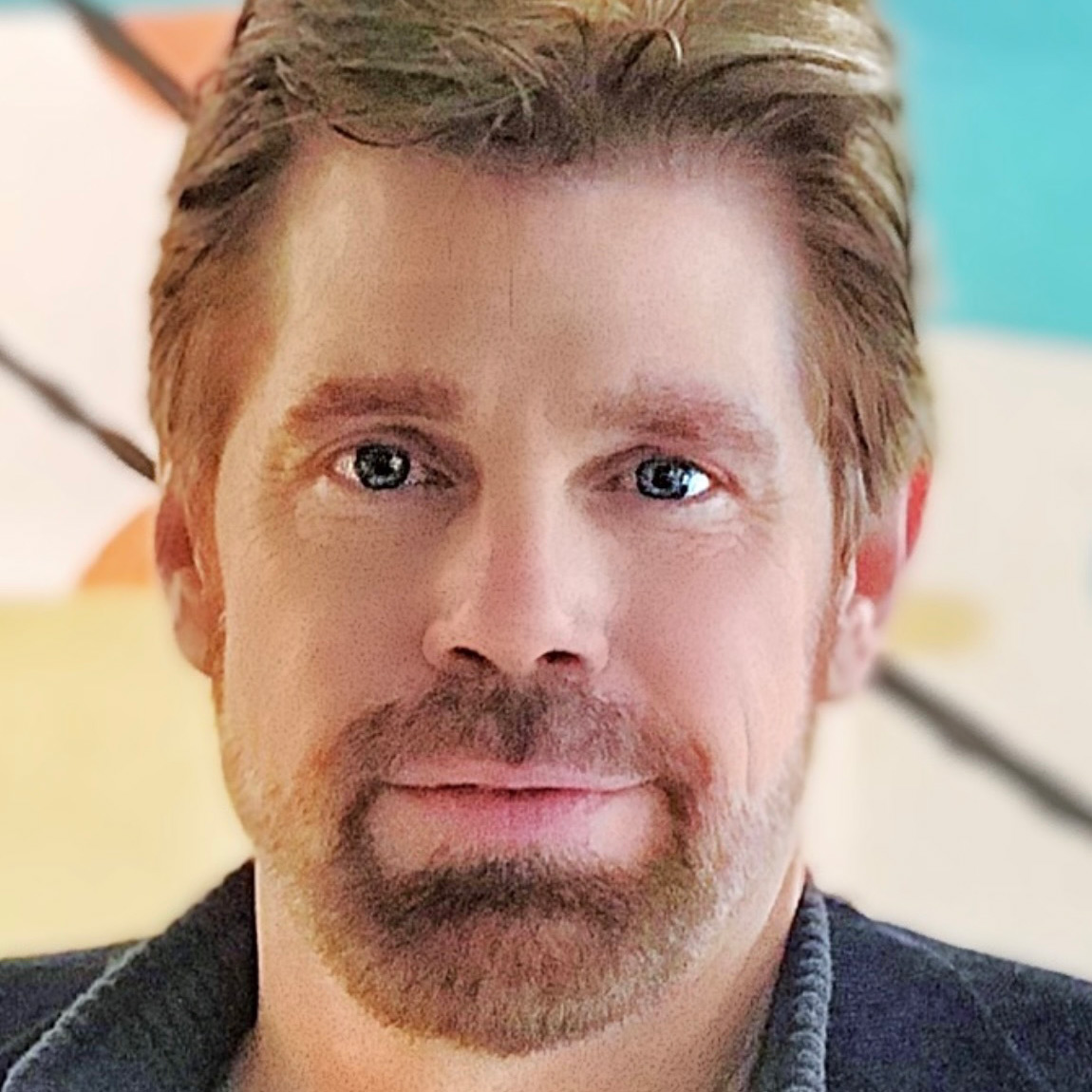
Douglas Cole has published eight poetry collections, including The Cabin at the End of the World, winner of the Best Poetry Award in the American Book Fest, and the novel The White Field, winner of the American Fiction Award. His work has appeared in journals such as Beloit Poetry, Fiction International, Valparaiso Poetry Review, The Galway Review, and Two Hawks Quarterly.
He contributes a regular column, “Trading Fours,” to the magazine, Jerry Jazz Musician. He also edits the American Writers section of Read Carpet, a journal of international writing produced in Columbia.
In addition to the American Fiction Award, his screenplay of The White Field won Best Unproduced Screenplay award in the Elegant Film Festival. He has been awarded the Leslie Hunt Memorial prize in poetry, the Best of Poetry Award from Clapboard House, First Prize in the “Picture Worth 500 Words” from Tattoo Highway, and the Editors’ Choice Award in fiction by riverSedge. He has been nominated six times for a Pushcart and eight times for Best of the Net.


