As to the oboe it doesn’t need teeth,
but a boot heel can’t play it, he tries to
tell the guard, and feels for how many teeth
he has left. How will it help him to think
his instrument’s older than Zyklon B,
older than his neighbor soiling herself
as she tumbled down the steps, older than
the rabbi curled up like a salted slug
in the street, and the girl next door who laughed
and laughed, who couldn’t stop when the butcher
flew through window glass that burst into flame?
Strike the drum, bow that double bass so it
rattles the chest deeper than a bruised rib.
Let oboe and cello do what they can.
Let the violins weep, the trumpets shriek,
the finale annihilate itself,
so the guards cry, Stop!, raise their bayonets
like conductors. They must think the music
means to murder them, to pierce, turn them limp,
till they drop their guns. But they grip harder,
as if to shoot a symphony, as if
those sounds didn’t move through the air they breathe:
trombone, flute, shattered glass, the child’s laughter,
the old man’s groan, the bass, the snare, the dead
entering their lungs as if they too are
dead, though it isn’t music that killed them.
The drummer with his feet in rags, his crash
and boom, tried to warn, and the oboe asked—
don’t they know that nothing is left for them,
but the hearing, the haunting, the hanging.
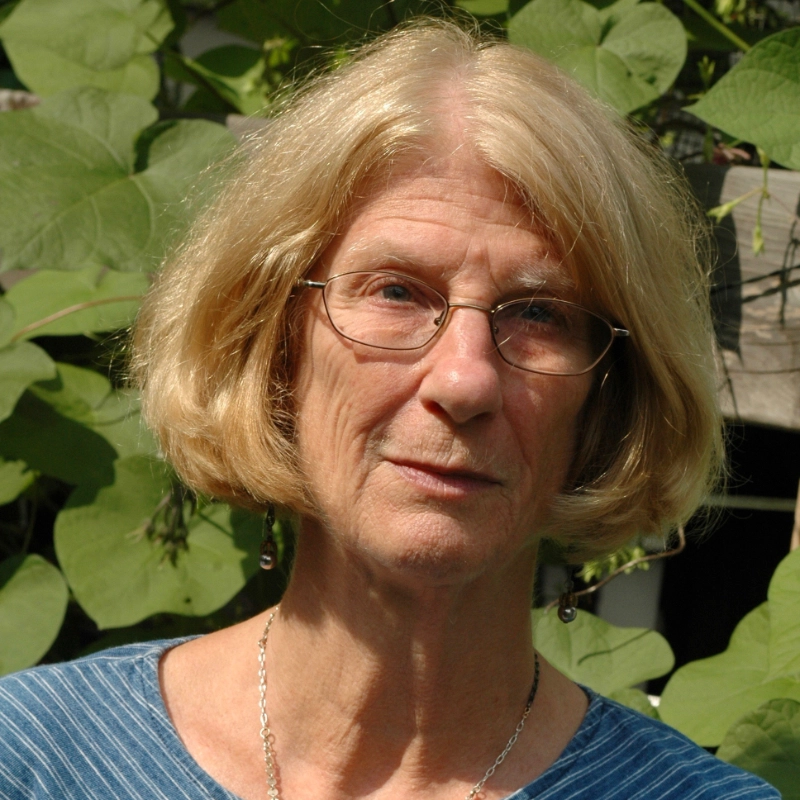
Betsy Sholl’s tenth collection of poetry is As If a Song Could Save You. Her ninth collection of poetry is House of Sparrows: New and Selected Poems (both winners of the Four Lakes Prize from University of Wisconsin). She has poems, recent or forthcoming from Solstice, Persimmon Tree, Tar River Poetry, Plume and Image. She is faculty emerita of the MFA in Writing Program of Vermont College of Fine Arts and served as Poet Laureate of Maine from 2006 to 2011.