

When I first saw Nestor, he was sitting in a wrought-iron chair in the hibiscus–filled courtyard of Havana’s Dulce María Loynaz Cultural Center. I was there to present the Spanish edition of my new book, my first for children. Nestor stood out among the audience because, unlike my adult friends who had come with a child or two, their own or borrowed, he had brought only himself.
He was tall and lanky, his white chinos and light blue button-down shirt contrasting with his dark skin and somehow remaining crisp despite Havana’s omnipresent humidity. Nestor’s professional attire was topped off with a lanyard for the international book festival I was participating in. When I approached to ask if he was a festival organizer, he told me that he was a graduate student studying international relations. He said that he was part of a student delegation attending different festival events.
And, yet, of the 17 people here for my presentation, Nestor was the only one that I— or a friend of mine— had not invited. He told me that he’d seen in the schedule that I was from the US and this rarity, an americana in embargoed Cuba, had enticed him to attend. But now, glancing at the cover of my book, Nestor apologized for not having been better informed. With a tinge of embarrassment in his voice, he said that had he known I would be presenting a children’s book, he would have brought his daughter.
I told him that the book appealed as much to adults as to kids, that it was based on a true message-in-a-bottle story with both an adult (the California sailor who’d written the message) and a child (the Cuban girl who’d found it on her eighth birthday) as main characters.
In truth, I couldn’t fault Nestor for not having known that he’d come to a children’s event, just as I couldn’t fault his classmates and all the other Cubans for not having come at all. Really, it was a small miracle that Nestor had discovered my launch in the first place.
Its listing was buried (without any description other than my book’s title and my nationality) in a 54-page schedule, available via WhatsApp via an inquiry to a festival organizer. Considering that many Cubans did not have tablets or computers, I didn’t know how anyone managed to read all this on a phone.
But I also did not fault the organizers for this oversight. Times were tough in Cuba, tougher than I’d ever seen them in my 23-year history of visiting the island, which I’d fallen in love with during a one-year stay in the year 2000.
During Trump’s first term as US president, he imposed upwards of 200 new sanctions on Cuba, compounding the devastation caused by the US’s more than 60-year-old embargo. These new sanctions exacerbated Cuba’s already stressed economy by further restricting tourism to the island. They prohibited Cuba from purchasing products manufactured abroad if they contained more than 10% of US-origin components, thus dooming its aging electrical infrastructure to disrepair. The sanctions also limited the ability of US residents to travel to Cuba. They hindered humanitarian aid and the ability of Cubans residing in the US to wire money to their families, a common way for immigrants from all parts of the world to supplement the income of relatives back home.
Then, during the pandemic, Cuba’s tourism industry was decimated, and the country suffered devastating hurricanes, floods, and the explosion of a major oil storage facility. Now in February of 2023, just months before the World Health Organization would declare the official end of the pandemic, Cubans were still suffering from regular blackouts and shortages of gasoline and food, medicine and, even, paper.
This year’s book festival was the third I’d attended, albeit the first in which I’d participated. Previously, there had been daily festival newspapers with author profiles and book reviews. There had been beautifully designed posters decorating cultural centers and gracing the ornate columns of participating countries’ embassies. There had been books for sale.
Now, when I asked a festival organizer about buying a new biography of Dulce María Loynaz, the defunct poet whose former house was the cultural center hosting my book launch,the organizer shook her head sadly.
“We sold out at the author’s launch yesterday, and there’s not enough paper for another print run,” she said, adding, with a pained look on her face, “I’m so sorry.”
From all my time in Cuba, I recognized this expression— the dashed pride of a Cuban no longer able to carry out her job to the standards she’d once strived for.
Something in the organizer’s expression also mirrored Nestor’s embarrassment at not having known he was attending a children’s book event. As we filed into the cultural center for my presentation, I wondered what his story was. He appeared to be in his 40s like me, an older student, which in itself was unusual in Cuba. But, beyond that, despite the free educational system, it seemed not so common to meet university students these days. With professional jobs not paying what it cost to buy the basic goods often only available on the black market, many were abandoning higher education. They were choosing instead to work in the profitable world of negocios or under-the-table jobs. If, that was, they weren’t just leaving Cuba altogether.
In my circles, the exodus had started several years ago with a friend who’d been granted a filmmaking fellowship in Germany and never returned. Next, my oldest and closest friend in Cuba had gone to visit her brother in France and also overstayed her visa. Of those attending my book launch, one friend would be moving to Arizona to live with his grandmother in two months. Three others, a couple and their young daughter, were awaiting a visa to live with a relative in Michigan. And the one friend who couldn’t make my event, a retiree in her 70s, was immersed in paperwork to move in with her son in Montreal.
On this visit, regardless of what I was doing, these stories were never far from my mind, my stay haunted by the memories of those gone and the lingering fear that soon there’d be no one I knew left here.
Despite the lack of advertising and attendance, the book launch was a success. The audience listened with rapt attention as I read the story, the artists’ lush illustrations blown up on a big screen behind me. Arletis, the little girl who’d found the message in a bottle, was now an adult and sat with her two young children in the front row. They had traveled three hours from their rural village, and during the presentation, Arletis was so overcome with emotion that tears rolled down her face.
Arletis had brought the bottle she’d found 20 years ago, its parchment-like message rolled up inside. A hush fell over the room as she read it out loud, enveloping everyone in the magic of this message in a bottle. This bridge that had forged a friendship between two people in countries so cut off from each other.
Since the embargo prohibits US publishers from selling to Cuban bookstores, I had brought a suitcase of books from California to give away. As Arletis and I sat together to sign them, Nestor asked if we would dedicate one to his daughter. He said he’d loved the book and would like to talk more if I had time to meet another day. When I asked for his phone number, he laughed sheepishly and explained that his phone wasn’t working.
“But I can call you from a friend’s phone,” he offered.
Now I laughed as I recounted how my phone was not working either, how I’d been unable to procure a SIM card for it because the office that sold them was always closed.
“No es fácil,” he said. It’s not easy, the refrain of life in contemporary Cuba.
As we laughed together now, knowingly, my friend Jacqueline, who stood behind Nestor in line, cast him a scrutinizing stare.
“I know you, don’t I?” she asked.
Havana, the world’s smallest city of two million people.
“Yes,” Nestor said as he narrowed his eyes and a spark of recognition flashed across his face. “From the círculo infantil, no?” he said. “Our daughters went to the same preschool, right? Seven or maybe eight years ago?”
“That’s it!” Jacqueline said as a child’s hand reached around from behind her to place a book on the table for signing.
“Oye, your fans are waiting!” Jacqueline said. I asked her to write down for Nestor the landline number of the house where I was staying, although I cautioned him that the phone was often occupied by the owner’s chatty teenager.
“I’ll give you my phone number, too,” Jacqueline told him. “If you can’t get through, I’ll walk over and deliver the message to her. Siempre hay una manera.”
I smiled at Jacqueline’s quintessentially Cuban determination that there was always a way and, at the same time, felt a pang of sadness at the thought of how much I would miss her— and everyone at my launch— when they left Cuba.
The next afternoon, as I was walking down 23rd Street, Havana’s main thoroughfare, at the very stoplight where I’d planned to cross the street, there was Nestor, also stopped to cross the street. For a beat, we each just stared, too shocked to speak.
“¡Otra coincidencia!” he said.
Nestor told me that he was on his way to class, although, with typical Cuban hospitality, he abandoned his schedule and accompanied me to a nearby office where I planned to make one final attempt to communicate with the outside world. I’d given up on the SIM card, but the card available at this office, supposedly, would allow me to access the internet.
At the office, Nestor insisted on paying for the card. It was just a few pesos, but I knew this was precious money he needed to put towards food and other necessities. But, also, I knew Cubans well enough to know that it would be rude to turn down this generosity.
He walked with me down Avenida del los Presidentes, where busts of Simón Bolívar, Salvador Allende, and their fellow Latin American revolutionaries serenaded us. At the start of each block, Nestor stopped, saying, “I think there’s Wi-Fi here.” But there never was.
Finally, at the end of the boulevard, on the patio of Hotel El Presidente, literally the last place we could have tried before the land dropped off into the sea, I was able to connect. By now, Nestor’s class was over, but he had to rush off to pick up his daughter from school.
“I’ll call soon, so we can find a time to meet,” he said in parting as the Caribbean crashed against the white-washed Malecón seawall behind us. He walked a block back up Avenida de los Presidentes, turned right down a side street and vanished as suddenly as he’d appeared.
Several days after this encounter, as I was reading in bed a little before 10 in the evening, I heard a tentative knocking on the exterior wall of my guesthouse. My host, who lived in the main apartment to which the front door was attached, was not home; and as I was trying to decide what to do, I heard a woman’s voice say, “Más fuerte,”and then the knock came again and, as instructed, more assertively this time.
“Hay una luz encendida,” the woman said to the knocker. “So, there must be someone in there. That’s the room where visiting foreigners always stay.”
There was a moment of silence, and then the woman called out in my direction, “¿Hay alguien ahí?”
Instead of answering, I pulled on some clothes, the humid night air hovering around me as I walked into the main apartment. Once there, I heard the woman’s voice again, now offering to unlock the main gate to the apartments so her companion could knock on the front door.
I unlocked the dead bolt of the front door and walked into the open-air foyer to see a small elderly white woman gesturing excitedly.
“Is that her?” she asked as, from the shadows, out stepped Nestor nodding. “I told him he just needed to knock harder,” the woman said, addressing me now and, with a laugh, adding, “Such a big man, but such a soft knock!”
As with Jacqueline’s offer to relay whatever message Nestor might have for me, this moment represented so much of what I loved about Cuba— how people helped each other out; how strangers still spoke and had not yet become afraid of each other; how it was still acceptable to drop by someone’s house unannounced. How there was community.
In the US, I could not imagine a diminutive elderly white woman offering to unlock the gate to her apartment complex for a big black man she’d just met in the middle of the night. Later, when I would recount this scene to friends back home, I never had to finish my thought about how things would have played out in the US. Sadly, we all knew of too many horrific outcomes from such innocent encounters.
Her good Samaritan duty now accomplished, the older woman bade us goodnight and, with a proud smile, headed inside to her apartment.
“I’m sorry to have stopped by so late,” Nestor said to me. “Your guesthouse phone was always busy, and when I called Jacqueline tonight, she told me that you’d be leaving in two days and gave me your address so we could find a time to meet up.”
We made plans to meet up the next day and parted with the requisite Cuban cheek-kiss salutation. Then, just as Nestor had done after we’d last met, he disappeared around a corner, and now, was swallowed up into the night.
On my next-to-last day in Havana, Nestor and I met in El Balcón restaurant, a few blocks from the Centro Cultural Dulce María where I’d had my book launch. I had proposed we meet at the guesthouse where I was staying, extolling its garden table shaded by a broad-leafed almond tree. In truth, I was hoping to avoid the awkwardness that arose whenever I accepted a Cuban invitation to go out and then had to witness my host count every last peso in their wallet and still come up short for the bill. But Nestor had insisted we go somewhere new to me.
In El Balcón, surrounded by the giant green and hot pink leaves of a caladium, we talked for nearly four hours, declining food and nursing our guava juices in an unspoken attempt to keep the bill down. We talked about my book and our favorite books, about films and plays and songs. We discovered that we were both fans of Cuba’s nueva trova music with its social and political commentary.
When I told Nestor that I was involved with US groups working to end the embargo, his face broke into a smile so big it made me smile too. He said he’d thought this might be the case when he’d heard me talk at the festival. He said he felt there was a lot I could do towards this goal, that my book could even play a role, that we should definitely continue this conversation once I was back in the US.
Nestor praised the accomplishments of the Cuban Revolution— its free healthcare and educational systems, its organic community farms, its support of women and Afro-Cubans, its subsidized housing, its sports programs. And he lamented the dissolution of so many of these gains due to the hardships caused by the embargo and its sanctions.
When Nestor spoke of his wish for things to improve and his desire to use his studies in international relations to support Cuba in this, I found myself catching my breath. Nestor, I realized, didn’t want to leave, making him one of the only Cubans I knew who didn’t.
I felt a small and long-dormant flicker of hope for the future of Cuba— and also my future connection here. I felt almost giddy at the thought that I had made a new friend who would be here when I returned.
When we said goodbye, Nestor asked for my email address so we could continue our conversation. I walked back to my guesthouse, beaming all the way.
On the day of my departure, as I was awaiting my taxi to the airport, Nestor called to say goodbye. He said he was so glad to have met me and then asked if I would be in another country soon. Confused, I said I would be landing in the US in the evening to which he responded that he was referring to a country outside the US.
“Well, no,” I said. “I don’t have any other trips planned now.”
“Pues,” he said, clearing his throat, “it’s just that I was telling a friend about our conversation, and he thought it was best to not continue it now, and I realized he was probably right. Maybe later,” he said, pausing, “if you’re in another country.”
I felt I should respond, but I was too stunned to speak.
“I’ll still email,” he added quickly. “But when I do, I’ll be writing you as Palomo. Do you understand?”
“Not really.”
“When I write,” he said, slowing his speech as he rephrased his words. “I’ll sign the email as Palomo.”
Before I could ask for further explanation, my taxi honked outside, and there was only time for a rushed goodbye.
All the way to the airport, I replayed our conversation in El Balcón, searching for clues as to what had so spooked Nestor. Did he fear that he would somehow endanger Cuba by talking to me more about the embargo when I was in the US? Or was he worried for himself? Or for me? Or, maybe, for all of us?
Six months after I returned home, I received an email from Nestor. It read, quite simply, “Hello, this is Palomo. We met at the book festival in Havana. I’m writing to send my wishes that you are well.”
Given that we’d met so recently, I was surprised by the sense of sadness and, also, of loss that I felt while reading his email. The reality that he was the one Cuban I knew who would be there when I returned was still true. But something had shifted significantly since our conversation in El Balcón.
I could see now, the politics between our two countries had done their damage. They made it so that a Cuban like Nestor, who remained because of his alignment with his country’s history and ideals, also remained afraid to communicate with a new friend in the US. Maybe, I realized with a sigh, the rift between our countries— and its impact on personal relationships— wasn’t as easily forded as in the fairytale of my children’s book.
Even though I suspected, as time would prove true, that this would be the only email I would receive from Nestor, I nonetheless wrote back. I wrote warmly but also briefly and formally as he had. I wrote as if our deeper conversation hadn’t occurred. I wrote to Palomo, this pseudonymous man I didn’t know, lamenting the friend I had almost made but who had disappeared, silently and with no rift. Like a bottle drifting away on the waves. Like a person hoping against history for a sea change.
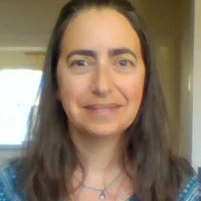
Lea Aschkenas lives in Northern California where she works as a librarian at a public library and a poet-teacher with California Poets in the Schools. Her memoir, Es Cuba: Life and Love on an Illegal Island (Hachette), tells the story of a year she spent living in Cuba. Her children’s book, Arletis, Abuelo, and the Message in a Bottle (Star Bright Books), is based on a true message in a bottle story set in California and Cuba.
Additionally, her prose and poetry have been published in World Literature Today, Salon, The Washington Post, The Los Angeles Review of Books, The Atlanta Review, Bracken, and Poets Reading the News, among other publications.


