

Halina
You’re back, Halina says, not looking me in the eye, and leaves me
bitter black cherries on the table. As a child, I believed these
cherries to be food for rooks, because even sparrows wouldn’t eat
such bitter fruits. Only the rooks and sometimes me. The culture
I grew up in, from which I ate and drank, offers insufficient tools
for suicide. It actively opposes my striving for seclusion, my closing
myself up inside solitude’s small stones, or the rain of obliviousness
to the consequences and insolence of poems supposedly meant to serve
as rescue and anaesthetic. Poems give off love on paper, they stink
of the provincial library imagination. I throw out my books, renounce
touch, avoid getting drunk on cocktails of hair and secretions. The cherries
came from the tall trees of the district hospital, the rooks would fling
themselves from them, the stones fall on my little head. Louder, shout
louder to stifle fate’s voice, another song of return that will never lead you
to savour presence, or to passion’s warm sweetness, I know that already.
After touching dark nipples in a thick night of air raids, hunger and no
sleep, all I have is dirty fingers, fingers sticky with cherries and fingers
bitter with rejection.
Ewa
I put it in my mouth, this morsel of ritual bread
I’d never received the proper way, never having knelt
before its corporeality and duality. In the end, who comes
out of who, who is inhabited by who, who was gifted
the fire of enlightenment and who only got this bread
soaked with acid? Ewa’s shaved head sort of shines in the
flat’s interior, quite ordinary, while a warm male hand,
swollen from hypertonic attacks, halts on my knee.
My bandages are soaked with blood and exudate,
and patches of my skin are still there on the pavement
on Kalwaryjska Street. What’s this shaking in my hand,
is it the hand itself, or am still not cured of silence or
loneliness’ apathetic sun? Is it the bald little girl shaking
as she swallows her chocolate communion on the sly
while her father keeps caressing my knee, is that
my bleeding calf, torn up by the rough pavement?
Or something else entirely, my strung-up biking breath
cured by the flame of pre-war alcohol? Behind trauma
only trauma, behind torn skin only a wasp sting, behind
dejection only resentment, behind laughter only a
slobbery cackle, behind tears only a slobbery cackle,
behind testimony, behind sacrament, behind sacrifice
only a slobbery cackle. A pre-war memory tearing
my lips apart with its forked taste.
Igor
You force me to go back. The woman holds a shower head
in her shaking hand, frantically unscrewing the cold water tap.
You were born to her so you could devour the weak and the
sick like a wolf, swallow up those in search of help and
support. Wild, erratic, uncertain, shaggy wolf. I’m a god, I'm
flying, her son shouts in the bathroom, drunk and hot.

In the art museum he smells the paintings, goes round from
colour to colour, hunting for the gap between hues, the error
at the tip of the brush so he can finally finish off his own
image, unlike him, untidy, equipped with unnecessary detail,
like the figure of the little girl in the white jumper who hides
her face behind a bouquet of little white flowers.

There is nothing, no future, no past, there remain only words.
Gravity won’t hold that god in the bathroom, in his mother’s
shower, and his screams land in the dust of the street like
droplets of cold water in the city’s filth. Water boils and
evaporates on the skin, apparently that’s just what it’s like,
the chain reaction of a drunken tongue, that’s just how
the smashed panes of memory shake, permitting nothing
but laughter and shouts. You’re a god in this memory, you fly
in this memory. You devour me, Igor, in this memory.
Anna
At dusk this landscape is so crappy it would be embarrassing
to look for lines and points, composition and order, colour
and contrast, fuck that. Through the window I see people
of different genders, meeting up, saying goodbye, he’s off
to the car, she to the patch of light by the entrance. The man
is making his way north into that cold and night, upset,
puts some techno on, he’s escaping, maybe trying not to
think about it, he slips away, he’s off, he’s got the fuck out, but
I’ll admit I know nothing about this, and my mention of the direction
he chose, the music he put on are the fruits of my own imagination,
the crap of my invention, the shite of my psyche. The woman,
however, is still standing in the patch of light at the entrance.

The dark sets in and ice floats down the river, the cold sets in and
what does it mean that I’m standing over an abyss, after all, it’s just
a river, maybe wider than it had seemed, but not rough enough
to swallow a crumpled ticket to Kyiv. Anna has a dragon-shaped
earring, looks at me from the Dnipro’s other bank, from so far that
there’s no way I can recognise the tiny muscle movements on her face.
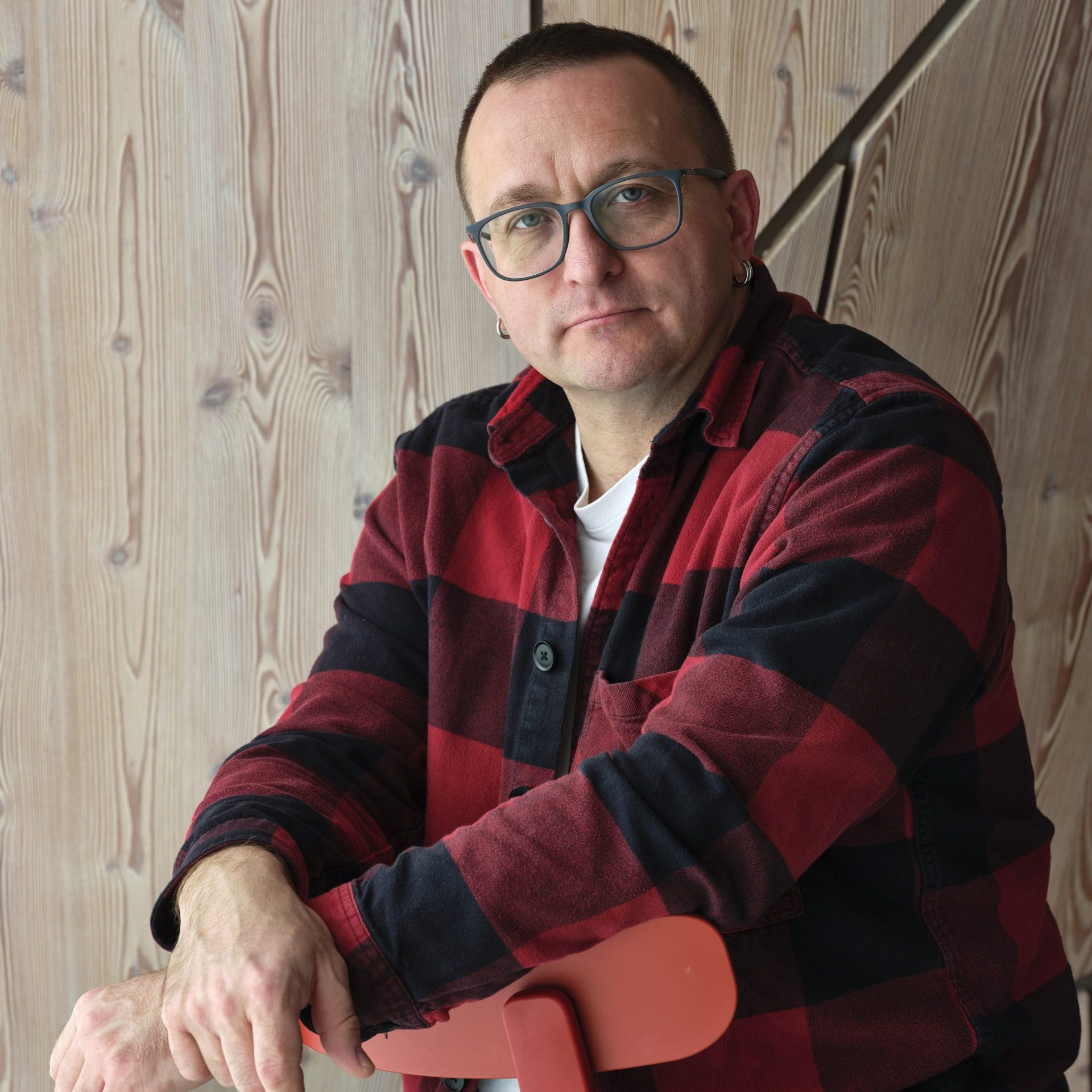
Jurij Zawadski is a Ukrainian poet, publisher, musician, literary scholar, and social activist. An experimentalist and performer. He holds a Ph.D. in philology. He has published 10 volumes of poetry. His work has been translated into many languages and published in Poland, Denmark, and the Czech Republic. In addition to his own creative work, he is involved in translation and publishing; he is the founder and director of the Krok publishing house. He lives in Ternopil and Cracow. His last poetry book in Polish „Jak poczuć się samotnym w zatłoczonym pociągu” was nominated to Nike Prize in Poland.
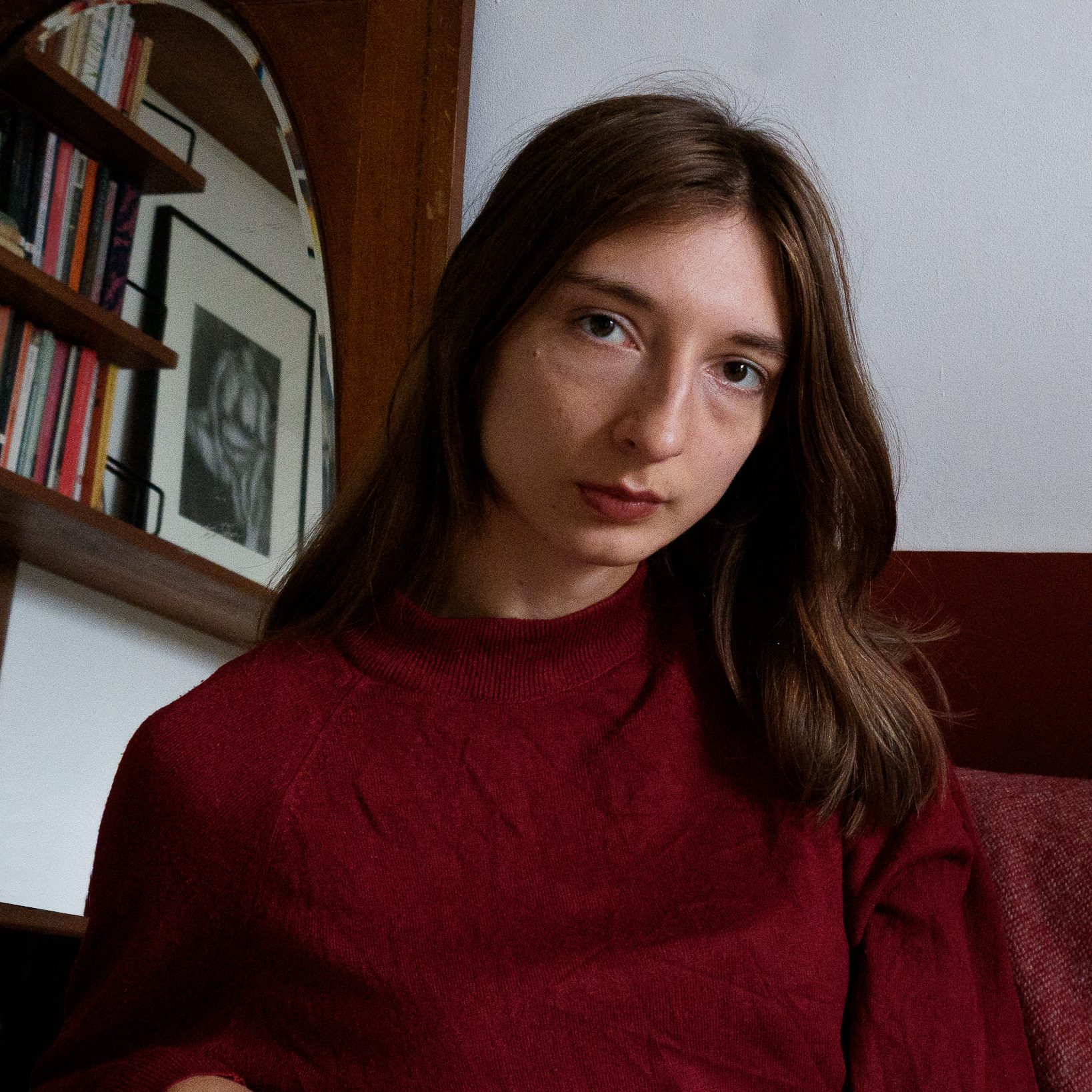
Nasim Luczaj is a poet and translator. She is the author of Hind Mouth (Earthbound Press) and Ultraviolet with Landing Marks (Oblique House), and her debut poetry collection, Tang, is forthcoming from Faber & Faber in 2027. Her poems and translations from Polish have appeared in Granta, The Atlanta Review, Poetry London, Wasafiri and on the Asymptote blog, among others. She co-edits Wet Grain, a magazine for poetry and essays on land use, provenance and the environment.


