

A Few Words from Solstice’s Poetry in Translation Editors
BSC: I was introduced to translation through the poems of the Slovene poet Srečko Kosovel over 30 years ago (1989) in graduate school. One of my mentors handed me a slim green volume of Kosovel’s poems that had been translated into French. I decided to try “translating from a translation” and see what would happen. I had no knowledge of Slovene nor Kosovel, but even through another language I was excited by this particular poet’s imagery and voice. His writing was different from the narrative, somewhat prosaic/talky style at the time in the late 80s, early 90s. I admired the collage-like structure of the work, the stacking of seemingly disparate realities, the use of numbers and symbols as an early avant garde poet. Kosovel’s poems were composed of so many different styles that gave each poem its complexity and depth. They were at once haunting & lyrical, soulful, but bold, edgy, but tender. I felt a kinship with him/his writing, even as it came through the French. I didn’t have access to the Slovene till many years later when I traveled to Slovenia for the first time (2004) as a post-graduate student at a Vermont College residency. After the writer/scholar Ana Jelnikar gave a presentation on translation where she included a poem by Kosovel, I asked her if she might consider translating more of his poems together. We began an email correspondence soon after that leading to the book Look Back, Look Ahead, published about four years later.
EC: My interest in translation probably began in graduate school at the Jagiellonian University, in a class with Professor Elżbieta Tabakowska, a translator and cognitive linguist. For my master’s thesis, I analyzed container metaphors in selected poems by Emily Dickinson and it was then that I first started comparing various translations. We also had translation workshops with other professors, where we translated poetry from English to Polish and vice versa.
My first translations were graduate school assignments, and later, after graduation, my former professor. Elżbieta Wójcik Leese invited me to translate Polish poets — Miłosz Biedrzycki, Marcin Świetlicki, Anna Piwkowska — for anthologies published in the US and UK.
During my PhD in the United States, I began seeking out my own poets to translate: Kazim Ali, Cole Swensen, Lyn Hejinian. But in the end, I found the greatest joy in co-translation. Together with Miłosz Biedrzycki, we translated Jorie Graham into Polish, a selection of her poems published by Biuro Literackie in Poland. My most recent co-translations include poems by Vievee Francis and Matthew Olzmann, translated with Artur Grabowski, published in a Polish literary journal: Topos.
How translation has influenced our writing
BSC: Translation makes me much more careful writer. If something is unclear, I can almost hear my friend who translates my work into Slovene, “What do you mean by that?” When you have to explain what you mean, even though you don’t want to be stated directly in the poem, your intention should be clear and the language sharp and precise. I try to use words that open up to more than one meaning but do not lead a reader astray. I’m also more conscious of using idioms. I have to be able to follow the thread of meaning but in a way that is both surprising and natural, full of particulars but also suggestive. I’ve primarily been working with a poet who writes very tersely. This has made me very conscious of cutting out all unnecessary language, so that the writing is close to the bone.
In addition to making me more attentive to wording, lexicon and syntax, it’s also expanded my writing in many ways. I trust more in the ambiguities and get a sense of how cultural values are often imbedded in language. An example is how many words there are for silence and its different aspects in Slovene, a language that few people speak and whose language was even at one time between the two world wars was forbidden to be spoken.
EC: Translation has been inspiring me in conscious and unconscious ways. When I am stuck with my own writing, I turn into a translation. When I fall in love with someone’s work in English, I translate it into Polish, as if to absorb it into my own blood. It is both a desire to share it with others and to inhabit it more fully, to make it mine. Because I write in a non-native language (my native language is Polish) I could argue that my writing is itself a kind of auto-translation, or maybe mistranslation. These things are hard to explain. Subconsciously, I may be smuggling and shuffling images from one culture into another. I am no neurologist, but I suspect that exophonic writers (those who write in an adopted language) draw unconsciously on translation processes as they compose, moving between two linguistic worlds even when they believe they are inhabiting only one.
What we find to be the most challenging aspect of translating poetry
BSC: At the recent AWP in Baltimore I attended a panel on fidelity vs beauty in translation. Finding that balance is the most challenging aspect of translating for me. Denise Levertov was quoted as saying that both the original and the translation should have the same effect. What is difficult is that there are natural properties inherent in each language; for example, French, Italian and Spanish tend to be more melodic than English, which tends to have a crisper or perhaps more harsh sound. Slovenian tends to be softer with fewer words because like Latin it is a language that is declaimed, whereby the subject and tense are part of the verb, so they are all contained in one word. Since the word music is part of the meaning you have to find a corresponding way to contain the music. Sometimes it is found in using a lyrical image.
Another challenge is creating a translation that sounds natural in the target language but also a bit foreign. I like to preserve the sense that one is reading a translation & not a poem in the original. But you don’t want the poem to sound stilted or too strange. What is difficult for me is that I don’t have direct access to a deep knowing of the poem in the original so I must rely on my co-translator who provides me with a version of the poem that is beyond a literal. However, not knowing the poem in the original may also give me more freedom since I am not as bound to the original poem. Still it can be much more time-consuming. When I first read the piece, I have trouble locating the poem. The content is there, but the words are informational. It takes a lot of going back and forth to draw the poem out.
EC: I agree with Barbara that one of the central challenges is how not to domesticate a foreign text while still making it accessible. Another is our tendency toward over-explication. In translation, we often feel the pull toward explaining too much so called “surplus.”In his book Gościnność Słowa (Hospitality of the Word), Jerzy Jarniewicz — a Polish translator, poet, and critic — observes that translators sometimes expand on the original, as if afraid of the horror vacui, the fear of empty space.
For me personally, the hardest challenge is translating rhymed poetry.
If no two snowflakes are alike, how we -translators – attempt at the equivalence between the two texts
BSC: A poem is created out of a particular language—through its specific words, their rhythms and music in conjunction with images and associations out of which the experience of the poem arises, something created through the combination of all these—which is why we might call the poem organic or alive. It’s impossible to create the exact same entity in another language. But you can find correspondences. Approximations. If the poet were writing in English what images, words, idioms, structures, manner of expression that might be used that evoke a similar sense and spirit. Sometimes the association or particular sound of one word over another draws out what I perceive the intention of the text more closely. Again we are after a similar tone and effect. That is the aim and the hope.
EC: Even synonyms in the same language are not equal. Dog is not the same as perro (Spanish) as chien (French)as pies (Polish) or cao (Portugese). Snow for Eskimo (many synonyms here) is not the same as snow for Europeans. Even onomatopoeia varies from tongue to tongue. Woof woof is not the same as Polish how how. American rooster crows differently than a Polish one. In Polish we have kukuryku, not this weird cock –a doodle do. Instead of being just faithful to linguistic or semantic structure, we need to convey the spirit, the semblance of felt life, the aliveness.
In his book Europe: A History, Norman Davies, a historian, said that translation is like a melody of an original played on a different instrument or in a different key. Bach’s Air on a G string which was written for a violin, will remain recognizable, even if played on a trombone and in the key of B flat. But they can never produce exactly the same sound (7).”
How we translate the aliveness, “the semblance of felt life,” to paraphrase Susanne K. Langer in her book In Feeling and Form
BSC: When I translate a poem, I enter it completely, submerge myself into the experience of what is happening inside it, all the while keeping in mind what I know of the poet, the tone and manner in which they express. I’m aware of the need to balance, so that the poem brings alive the experience as closely as it might have been felt by the poet. Recognizing there is always a gap because the words are unique in evoking both the experience as a physical one but also an emotional and spiritual one through the music and sounds of the original language. Often the literal versions are very wordy and wooden-sounding. One must stream-line without becoming too obscure. I am always searching for a balance between bringing the poem to life in English and keeping it faithful in its spirit and tone to the original.
EC: When Emily Dickinson sent her poems to Higginson – the editor of Atlantic Monthly – she asked whether her verse was alive. It is because poets think of their poems not as description of past event but an enactment of an experience. How do we translate what cognitive linguists would call iconicity of the poem? Is it enough that translators relocate the meanings or solely interpret them? But how do they reenact them?
In poetry “felt life” is carried by prosody, in other words: meter, rhythm, and sound. This working of all of the elements together in a poem in order to lead to a formulated feeling is called poetic iconicity. The challenge for a translator is to capture that aliveness. How do we translate the aliveness? How do we translate what cognitive linguists would call iconicity of the poem? Is it enough that translators relocate the meanings or solely interpret them? But how do they reenact them?
In poetry “felt life” is carried by prosody, in other words: meter, rhythm, and sound. This working of all of the elements together in a poem in order to lead to a formulated feeling is called poetic iconicity.
How we are co-authors and not just translators
BSC: That’s like asking if we are creators or re-creators? Only in our re-creation the translated poem is not the same as the one in the original language. We are essentially finding our way through the poem not currently worded in the target language. It is similar to writing a poem, feeling our way through the experience at the same time we come up with the words. Though the experience is already imbedded in the original poem, so it’s kind of a transference of energy through the words, their sounds and the rhythms of the sentences, trying to align those to the original as closely as we can in order to carry that energy live from one language to another.
As I mentioned earlier I work with a co-translator who provides me with a better-than-literal English version of the poem. But she also interprets the poem. One of my co-translators, Ana Jelnikar is a literary scholar and essayist. The other is the Slovene poet Miriam Drev, whose English is also superb. I also use Google Translate to get a basic sense of the poem before adding my interpretation into the mix. Reading the literal helps me find my way in, as though I’m standing in the foyer of a house. I go through each line as I am walking through the house. As I read, so I find words in English—re-enacting in English the words I imagine the author might have chosen if she had written the poem in English. One example of translator as co-author comes to mind regards the poem “Sheepskin,” which appears in this issue of Solstice. The final line of the poem Vse drugo je neoprijemlijivo in spi v toplm hlevu literally translates into “Everything else is intangible and sleeps in a warm stable.” But instead of “stable” or “barn” I use the word “pen.” Why? That adds a layer of meaning due to the fact that in English “pen” is both a place to keep animals and an instrument of writing. The poem is also about how the act of writing leads one “beyond knowing” where countless possibilities “sleep in the animal and the human who writes to understand more. Here a spiritual understanding of the cosmos comes alive in the animal skin as much as in the act of writing
So that’s an instance of another layer of meaning coming out in the translation that may not be the same in the original. And that’s ok. That is the way translation works. In some places a single word as homonym can heighten or make the discovered sense more resonant in the target language than it is in the original. By the same token, words that are homonyms in the original only serve one meaning in the target language. So while you may add depth in one place, you may also lose it elsewhere. You try to find an association or image that offers a similar sense. That is the beauty of the process. You experiment, play, tinker. As a creative process, you carry the poem across language to deliver it whole and alive.
EC: Translators make thousands of invisible decisions about rhythm, tone, ambiguity, cultural resonance that shape how a reader experiences a work. There is no neutral translation. The translator’s voice, sensibility, and interpretation are on every page, whether we acknowledge it or not. So when I read a poem in translation, I am reading as much the translator as the original author.
What we look for in a translated poem
BSC: That the poem sings and thinks at the same time. That it moves me. That the experience of the poem brings me to a different place than where I began. That my energy is changed as a result of reading this poem—that I feel its spirit as well as its sense. That it doesn’t sound wooden or wordy. That it captures not just the content of the original but its poetry—its resonance and word-music. That it intrigues and mystifies and brings something new into existence.
EC: A re-enactment. That “semblance of felt life” we mentioned above. The ideal is to make the poem alive. Not a reproduction, but a re-creation. A new creation.
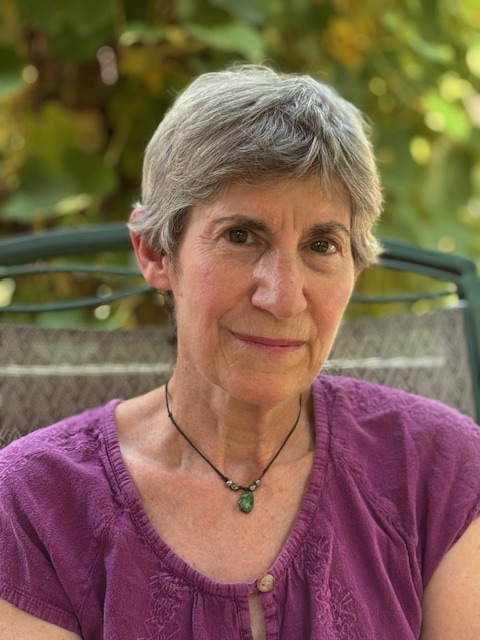
Barbara Siegel Carlson is the author of four books of poetry, most recently Current published by Lily Poetry Review Books, 2026. She is the co-translator (with Ana Jelnikar) of Look Back, Look Ahead, Selected Poems of Srečko Kosovel. Her poetry and translations have appeared in On the Seawall, Verse Daily, Mid-American Review, Salamander, 2River, The Poetry Porch, among others. Carlson is a Co-Poetry in Translation Editor of Solstice.
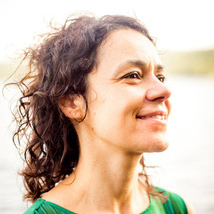
Ewa Chrusciel is a poet, translator, and educator. She has four books of poems in English with Omnidawn Press: Yours, Purple Gallinule (2022), Strata, Of Annunciations, Contraband of Hoopoe, as well as three books in Polish: Tobołek, Sopiłki, and Furkot. Her book Contraband of Hoopoe was translated into Italian by Anna Aresi and came out in Italy with Edizioni Ensemble in May 2019. Her poems have been included in curricula at institutions such as Harvard University, University of Wisconsin, Dartmouth College, Salem State University.
She also translated various authors into Polish, including books by Jack London, Joseph Conrad, and I.B. Singer, as well as book of selected poems by Jorie Graham (2013), and aforthcoming book of selected poems by Vievee Francis (2027), and selected poems of Kazim Ali, Lyn Hejinian, Cole Swensen, Mathew Olzmann and other American poets.
She is a Professor of Creative and Professional Writing and M. Roy London Endowed Chair at Colby-Sawyer College.


