

In the summer of 1975, my Uncle Marvin sent for us to stay with him in Chicago by telephone. Just the girls, he’d said, leaving my brother Michael to himself in Robbins. We were ecstatic. Robbins, Illinois, wasn’t much different from Southside Chicago or very far. Hell, we went there to get our school clothes every year. But that summer it felt like we was being sent to Hollywood. We’d packed our bags the night before. By we, I mean I watched Star pick out my clothes, fold them, and stuff them next to hers in a big brown suitcase that fell off a truck somewhere. We’d have five outfits each and our castor oil, comb, and rubber bands.
The day we left, Wah-ya wasn’t up yet, and my older sister Star liked it that way. I did too. But Star got it the worst, black welts stretching across her back and legs. I guess—actually, I know—Wah-ya wasn’t her name. Technically, ‘wah-ya’ wasn’t even the word we were saying. She was a little woman, stern with glasses, and we called her “warrior” because she was quick to beat you to the southern states and back. And ‘you’ included men, women, and children. But us, in Robbins, messed names up in a special way that country people near big cities do. Robbins is special. But all the social silos of the southern suburbs feel that way. Like little social clubs that you’re born into, and that is your only admittance. You don’t know it if it’s not in your blood. And even now, I just say I’m from Chicago. You only know Mudville if you are the type of person to know it.
“I know you better get ya ass up.”
By then, Star had perfected a maternal tone of voice. She carried a feminine bass in it all the time anyway. She always sounded like she was two steps away from announcing a ball game. When she was happy, it carried a mirth in it that could light your insides up with fireworks. Especially when she called your name. There were four of us, and Tony, our oldest brother, did too. His voice was the deepest sugar rush. But Tony did a lot of promising that he’d come by and not coming. He was never there. Michael had a voice more like the sound of a broom sweeping. And mine was in between, sharper than his but not as full as my other siblings. Not that anybody listened to me to notice my voice; I was the baby.
It’s strange to linger on voices, but details like that are sharp when you mourn. The big pictures are the shady things. You won’t remember whole rooms of the house you lived in, or why you moved there. But as you watch them tear the thing down, you’ll remember the flaking white paint on the underside of the basement steps and the spot on the carpet where your dog spilled your nail polish, and you were so mad, scrubbing with acetone, the smell soaking into your fingers. Remembering people goes the same way. No big pictures, just snapshots.
“Five minutes.” I waved my arm at her before curling up in a ball, knees down, my forehead pressed into the mattress.
She ripped my cover off of me. “‘Til I beat yo’ ass. Get up! We gotta go.”
I took my five minutes anyway. When I got up, she’d already left the house, which blessedly gave me the peace I needed to take my time, the way I like to.
We lived on 137th Place in a little three-bedroom house that looked like it was impersonating a single brick, save for a low roof and a blue and white striped awning above the door. Our street wasn’t properly paved, gravel laid down on tar. The gravel would poke at your shoes and the tar would cling on to them. And my least favorite thing about it during summer was that I couldn’t run out and feel the street under my bare feet. In the lot next to us, Mr. Young grew vegetables. I don’t think he even owned the damn lot. But he left room for the neighborhood kids to play there, between his crops and the small gate of our yard. He’d planted lilac shrubs along the edge and that year was the first year they were tall enough to poke through the gate as they bloomed, hummingbirds coming to buzz around them every so often. We still loitered in the middle of the street, a benefit to living on a dead end. In the summer, you’d hear the sound of children playing throughout Robbins, or ‘kids being bad as hell’ as most of the adults assumed. It was an intersection of the idyllic and abject squalor, our little dead end street, where American dreams and nightmares laid next to each other and made one whole.
Star had left food for me on the counter: government cheese and bologna on white bread. So, I ate it before I braved the summer sun. I had made sure to wear my good shorts, the ones that ended right before my knees and my thinnest t-shirt, ‘cause it had been hot as sin. We weren’t supposed to wear anything too tight or short, so our coolest clothes were ones that were too small.
Still, Star had just gotten to the age where she wanted to show people something. The upside of that day was she wasn’t coming back home to hear Wah-ya call her a slut or beat her for tempting somebody, as if her full figure had come from a pact with the devil. And since she wouldn’t see our foster mother—forgive me, that’s who Wah-ya was—she had put on her daisy dukes and a bright orange crop top. She’d put two braids in her hair the way I’d wish she’d do me, parted to the side so the one braid was especially beautiful, like a crown across her head. She never did me like that. She always put seven or eight braids in my head. I walked around like a doll baby.
“You better tell somebody, I’m bad.” She strutted in the middle of the street, her wrists bent so her hands pointed behind her. She moved her arms with a rhythmic flair, her shoulders thrown back and her chin jutted upward. They used to say stuff tight-lipped and cool, slinging words with carefully placed laziness in just the right vowels, dropping just the right consonant, putting a sensitive soulful whine in their voices that many imitate but can’t quite hit. Back then, everybody already wanted to be damn Dolemite, and he’d just come out.
Our suitcase was on the side of the road. Robbins is Mudville, cause it ain’t got no sidewalks, never been paved right. So I just sat on the suitcase and read Sherlock. I had two more in my backpack that I’d been told not to take. I wore it on my shoulders hoping it wouldn’t stand out.
Her habitual audience, Karen and Cocoa, got to laughing, strutting with her. They had a call and response they liked to do, and it likely came out then.
“Hey, who got it?” one girl would say.
“We got it! We fly and Black. We flaunt it!” the other girls would respond.
They had a specific chirping that was only for their flock. No flightless birds allowed. So, I kept my nose in my book.
“What she reading?” one of the girls asked.
“I don’t know. You know Tracy. She always reading,” Star said.
“She need to stop reading and learn how to dress.”
“Too ugly to dress like that.”
I delved into the words of my book as if a womb, as if a place to harden until ready for the world I’d already been dragged into. Star’s silence was louder than the insult.
“Anyway, girl, when y’all leaving?”
“Soon. Now. I don’t know,” Star replied.
The words of my book might as well be Spanish. I couldn’t focus. Ugly. The word repeated itself. It was the refrain from everyone who knew me. And looking back, I couldn’t have been that ugly, could I? That it came from Wah-ya, from my siblings, from my friends if you could call them that. I couldn’t have been so ugly that I needed to rush past reflections, smile with a closed lip shame to hide the gap of my teeth. I came to know the word to be my name, heard it more often than Tracy, sure as hell more than Tricetta, my whole name. I closed my book and stared at the sheen of sweat starting to appear on my shins.
I didn’t pay attention to who said it. Cocoa and Karen were pretty much the same. Short, loud, round, and brown. That was most of the girls, but me and Star. Star was more solid. She played basketball, loved the game. Probably mostly because she could humiliate any boy who went toe to toe with her on the court. Me, on the other hand, I was on the thin side, sturdy but fast, built to run. We stayed outside from sun up to sun down, all year round, developing the endurance of Olympians. Even going into the city was arduous, it took hours and if we came back too late, we’d have to walk from Blue Island. I don’t know exactly how long or far that is, but it’s damn far. I know that.
When I got up, Star looked me over with mild satisfaction. I was ready in her estimation, dressed and clean. Her eyes flickered over my bag’s shoulder straps, but she didn’t say anything, just sighed.
Cocoa watched Star’s inspection and interrupted, throwing herself onto my sister.
“I’mma miss you, girl!” she lamented.
“You, too.” Star’s voice wasn’t especially tinged with sentiment, but she brought her arms around Cocoa’s waist. When Cocoa stepped back, Star’s hands lingered for an extra second, before pulling them back quickly, as if Cocoa were the eye of a stove growing too hot to touch. “I mean, I really will,” Star added. “Both y’all.”
The short hop it was to the corner of Kedvale was in silence, Star kept looking in my direction, carrying our suitcase. “You say goodbye to anyone? Michelle?” she asked about my closest friend.
I hugged my book, looked in the direction of the two-story she lived in. We’d sat together yesterday, in an overgrown field nearby, watching the sun go down. You could hear the nearby tollway, and it was the only sound apart from Michelle’s hiccups and the occasional slap of skin, attacking a mosquito. She had shook violently, with both pain and anger, her cheeks wet from an on and off tap of tears. Her left eye started bruising something bad. I, myself, had avoided touching my shoulder, still sore from last week’s report card. All ‘A’s but teachers just have to put something in the comments, never knowing how it will be read. When we got up to walk home, Michelle patted me on the back. I winced and immediately felt guilt, knowing she hurt more.
“Sorry,” she muttered.
“No, it don’t hurt,” I had said.
Those were our only words.
The meanest cruelties are ones that are inherited. And her mama and my mama gave each other a run for their money.
I hugged my books tighter. “I said goodbye yesterday,” I lied to Star.
I tried to start a conversation as we walked.
“You know if I have a little girl. I’mma name her MaryAlice. You know why?”
Star didn’t answer, hefting the suitcase to switch arms.
“Cause Wah-ya named Mary, right? And our real mama named Alice. I told God, if he give me a daughter—and she ain’t even got to be pretty,” I added piously, “I’mma name her that.”
Star hummed in a way that made it seem like she wasn’t listening. A tension in my jaw set it clenched. And I wished I kept it to myself.
The walk to the train station was about a half hour, so Star and I took turns carrying the suitcase. A lot of the fields were overgrown, so you had to be careful if you cut across them. A hole or rodent could reach out for your ankle and change things quick. Cars on the road were in a hurry to get somewhere else, somewhere there was something, anything. So you had to be careful of them, too. They were going faster than they could see you, so you had to walk against traffic. It seemed like a waste of time in Mudville, but I remember trying to keep my buddies, blue tennis shoes, clean. Tony had given them to me and I wore them constantly, the thin soles letting the ground beat up my feet. Watching where I stepped had a dual function, I could stare at my feet without ever admitting how uncomfortable it was to look up.
The heat was oppressive. No tall buildings of shade or to catch a draft between. The heat was “here” in big block red letters, light bulbs flashing around it to make the sign of the times pop. Star took the opportunity to put my book back in my bag during my first turn with the suitcase. “It’s too hot to walk and read. I need you moving.” The movements were rough, my shoulder releasing a dull ache with each of her tugs on the bag. Soon, the suitcase was an anchor tied around our necks. We dragged it, carried it on our heads. Star propped it on her shoulder. I hugged it against my hip. My discontentment holding the suitcase and carrying my backpack was something I couldn’t do anything about, Star would be quick to remind me, so I badgered her about something I could complain about instead. I sucked air between my molars, producing a wet click. We called it kissing teeth.
“Man, why you gotta hang with those girls anyway?”
“Tracy, can you invite me to the conversation you tryna have?”
“Cocoa and dem,” I said, as if Cocoa was a part of a gaggle of girls, wearing me out with their multitudes. I looked at her stiff shoulders and knew I was close to striking a chord. Good.
“‘Cocoa and dem’ are my friends. Stop talking. It makes you walk slow.”
I stayed quiet just long enough to show I had heard her. “Why you let them talk about me?”
“Why you let them talk about you?”
I pouted then and she must have known it as I walked behind her.
“Suck yo’ lip in and stop.”
The train station for Rock Island was empty, save me and Star. She hadn’t spoken much on the walk. She kept looking up at the sky in a way she usually didn’t. She was grounded in every sense. Her feet, almost too small for her body, dug into the ground when she walked. Her attention spiked you down, tethering you to the reality she had dictated. Everything felt close to the ground when she was around. Everything was achievable, fathomable. She could bring your dreams within reach how she framed it, but at the same time, nothing seemed too lofty or high of a hope. Nothing got to being very important. There was no room to be in the clouds. You stayed right down there with her.
The platform was small, a wood-rotted bench the only thing there. I’d kept a stank face on as I sat down, the wood rough under my curling fingers. Star dragged the suitcase next to her, and offered a truce by touching my face, her fingers lightly brushing my cheek.
“Let me show you something.”
I looked up and smiled, in that way kids do before they learn to mind their expression. Only Star got that smile from me. She smiled back, her lips curling slowly. She stuck out her hand, palm up. “Watch.”
Star looked to see that no one was on the platform before she started. A prism of light caught the space over her hand, a nearly transparent globe of a pastel spectrum of color deepened to vibrant hues, before it was mostly opaque. The shape bent and twisted in the light, first growing taller, then spreading, as if growing wings. The colors danced in the light, shifting throughout the shape as it gained definition. A hummingbird, like the ones we watched on Mr. Young’s lilacs, soon fluttered in her hand. The wings were slow, not the blur of a real hummingbird, but it made it more of a marvel. Long slender expanses of sharp color, beating laboriously, shifting a miracle to and fro over her palm.
“Starlet, how you do that?” I exclaimed. The ‘r’ of her name was a distant concept when we pronounced it.
The bird disappeared. It was an eerie effect, seeing that outside of I Dream of Jeannie or something. She folded her arms. “I don’t know. I just can.”
“Whatchumean!” I jumped up, bounced on my knees. “You gotta teach me how to do that.”
Star’s eyelids hung lower than they needed to as she looked down at me. “You just learn how to do it if you-” She trailed off.
“If you what?” I asked, my breath bated with anticipation for the secret.
“I don’t know. Damn. I shouldn’t have shown you.” She sat on the bench and made a show of folding her arms again. I felt my chest shake as I sighed, like my heart was spastic in its cage, overwhelmed by both admiration and disappointment, frustration and appreciation.
“What you gotta do?” I asked in my sweetest voice, my pitch high, my volume barely above a whisper.
“It just gotta be something missing. Like a hole or like you lost something.”
I nodded as if I knew what that meant. I stayed quiet for a while, enjoying the first good set of breezes in a while.
“It’s a good name. MaryAlice,” she said as she watched the trees down the track swipe at the wind with their branches. “I think God’ll like that name.”
From the Rock Island train was a bus. From the bus was the “El” train, the Dan Ryan. And that meant, you’d arrived. The train cars, striped with blue, red, and white, signaled that we had traveled somewhere new. It felt that way every time we made it, though we’d made the trip countless times. The train shook more then, screeched more then. No point in talking on it. The windows were dirty with grime, so, of course, Star made me sit on the inside next to one.
When we got to the station on 63rd, Uncle Marvin was waiting to give us a ride in his new powder-blue, four-door Dodge Colt. It was a little station wagon of a thing, but too small to call it that.
“How y’all like that,” he said, circling the car after we walked a block down the street. “I’m stylin’ now!” His body was long, his fingers, his face. He kimbled like the pimps do in the pictures, his stride dipping low with a rhythmic bounce. I liked my Uncle Marvin. He had black hair, but he was older. I didn’t ever know how old. He could’ve been young and lived hard, or old and lived good. He had that kind of general middle-aged quality to him. He was nice, and he made me feel pretty. Always commenting on my clothes and how good I looked in them. No one gave me the dignity of that often. Even when Eddie, my foster mother’s grown biological son, would visit, he only complimented me to be nasty, trying to set his hand on my chair before I sat down. Uncle Marvin never did nothing like that to me. I laughed before checking to see what Star thought. Her smile was slight. She looked over the car before keeping her eyes on the trunk. She struggled to keep the suitcase in her arms from fatigue, shifting it to rest against her body.
Uncle Marvin spread out his arms. His pink slacks made his legs look like long strips of taffy. “Really, though? What y’all think? Delightful as a mothafucka, if I say so myself.”
Star kept looking at the trunk. I suppressed a laugh.
“Oh! Give it here.” He scurried back to the sidewalk to take the case. “That’s on me. I got it.”
When we got in the car, it was dry and hot. I imagined us baking like potatoes, somebody opening the car to sprinkle salt on us. I giggled to myself.
“Don’t start all that daydreaming and stuff,” Star said looking in the back seat.
Uncle Marvin laughed. “C’mon Starlet,” no ‘r’ in that for him either. “How you gonna make it so she can’t even dream!?”
Star rolled her eyes, turned her shoulders so she faced the window. “She need to be paying attention, not dreaming,” she muttered. The city was brown, oppressively so, looking back on it. There’s this fishy, garbage smell that is specific to the hood, to pockets of forgotten cans and desperate people. But then, it was so much more than Robbins. And once we got to my uncle’s street, there was more green, more space between the buildings. Most of the buildings were stoic apartment buildings made with facades of carved stone and big oak doors. He lived near 67th and Rhodes, and across the way from his house, Mr. Porter ran a liquor store. When we were in town, Uncle Marvin would send us for his ‘medicine’, a big bottle of whiskey in a paper bag. Mr. Porter always threw in some wine candy, preferably jolly ranchers, for me and my siblings. Seeing the store gave me more excitement than Uncle Marvin’s house did. I didn’t like the look of the house. The blue paint of the trim was speckling away in flakes, the door had a carved notch out of it. I’d run my fingers over the ridged texture. What an impulse that is, to feel at a mystery, to wonder with your fingertips. Uncle Marvin had gone straight to the store to “get his instants” since Mr. Porter just started selling them. We dropped our suitcase off in the second bedroom and ran back out as fast as we could, eager for wine candy, me a cherry one, star preferring the lemon.
When we got there, Mr. Porter gave a wave, but kept talking to Uncle Marvin, who leaned on the tall counter with his chin in his hand. “Them niggas went toe to toe. Scrappin’ in the skreets.”
The two men started laughing, because grown-ups often laugh at things that aren’t funny, I thought. Then turn around and can’t even crack a smile at Looney Tunes.
“Star, come here,” Uncle Marvin said abruptly, as we made our way to the chip rack. Star looked at me for a whole two seconds, but I couldn’t read her expression, before she turned back, going to Uncle Marvin’s side.
“Tell Mr. Porter what you want, girl. Don’t just stand there.”
Star brought her lips in nervously, “I-” she started timid, then as if remembering she was tough, got bolder, “I want some of them wine candies you be giving us.”
Mr. Porter laughed heartily. “Who woulda guessed!? She want some candy.”
The only thing I hate about coming to Uncle Marvin’s was how he made everything about Star. I liked candy, too. I stepped up to the counter indignantly, as Mr. Porter gave her a small cellophane bag of jolly ranchers, but I was quickly pacified. He’d grabbed me one already. He handed it to me and flicked one of my barrettes. “You too, Spacy Tracy.”
I grinned.
Mr. Porter looked at us, his mouth downturned in thought. “You know, it’s a Bruce Lee double feature going on at the Chicago Theater. Y’all might wanna go to that.”
Star and I looked at each other with excitement. I opened my mouth to speak.
Uncle Marvin nudged Star’s arm. “You want a pack, don’t ya?”
Star looked down at me. I looked away. I wasn’t going to tell.
“Okay,” she said shyly.
“What them girls smoke?” he asked Mr. Porter, but didn’t give time for him to answer, “Give her them long ones. Them Virginia Slims.”
I tightened my lips. I hated the smell of cigarette smoke. It made my lungs feel tight. I certainly didn’t want a pack of my own. But I still wanted something from somebody. I wanted and wanted. I rarely got.
When Mr. Porter put the pack on the counter. Star looked up at Uncle Marvin and grabbed the pack. She didn’t say thank you, turning to whisper to me instead.
“I got five dollars that say we go’n’ see Bruce Lee.”
I grinned again.
When we went home, we were put up in the spare bedroom. It was especially true then, but I guess it’s still true now, how we put kids up in their room, up in a school, up with a book, up in a yard. We set them down and leave them alone and hope they can navigate, leaving them to their own half-developed devices. As an adult, it’s protection of sanity. A developing mind is a tiring thing. But when you’re a kid, there’s a twinge of something. It’s all you know. Being sent somewhere, put somewhere, but after a while, right when you come into your own, even just a little bit. You can feel it. The dismissal doesn’t sit right on your shoulders. The discarding reverberates in your bones.
The room had one mattress to the left of the door, which opened into the corner of the room. My earliest summer here, it was the four of us, head to feet, squeezing against each other and sweltering. There were two tall windows, of which only one opened. It was open now, with a new box fan wedged in it. I wanted to kiss the ground at the sight of that. An armoire stood ominously in the corner. I hated the old thing for an inexplicable reason. And a linoleum table, obviously intended for a kitchen, sat across from the mattress with a matching chair, the rest of the set lost to memory. A big mirror with an ornate frame rested on the table, propped up against the wall. The mirror was new and probably the result of Uncle Marvin’s sensibilities about what a teenage girl might need for a summer. Star set about to pressing our clothes—she didn’t need to—and hanging them up. She swept the creaking wood floors and dusted the mantle of the blocked off fireplace that rested across from the room’s windows—which was unnecessary as well. She hustled around so much, fussing about the cleanliness of this and that, she reminded me of Wah-ya. I knew better than to tell her that, though.
We changed into our nightgowns, big old white t-shirts that Wah-ya had us stitch a panel of cotton on to make them dresses. Then I sat on the bed and read my Nancy Drew. I had a brand new book with me. Me, little old me, with a brand new book for grown ups. I would touch the words on the glossy front with reverence. Where are the Children? the title asked. I was saving it for a porch read on a rainy day. We didn’t have a porch back home. But for now, my Nancy would do just fine. I read until dark, not paying any attention to how Star spent her time.
“Come here.” Star’s command pulled me from my book. She’d set the comb and castor oil on the table. “I don’t know why you don’t redo them braids.”
I made a face, put out my tongue. “I don’t know how.”
“You need to learn. You can learn anything else.” Star started, “If you don’t—”
I sighed, looked up with pleading eyes. “Star, leave me alone.”
She had a bit of shame to her when she gave an almost imperceptible nod, for what I don’t know. She wasn’t one to feel guilty about fussing, not ever.
“Come here. And be quiet too. We supposed to be sleep by now.”
I made a show of marking my place with the red ribbon I used for a bookmark, closed the book with the speed of dripping molasses, and set the book down on the bed as if a newborn. Star bit the inside of her cheek in annoyance.
When I sat down in the chair, she brushed her fingers on my cheek again. “How you want your hair?” she asked.
“Cute. Like yours be.” I looked at her braid. It had frayed out, hair creeping out of its woven pattern. I still liked it. I envied her. The way she could do whatever looked nice. She could look cool on a basketball court. She could look pretty in a dress. And she was so much older now. She looked halfway to grown. Nobody thought of Star and thought lil kid in that stupid ass voice Black folks say it in, holding their mouths around the vowels in the perfect way to let a child know their place.
“You want your hair like mine?” She pointed with the comb to herself.
I nodded and grinned big and she kissed my forehead.
The last time my sister had kissed me on the forehead, we were playing on our dead end, and I hurt my knee, skinned it something awful. She had run over to wipe my tears. Her voice softened, aspirated with fear. But there weren’t any tears. I smiled through the pain and held them in. It was more important to keep going, to keep playing. “Oh, you a tough foxy mama, huh?” she asked, after blowing on the wound. Before she picked me up and set me on my feet in one fluid motion, she planted her lips on my forehead.
But there was no loving caresses in my household when it came to hair. Not when I was a child, and not when I was grown. It isn’t a time for niceties and affection. Star raked through my hair and pushed and pulled at it, working quickly. She drew my hair tight. Tighter than she would her own, I complained. But if she could to her own head, she would, she argued. When she was done, I looked in the mirror and almost, for a moment, looked like her.
“I like it.”
“I know,” she replied knowingly.
“You shoulda did this tomorrow though. I’mma mess it up.”
Star frowned. “You better sleep right.” But then she smiled. “I’ll do it again.” She paused, bit the inside of her lip. “You look beautiful, Tracy.”
I looked away, my face hot. She slapped the underside of my chin. “Stop all that. You beautiful.”
“You be calling me ugly like everybody else.”
“And it’s your fault if you dumb enough to listen.” She bent down a bit so we met eye to eye. “You are beautiful, Tracy.”
We heard Uncle Marvin’s footsteps from across the hall. You could hear him shuffle in his room when he was up. Star’s eyes widened before we hustled. I pushed my book off the bed and got under the covers. Star hit the lights and got in the bed too. Uncle Marvin opened his door, closed it. Then our door opened slowly, a long dry creak that would have woken me up if I had been asleep.
“Star,” he whispered poorly, not very quiet at all. “You up?”
She didn’t answer.
“Star,” he said louder.
I felt a dip of the bed to announce his weight there. I imagine he was sitting on the edge.
“Star, come talk to me, please, girl.”
A patting sound, the cover shifted. I kept my eyes closed.
“Don’t be like that,” he whispered. “I just want to talk to you now.”
Star mumbled something, but even right next to her in the bed I couldn’t hear it. The bed shook. Had he grabbed her? Shook her? I never asked. We never talked about it. Not once.
“Come on,” his voice was a desperate whine. He had stopped whispering. “I’m lonely, girl.”
“Okay. Just to talk. Let me get dressed.”
“You ain’t gotta do all that. Just come on here.”
Looking back, I should have sat up. It was just one of many nights like that. But that night, I could have sat up. Then again, maybe it wouldn’t make no difference. Still it’s the kind of thing you think about. Fifty years later, a crochet hook in my hand, a hole in my heart from where my sister’s death leaned into me and broke through. I miss some detail on Midsomer Murders blaring on the television. Some piece of the Louise Penny I got playing in my ear. You know how I like my mysteries. But the world becomes one worrying thought, jaw clenched, shoulders stiff. Maybe I shouldn’t have, I don’t know. But I could have sat up.
The time that they were gone lasted an eternity. The corner of the sheet had slipped up and I ran my fingers over the rough of the mattress and strained to listen. What hearing would do I didn’t know. I remember the fear that someone was having fun without me. I wanted more than anything to have fun and dreaded the idea of missing it in that special way that little sisters do, unaware of anything else but fun and pain, desperately trying to grasp all that fun everyone older than you gets to have, your ten-year-old mind not yet knowing ecstasy or despair, violation or vindication. Love and hate lingers in your mind like a microwave or a streetlamp, real enough to touch but their operation far past your understanding.
I waited to hear Uncle Marvin’s shuffling footsteps. His bedroom door closed and I sat up as if I’d really been asleep, shocked awake by the sound. I waited a little longer, probably not as long as I should have. Then scuttled down the stairs with my knees apart in the way Star showed how, so I didn’t make noise on the wood. We looked like ducks doing that—ghost ducks, creeping down the stairs in nightgowns, haunting the empty spaces we could find, trying to be at peace.
She wasn’t in the living room, so she must’ve gone outside. I came out to the porch and saw her there. She sat on the porch in her gown. Her braid was redone. She could be undressed, but her hair would be neat. The summer huddled around us on the quiet street like a companion, the heat a weight leaning against us as if its arms rested on our shoulders. She was smoking one of her Virginia’s, worrying her bottom lip like she did when she thought, bringing it in to chew on its corner with her front teeth. I liked when she looked down. Her eyes were round, expressive, and from the perfect angle, the profile of her face was an angelic quality that was never lent to her in description. Her forehead was so smooth, the tip of her nose gleamed with an oil spot of sweat, her eyelashes caught what little light Chicago had to offer us. Say what you want but that city roll up the carpet at night, especially when you’re only old enough for trouble to come find you, not the other way around.
She didn’t look at me, training her eyes on the concrete, the asphalt, the stuff streets are made of. She’d been crying. Or was trying not to cry. I just knew I didn’t want to see her cry. I wouldn’t know why she was crying, so I wouldn’t be able to fix it. For some reason, I knew I could fix it . . . as long as she didn’t cry.
“Tomorrow, we can go to the park and watch the boys play basketball,” I offered, hugging my knees.
She gave a wet huff of a laugh, her eyes blinking a bit before she rolled them. “Ain’t nobody studied on no boys, Tracy. You need to keep reading.”
I pouted. “I know that, but—”
She turned to me. “I’m serious. You need to keep reading. Be smart.”
“I am smart.”
“Not ‘til you leave. Ain’t nobody nothing ‘til they get the fuck out of Robbins.”
I frowned. We weren’t in Robbins.
“You’ll understand,” she said. Silence then. A brown car, one of them new ones, cruised past the house. The tires on the street sounded wet, probably from the summer dew settled on the slick heat. Somebody had cut their grass and the smell was sweet to me then. I’ve never been able to describe the smell of grass. It escapes me and my words. They say I’m good with them but I gotta get that down first. There’s a difference with grass, you know. The cut lawn rising up to meet you and announce to your nose that someone cares about it, waving its arms, announcing how much it matters to your senses, looking good like Easter Sunday, but then there’s the grown grass, the tall dry smell of smooth blades with scratchy edges, the dependable stuff you often overlook, coming up to cushion your fall, bending down to be your seat, embracing your weight, your hands pressing down as you lift yourself.
I do, by the way. I understand now.
I adjusted my arms around my knees and sighed. “Well maybe we can take the train closer in. See the show like you said. Bruce Lee? Double feature?”
Her lips pursed a little, a reluctant smile curling on her lips. “Yeah. Maybe.”
The next summer, I showed her my hummingbird. I could do it since the Christmas party in December. There had been so many people in and out the house before a firm hand grasped the back of my neck. But since then, I was trying to get the wings right. Trying to hold it longer than she had. To make sure its wings could really flutter into a fast blur, technicolor right in the palm of my hand. She pressed her lips together for a moment, a crease in her brow as she watched the thing. We stood in the yard across the house back home. She held a red rubber ball under her arm. The old ones used to smell like Vaseline on a garden hose when they got hot. A crochet choker on her neck, complete with beads woven throughout, bobbed as she swallowed. Her stare had felt like scrutiny then, like she was assessing its form, but looking back, her eyes had a shine before she closed them and smiled. And by the time she opened them, she was grinning like the child she should’ve been. “I told you. You don’t learn how. You just do it.”
I nodded.
“Tell me, I’m right.”
I kissed my teeth, stopped showing her my bird, started to walk away.
“Tell me!” she yelled before I heard her run behind me and started to run myself. Not so much to escape but to enjoy the chase, to hear her laugh while the wind pelted my cheeks, the tar of 137th Place sucking at the bottom of my shoes.
When I finally had my daughter, I named her for the promise I made as a little girl: MaryAlice. The nurse said it as she handed the baby over in the delivery room, and Star was right there beaming like she was the one who went through labor. I remember it fondly, but in the moment, she irritated the hell out of me doing that. After they took the baby to the nursery, Star paced the hallway, opening my room door constantly, bouncing to and fro, trying to watch two people in two different rooms at one time.
She prayed to God, loudly, then thanked him again as she talked to me. “Cause you was so sad ‘til she was born. Now look at you,” she had said as I held the baby to my chest. And my daughter’s heart was beating so fast, a pitter patter like the lightest, hardest rain, as if a message just for me, as if driving her toward lilac twined through a fence.
Star fed my daughter food before she had any business doing it, rewrote her DNA with it, my chubby little thing. The girl would light up, Christmas incarnate, when she heard she would see her Auntie Star, and the identity rewrote all of the woman’s other labels when the two were together. Mother, Sister, Wife. All second to that one, to that time as Auntie Star with her “favorite niece.”
And still, after all that, her ridiculous ass called the girl Stinky until the day she died. Until, at thirty years old, Stinky clutched at my middle as if still a child, her breath hitching violently, her body halfway crumpled in a chair, emergency room fluorescents drowning out the sound of her wailing, the light so loud that I had to close my eyes. I like it. That’s what she calls me, my daughter had said years before.
I prayed and prayed MaryAlice would never show me that spectrum of light on her hand, a beating pair of wings giving way to the summer heat. And she did it so early, having never even seen it done, her tooth missing, her brown skin slightly ruddy from the sun. She smiled so big at the magic in her palm, expecting amazement at the spectacle. So I gave it to her, my voice high and light, my eyes wide, my smile big. A strange joy, that bitter joy was, as I looked at my daughter. My smile crept up from a broken heart, my tears summoned by a beauty as great as her own, as great as her aunt’s. Then, I held her close and smelled the grease in her woolen braids and wondered what I had missed, how it could have happened.
I wonder if she ever showed Star, but I don’t want to ask. The same way I don’t want to know if my sister had felt that feeling as she watched me raise my eyebrows, a beating heart of light fluttering in my hands. The weight of its complexity is too heavy. The relief in its sweetness doubles the pain.
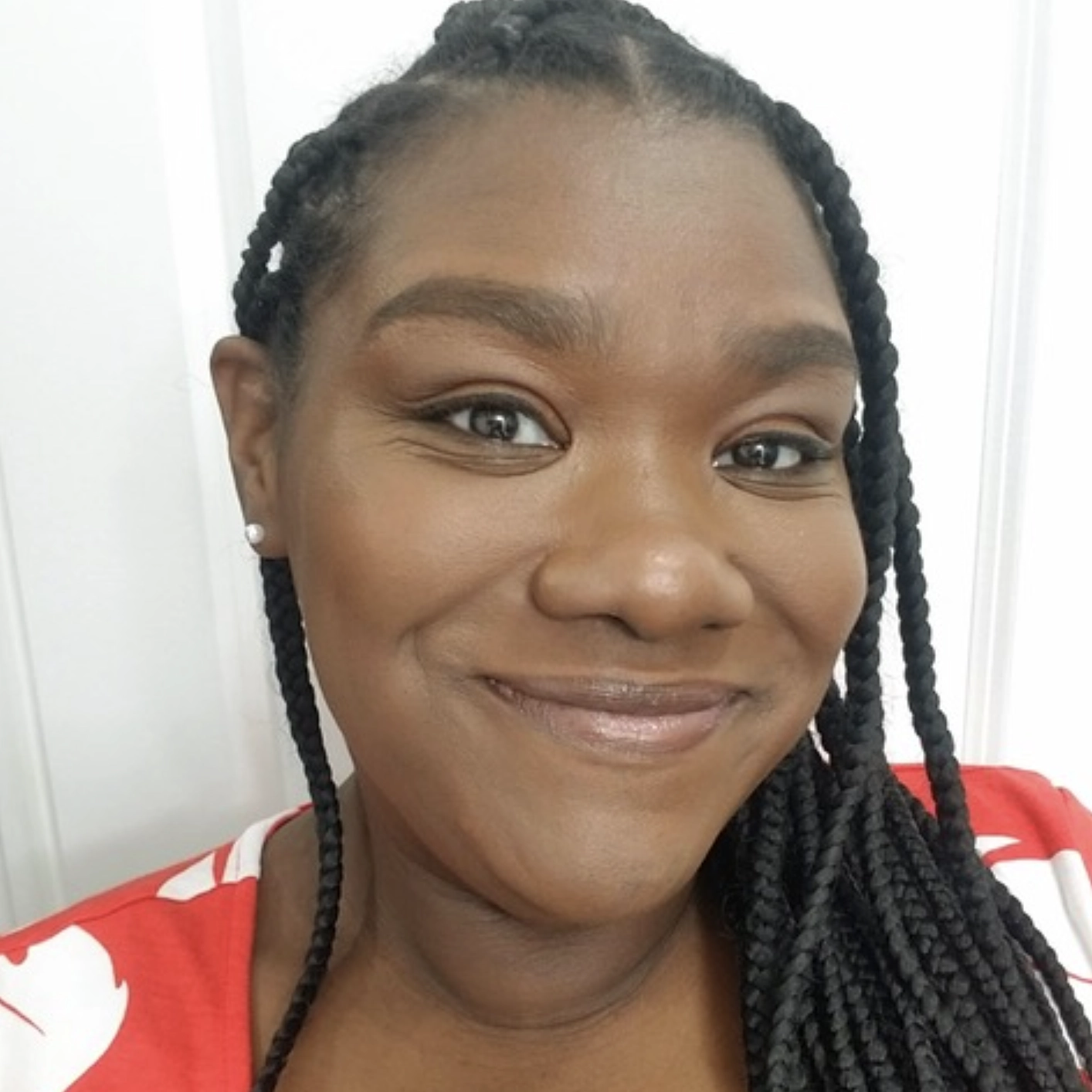
Mars Robinson, winner of the 2025 Solstice Literary Magazine Fiction Prize, is a publishing assistant, University of Cincinnati (BA, 2023) and DePaul University graduate (MFA, 2025), and above all, her mother’s daughter.


