

What poems can one write after borders are brutally transgressed causing others, in turn, to cross to safety? To quote the Ukrainian poet, Kateryna Devdera in Ewa Chrusciel’s translation, “More than words, and orphaned poems, I desire to return to my motherland.” In times of war, one does not do verbal operations. One does not get tipsy and giggle and pee in linguistic playgrounds. In his famous ars poetica poem, “Mr Cogito and Imagination,” Zbigniew Herbert proposes that poetry brings “the dead back to life / to preserve the covenant.” A poet, a thinking man, so-called Mr Cogito in these poems, chooses empathy and simplicity over the fireworks of showoff poetry. Herbert writes:
Mr Cogito’s imagination
has the motion of a pendulum
it crosses with precision
from suffering to suffering
there is no place in it
for the artificial fires of poetry
What do poems do during war? They evoke the dead. They pray. Just like Kateryna Devdera’s poem. They curse, just like Bożena Boba Dyga’s poem. They both pray and curse, just like Ewa Chrusciel’s translations of these two poets.
Ukrainian poet Serhiy Zhadan asks, “Who will light the fires in the lands of silence, / in the lost territories?” It must be language, not “beastly shrieks…laments of politicians or songs of buildings/from which entire families were evicted” but “music that circulates in the lungs of men and “[s]ilence warm like a lamb in your arms” which “like a thread/leads us out of burnt streets” for “we will withstand this wind/without losing each other/in the shadows.” Zhadan has been nominated for a Nobel Prize in Literature for 2022. Thank you to his translators Virlana Tkacz and Wanda Philpps.
There’s a surge of emotion, hope and strength born out of moral, social, historical and political struggle that rises from the voice of Jacque Viau Renaud (1941-1965), a Haitian-Dominican poet and resistance fighter who was killed in the Dominican Revolution of 1965. The rebel fighters are part of the land itself, with a yearning to hold this power indebted to the total commitment and struggle whose blood feeds the forest “from this now nameless meadow, / in the middle of these anonymous streets.” Renaud carries a vibration of both earthly and divine force through Ariel Francisco’s translations.
Whether originals or translations, poems must be bread for the hungry in times of war and struggle. The war which has never left us.
–Barbara Siegel Carlson and Ewa Chrusciel

Barbara Siegel Carlson is the author of What Drifted Here (Cherry Grove, 2023), Once in Every Language (Kelsay, 2017) and Fire Road (Dream Horse, 2013). She is the co-translator (with Ana Jelnikar) of Look Back, Look Ahead, Selected Poems of Srečko Kosovel and co-editor (with Richard Jackson) of A Bridge of Voices: Contemporary Slovene Poetry and Perspectives. Her poetry, translations and essays have appeared in Verse Daily, Cortland Review, Mid-American Review, Salamander, Slovene Studies and elsewhere. Her poems have been nominated for Best of the Net and Pushcart prizes. A fourth book of poems The Current is forthcoming in 2026.
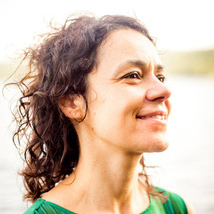
Ewa Chrusciel is a poet, translator, and educator. She has four books of poems in English with Omnidawn Press: Yours, Purple Gallinule (2022), Strata, Of Annunciations, Contraband of Hoopoe, as well as three books in Polish: Tobołek, Sopiłki, and Furkot. Her book Contraband of Hoopoe was translated into Italian by Anna Aresi and came out in Italy with Edizioni Ensemble in May 2019. Her poems have been included in curricula at institutions such as Harvard University, University of Wisconsin, Dartmouth College, Salem State University.
She also translated various authors into Polish, including books by Jack London, Joseph Conrad, and I.B. Singer, as well as book of selected poems by Jorie Graham (2013), and aforthcoming book of selected poems by Vievee Francis (2027), and selected poems of Kazim Ali, Lyn Hejinian, Cole Swensen, Mathew Olzmann and other American poets.
She is a Professor of Creative and Professional Writing and M. Roy London Endowed Chair at Colby-Sawyer College.


