

I said to my kids, “Trust me, you don’t want to know. You’ll wish you could go back to not knowing, but by then it’ll be too late.”
They do trust me—about everything. They’re still that young. They’d believe me if I told them it’s not true we all have to die someday, or that their father loves them very much. I don’t like having all that power, and I’d give it back if I could.
My son told a joke last night at supper. I knew he didn’t get it—it was just something he’d heard at school. It was a horrible joke, and I’m sorry to say I found it funny. “A boy and a clown walk into a forest. The boy looks around and says, ‘Gee, this is kinda scary,’ and the clown says ‘How do you think I feel? I have to walk out of here alone!’”
I’m sorry to say I made the mistake of smiling. My sister outright laughed. “That’s the worst joke I ever heard,” she said, pointing her knife at Toby. “Also the best.”
“What?” my daughter cried, lately desperate to learn the secrets of women. “Why is that funny? Who’s the boy?”
Toby was so pleased with himself he almost levitated out of his chair. Making his aunt laugh is his highest glory.
My husband smiled at me from across the table. Well, no, he didn’t, because he wasn’t there—I’ve never had a husband, but if I had, that’s where he would have been sitting and what he would have done. I need to stop saying My husband this, my husband that. It’s never out loud, just in my head, but even so, it’s a bad habit. Why waste time wishing?
But—just one more and then I’ll stop—if I’d had a husband and he was sitting there, he would have said to me, “See what great kids we’ve raised? So sweet and so good? They have no idea what’s out there waiting for them.”
Instead I told the kids, “Trust me, you don’t want to know.” They’re sweet and good even without a father. Either I did something right or I just got lucky; I don’t care which, as long as it lasts a little longer.
The movie we chose after supper was Airplane! We sat the way we always did, the four of us on the couch with our feet on the coffee table, one blanket covering us all. “Surely you know how bad your feet stink,” Fiona would say to Toby, and he’d say, “Don’t call me Shirley!” No matter how many times they’ve done the routine already, they both crack up every time.
Next to me, my sister put her head on my shoulder. She stays with us whenever she comes for her treatments, because we live closer to the hospital. Eight months ago I sat next to her, across from the doctor, when he explained that these injections—part of a clinical trial—were her best shot at survival. Until that appointment, we hadn’t understood that she might not survive. Audrey smiled. I saw that the doctor interpreted this as an inappropriate response to what he’d just told us, but I knew she believed he’d made a pun to lighten the mood (injections, best shot) and wanted to reward him for the effort. That might sound a little nuts, but remember, we are women and he was a man, in a white coat to boot.
I’ve always been able to read my sister like this. Same for her with me. We’re each other’s emergency contact and next of kin. There hasn’t been an emergency yet, but we’re both ready.
“What if this is it?” she said to me the other day, when the kids were outside playing kickball with the triplets from down the street. “If this is it, what’s the point? What’s been the point? I mean really, Lex. I worked so hard for it all to pay off someday, but what if ‘someday’ doesn’t come?” She’d worked herself into a state. Snot, tears, shouts—the whole nine yards. “I would have taken so many more days off. I would have spent all my money. Goddammit!”
It took her time to calm down, while I just sat with her. I knew I’d be feeling the same way, so I didn’t try to talk her out of it. After a while she blew her nose and said, “It’s just— I don’t want to leave. I want to find out what happens.”
She said this like a kid who wasn’t being allowed to stay up to watch the next episode of her favorite show. Which in a way, I guess, she was.
“You can’t think like that,” I told her, breaking my resolution to let her feel whatever she wanted. “Try to expect the shots to work. That’s what I’m doing.”
“If this is it, though,” she wailed (it was the first time I think I ever heard somebody actually wailing in real life), “it still means something, right? To you, at least. And the kids. I meant something. It will have mattered that I was here.”
It was a question, but she said it like she was announcing a fact. It will have mattered that I was here.
“You moron,” I said. It was the way we’d been speaking to each other since we were kids. I didn’t have to say anything else—she understood my answer.
At work today I told the joke to people in the break room. I got some groans and some clucks, but my friend Rafe liked it. “I mean it’s gruesome, but not in a detailed way,” he said, cracking pistachios into the Bills cap he always turns over on the table to collect the shells. “The humor’s more nuanced. It catches up to you.”
Rafe had a year at college, so words like “nuanced” come naturally to him. When he first got hired I thought there might be something between us, but when I asked him out for a beer after work one day, he told me he played for the other team. That’s how he said it: “I hope it isn’t too soon to mention this, Lexie, but I play for the other team.” He leaned across the table and made sure I looked in his eyes. I admit I was embarrassed, and also a little pissed. Not at him, but nature. How many guys am I going to meet in that plant, in this town, who’d make a good husband and father?
Estelle, the only person who’s been here longer than I have, patted her chest when she heard the punchline. She always tries to get out of doing things she’s supposed to do by saying she has a heart condition. More than once I’ve told her, “Estelle, everyone has a heart condition,” but she just ignores me and then I feel guilty for being mean and I end up doing the thing she was supposed to do. When she acted as if my joke was about to give her a coronary, I apologized and offered to clean her machine when our shifts were over.
I didn’t really mind because it made the end of the day come faster. Rafe and I punched out together, and he wished me luck. When I asked what for, he said, “She gets those tests back today, right? Your sister.”
Well, no way would it do to let him know I’d forgotten. Is forgotten the right word? No it is not. But whatever the right word is, he put it back in my mind again. I thanked him and said for about the thousandth time, “When are you gonna come try out for my team?”, and we both laughed, but then when I got out to my car I had to take a few minutes to cry into the steering wheel so hard I thought I might puke.
But luckily I had to pull it together, to go pick up the kids from school. How many times since Fiona was born have I thought this—how lucky I am to have these creatures I need to pull it together for? She came out of the building first, her backpack bulging because it was library day and she could never choose just one or two books the way they were supposed to.
Lately she’s been on a Helen Keller kick. Sometimes I’ll be walking by and she’ll grab up my hand and start finger-spelling into it. “You know I don’t get what you’re saying, right?” I always tell her, and she always shrugs and says it doesn’t matter, she’s just practicing.
She got into the car and said, “I think I know what happens in that joke” before she’d even buckled herself in.
“You do?” My heart clutched a little.
“The clown has to walk out alone because he’s gonna leave the boy behind, right?”
“Yeah, I think so.” I hoped she’d think I wasn’t sure, myself.
“But why does he do that?”
I try to be honest with them, I do. But it was too soon. Too soon. “Maybe to test him,” I said, as Toby pitched himself into the car. “A challenge or something. To see if he can find his way home without any help.”
“Oh, like Outward Bound.” Her forehead unwound from its frown. She knew about Outward Bound because a kid I used a few times as a babysitter went through it. I’d told Fiona and Toby that Dylan had gone off to a program that would teach him about survival in the wilderness. I didn’t tell them the program was court-ordered after he set fire to Chipotle when they wouldn’t give him a raise.
They’d liked Dylan because the three of them made pizzas together and he let them put on whatever toppings they wanted, like popcorn and marshmallows. He started a tradition in our house, which we follow once a week now. The challenge is to think up the weirdest possible combinations but still produce pizzas people will eat. Sometimes it’s a mistake to come to the table hungry at our house on Thursday nights, but on the other hand it’s always more fun than when I pick up something on the way home to stick in the microwave.
Tonight Fiona chose Doritos as her topping, and Toby picked bananas. I hadn’t given it any thought, so at the last minute I pulled out the leftover Halloween candy and chopped up a few Snickers bars. That really made them happy and they ate every bit of it, caramel and all.
Audrey didn’t make it back from her appointment before we sat down to supper. I was both dying to know and afraid to hear what the doctor had said. Was it a good sign or a bad one that she hadn’t texted?
I was exhausted. I wanted to get the kids to sleep so my sister and I could talk as soon as she got home. I told Fiona she could read either the first chapter of every book she’d brought home or five chapters of just one. She chose option two and settled into bed with The Miracle Worker, which she’d renewed for the third time. Toby was in one of his dawdling moods, so I told him if he put on his pajamas and got into bed before seven, I’d tell him a story. I had no idea what story I’d tell. And just before I would have had to figure it out, the back door banged open and Audrey let out a giant, crazy holler that rang through the whole house.
I closed my eyes and tried to keep the tears inside as Fiona came running. “What?” she cried to her aunt. “What happened?”
“Good news!” Audrey said. But we hadn’t told the kids about her being sick, so she couldn’t really say what the good news was. Instead she said, “I just found out I got a promotion,” and I was impressed she’d thought of this because in a way, I guess, it was.
My sister must have seen that I was in no shape to tell a story, so she offered. All four of us sprawled across Toby’s bed. “A boy and a clown walk into a forest,” she began.
“Not the joke,” Toby said, sitting up in protest.
“Ssh. Lie down. It isn’t the joke.” Audrey reached out to cup his chin, the trick we’d learned when he was a baby to calm him down. “A boy and a clown walk into a forest. The boy looks around and says ‘Gee, this is kinda scary’ and the clown puts a hand under his chin and says, ‘I know. Here. Give me a minute.’”
I could tell from the way Toby’s eyes darted how vivid the scene was to him.
“The clown points to a flat, smooth rock at the edge of the clearing,” my sister went on, “a rock just big enough for the boy, and the boy goes over and sits. The clown takes off his backpack and starts rummaging around in it, then pulls out a package of make-up removing cloths. He starts wiping his face while the boy watches. It takes a pretty long time and the whole pack of cloths, but when he’s done, he’s gotten rid of every single trace of the white cheeks and the black eyes and the giant red smile. They’re just a boy and a man now, having a talk in the woods.”
A pause as Toby adjusted the image in his mind from clown to man. “What do they talk about?” he asked.
Audrey shrugged. “Whatever the boy wants.”
Toby considered. “I like that story,” he said, and Fiona said she did, too.
“Is the man his father?”
It hadn’t occurred to me that Toby might wonder that, but when he asked it, I thought, Duh! Of course. “I guess he could be,” my sister said.
Fiona declared, “That story is like the joke, only better.”
“I agree,” Audrey said.
“It’s more detailed. The other one, the joke…”
My sister waited for a moment before she prompted, “The other one what?”
Fiona gave the big sigh that means she’s bitten off more than her mind can chew. “I don’t know. The punchline just kind of trails off.”
I felt a whoosh rise up inside me, as if we were all speeding through an impossibly thrilling ride. I smiled and kissed both my kids. Toby wiped his kiss off before asking, “What’s the difference between woods and a forest, anyway?”
“I don’t know.” I was glad to be saying this not to hide something but because it was the truth. “Maybe a forest has more trees? Or maybe the trees in a forest are higher?”
“We should take a walk in a forest this weekend!” Fiona snapped her fingers, a skill she’d been working to achieve. “Are there any around here, Mom?”
Across from me, my husband shook his head. Don’t worry, I told him, I know. Then I said I thought the closest forest was still pretty far away, but it wouldn’t be long before we all took a trip to one together.
END
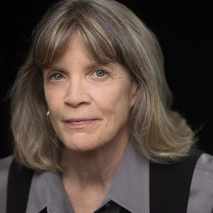
Jessica Treadway has published four novels and four story collections including I Felt My Life With Both My Hands, published in April 2026. Her work has appeared in The Best American Short Stories, and her collection Please Come Back to Me received the Flannery O’Connor Award for Short Fiction. She is a longtime faculty member at Emerson College in Boston.


