

The food is cold and so his mind drifts

a blue fin angling toward deeper water

the sky’s thin music

like a woman’s singing

from the other side of a wall

and so he tongues that night’s gristle

he can spit it out later

he can cover it up like a cat

his heart throbbing

muscular butterfly among the marigolds

though now he nods/speaks little

to the swagged faces

animal/vinegar stink of a sister

a brother’s waxen scalp

his parents higher up

with their bronzed teeth and wrecked liquors

he waits for the shove-off into dusk

when he can drag the short blade

through woven bark

the initial or full name signifying possession

or un-thought-through greed

then the longer blade pinched open

for deeper cutting

sometimes so quickly

accidentally

the skin, even the shirt tails

are blurred with bloody moth-prints

though he sometimes draws it

on purpose, a dare

over a thigh or forearm’s bunched skin

so he can follow each layer’s snap, release

a fraying rope inside the dermis

and sense something give

the whole elegant structure collapsing

a girl’s hard breathing beside him (her turn next)

as blood oozes from the hardly bleeding wound

spit rubbed in to make this tribal

the names still un-carved

the witness still to be carved

the girl’s arm laid out in a stench of creosote

for eternity is a steel blade in a child’s hand
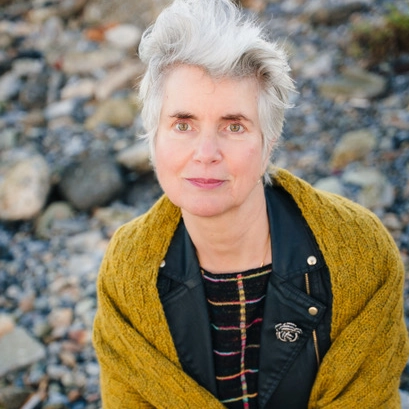
Suzanne Strempek Shea is the author of twelve books, the first four of which were novels set in her native Polish America that led to her being featured in national and international media, including twice on NBC’s Today; on The Late Late Show with Tom Snyder, NPR and Voice of America; and in major newspapers and magazines in both the United States and Poland.
Awards for her books include the New England Book Award and the Oskar Halecki Prize. Her journalism was shortlisted for the Penney-Missouri Awards, and her creative writing was recognized in Best American Fiction. Her freelance journalism and fiction has appeared in magazines and newspapers including Yankee, The Bark, Golf World, The Boston Globe, The Irish Times, The Philadelphia Inquirer, Brevity, Down East, Organic Style and ESPN the Magazine.
Suzanne co-directs the annual Dingle Writers’ Workshop in Dingle, Ireland, and the annual Iota Short Forms Writing Conference on the easternmost coast of Maine. She’s taught in MFA programs at the University of Southern Maine, Emerson College and the University of South Florida, and at conferences through the United States and in Ireland. She lives in Howth, Ireland.
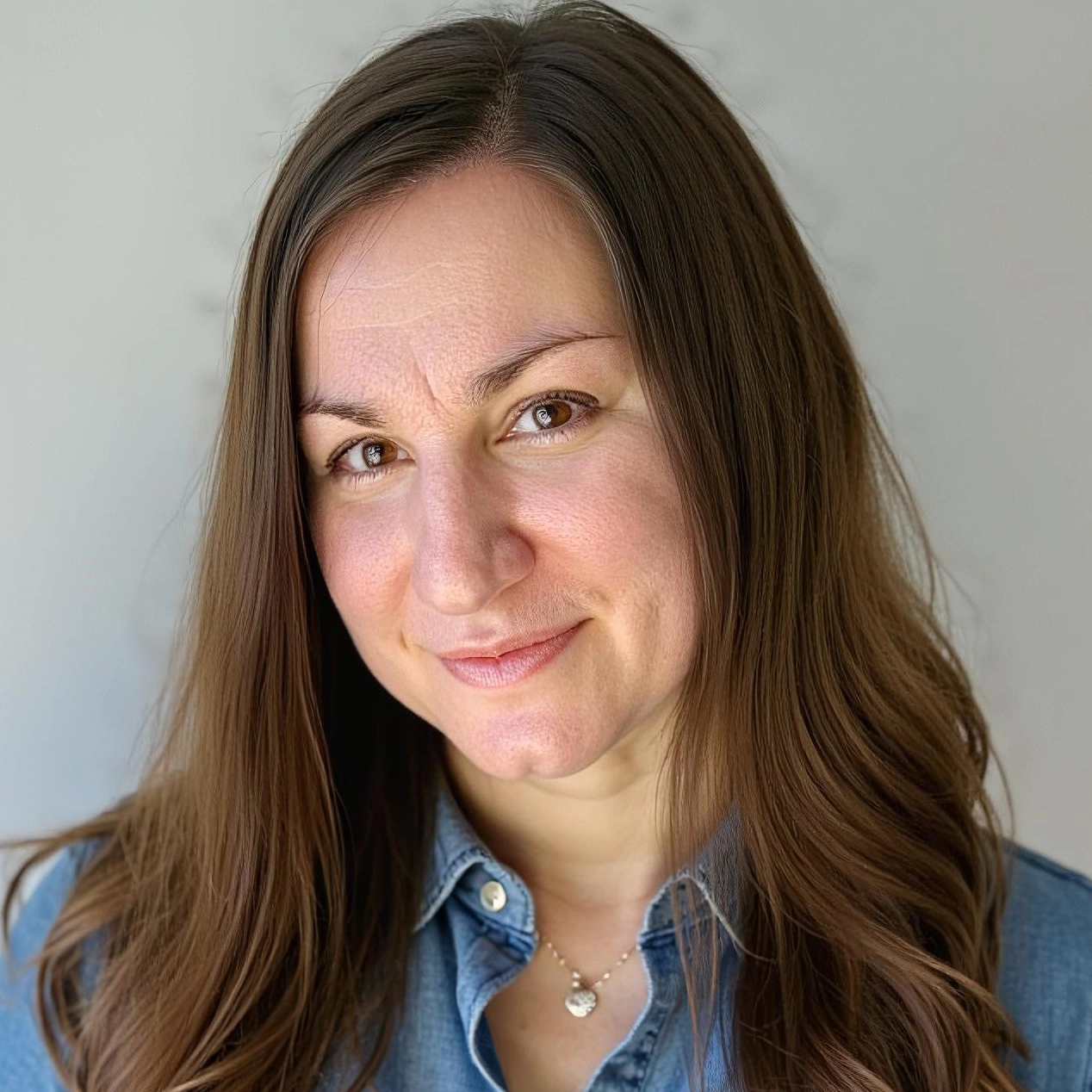
Karen Sherk Chio (she/her) earned an MFA in poetry from the University of New Orleans, where she was the winner of the 2025 Andrea Saunders Gereighty/ Academy of American Poets Award, the 2025 Maxine and Joseph Cassin Prize for Poetry Thesis, and the 2023 Vassar Miller Poetry Award. She brings 25 years of professional experience leading and managing projects for non-profit organizations to the role of Editor-in-Chief, as well as experience as an associate poetry editor for Bayou Magazine and West Trade Review. Her creative work has appeared in swamp pink, Salamander, CALYX Journal, and SmokeLong Quarterly, among others, and her critical work has been published by or is forthcoming from Colorado Review, The Adroit Journal, and West Trade Review. Chio holds two Bachelor of Arts degrees from the University of Connecticut and a Master of Public Health from Boston University.

Monica Jimenez is the senior culture & trends editor for Tufts University news and features and assistant editor of Tufts Magazine, and a community ed acting and playwriting instructor. Her work has appeared in publications including Ruminate Magazine and the Mini Plays Review, and her plays have been produced in festivals including the Boston Theater Marathon, Boston Slam Theater, and Short ’N Sweet Hollywood. She is a graduate of the Stonecoast MFA in Creative Writing program and former co-editor-in-chief, fiction editor, and designer of the Stonecoast Review. She was an honorable mention for Ruminate Magazine’s William Van Dyke Short Story Prize and winner of the flash fiction contest at the Boskone sci-fi and fantasy convention.


